 Korea Experience Finder
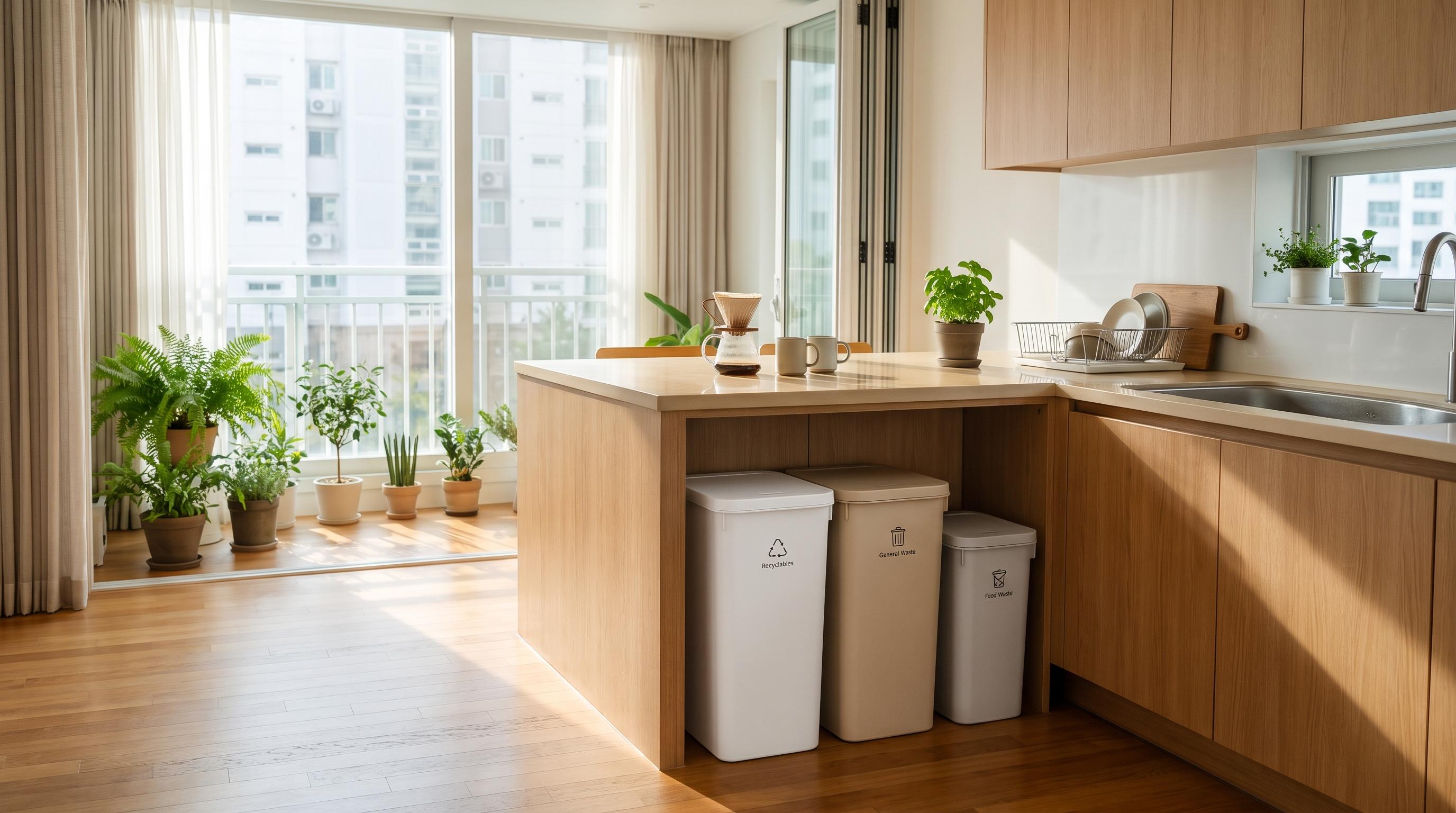
Foreign guests in Korean vacation rentals must sort refuse into general waste inside district bags, separated food scraps, and clean recyclables to prevent municipal fines.
Understanding South Korea's Volume-Based Waste System (Jongnyangje)
Navigating everyday domestic routines in an unfamiliar country can be challenging, but municipal waste disposal in South Korea presents one of the strictest sorting frameworks in the world. Travelers staying in short-term vacation rentals, serviced officetels, or urban apartments cannot simply dump leftover packaging, food scraps, and daily rubbish into a single trash bin. Under Article 15 of South Korea's Waste Management Act, building owners, occupants, and domestic residents are legally bound to cooperate with municipal waste reduction policies and properly segregate refuse at the source1. Failure to handle domestic waste correctly does not just burden your host; municipal enforcement teams inspect curbside bags and can issue administrative fines.
The cornerstone of this environmental framework is the volume-based waste fee system, known natively as Jongnyangje. Introduced nationwide in 1995, this mechanism requires consumers to purchase government-authorized, prepaid disposal bags that cover the collection and incineration costs of non-recyclable domestic items. Recyclables such as glass, metal cans, rigid plastics, and clean paper are collected free of direct disposal charges, incentivizing residents and temporary guests alike to divert as much material away from incinerators as possible. As an international visitor staying in an Airbnb or similar accommodation, understanding how to operate within this segregation system—general waste, food waste, recyclables, and clear beverage bottles—is both an ethical courtesy and a legal requirement.
Purchasing and Identifying the Correct Waste Bags
One of the most frequent points of confusion for foreign travelers is locating, purchasing, and correctly matching the standard Jongnyangje bags for their accommodation. These bags are not universal across South Korea; they are strictly administered by individual local municipal districts (known as 'Gu' in metropolitan cities like Seoul, or 'Si' and 'Gun' in surrounding provinces). As of November 2026, standard official rates published by municipal authorities such as Seocho-gu price domestic general waste bags at 60 KRW for 2 liters, 130 KRW for 5 liters, 250 KRW for 10 liters, 490 KRW for 20 liters, and 1,250 KRW for 50 liters4. Dedicated food waste bags are similarly priced in the district at 100 KRW for 1 liter, 200 KRW for 2 liters, 300 KRW for 3 liters, 500 KRW for 5 liters, 1,000 KRW for 10 liters, and 2,000 KRW for 20 liters4.
To purchase these bags, you must visit a local convenience store (such as GS25, CU, 7-Eleven, or Emart24) or a neighborhood supermarket located within the exact same administrative district as your rental accommodation. Because these items are stored behind the counter, you must ask the cashier directly for 'Ilban Jongnyangje Bongtu' (general waste bag) or 'Eumsikmul Bongtu' (food waste bag), specifying the desired liter size. You cannot bring a bag purchased in Mapo-gu and dispose of it in Gangnam-gu, as collection contractors will refuse to pick up out-of-district bags and may flag the property for a municipal violation. While many thoughtful hosts supply an initial starter roll of bags, guests staying more than two or three nights should check whether they need to replenish their own supply.
| Disposal Category | Standard Color | Common Home Capacities | Official Seocho Price (KRW) | Intended Contents |
|---|---|---|---|---|
| General Domestic Waste (Ilban) | White translucent | 2L / 5L / 10L / 20L / 50L | 60 / 130 / 250 / 490 / 1,250 KRW | Non-recyclable trash, dirty plastics, used tissues, pet waste, sanitary items |
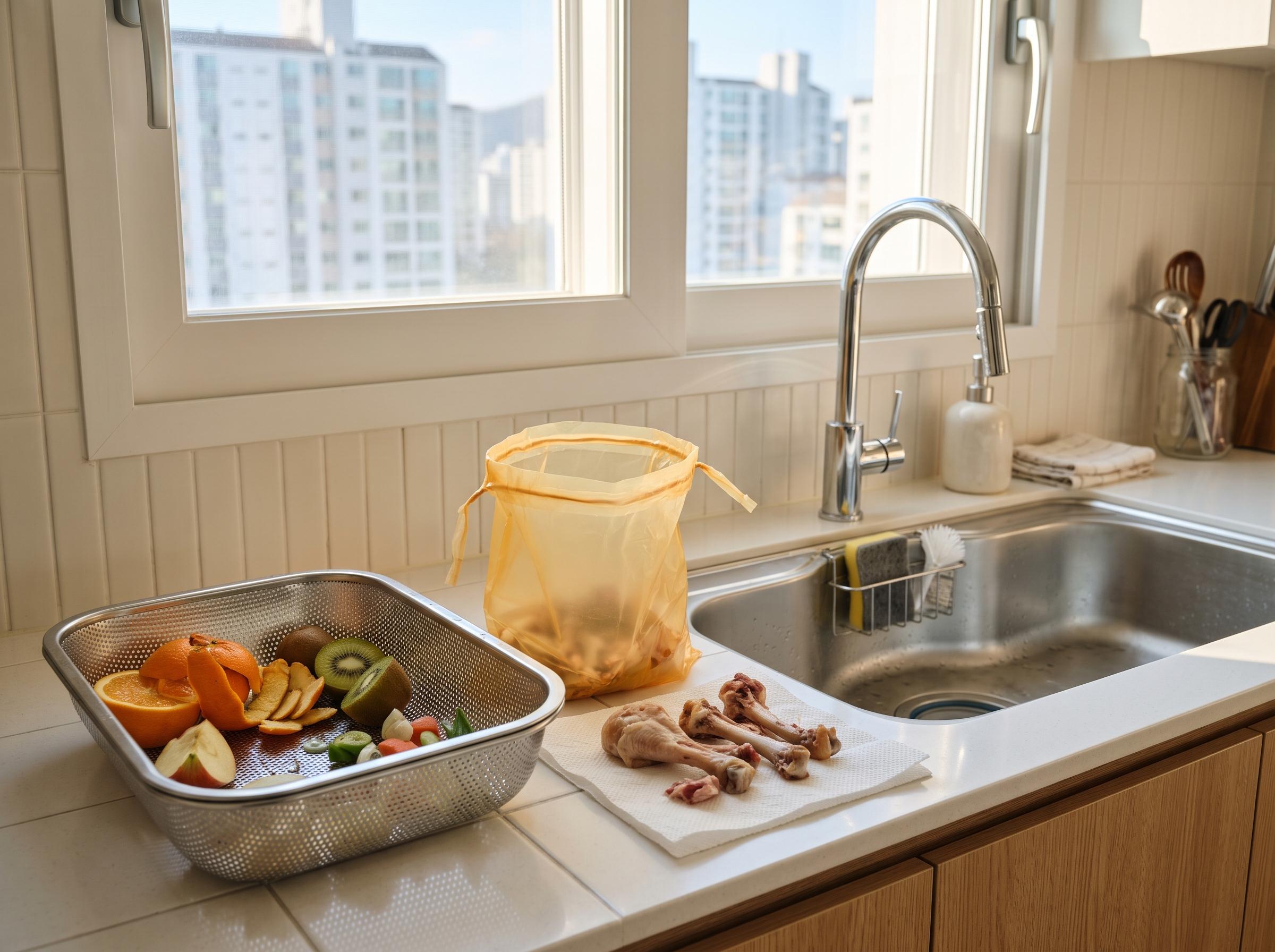
| Food Residual Waste (Eumsikmul) | Yellow translucent | 1L / 2L / 3L / 5L / 10L / 20L | 100 / 200 / 300 / 500 / 1,000 / 2,000 KRW | Soft, organic, edible food scraps destined for animal feed or agricultural compost |
| Reusable Shopping Bag (Jaesayong) | Purple | 10L / 20L | 250 / 490 KRW | Purchased at supermarket checkouts; functions as a grocery tote and general waste bag |
| Incombustible Waste Sack (PP Madae) | Polypropylene sack | 20L | 2,040 KRW | Broken ceramics, porcelain tableware, incandescent lightbulbs, tile fragments |
Mastering the Four Core Sorting Streams in Your Kitchen
Effective domestic sorting begins the moment you unpack takeaway containers or prepare a meal in your rental kitchen. Setting up distinct temporary holding areas for four primary streams prevents last-minute confusion on checkout morning. The first stream is general domestic trash, which encompasses anything that cannot be biologically processed into livestock feed or physically melted down into post-consumer resin. The second stream is organic food waste, which must be kept free of plastic films, skewers, and excess liquid moisture. The third stream consists of traditional dry recyclables, which are segregated into paper boxes, paper cartons, glass beverage bottles, aluminum cans, and mixed rigid plastics.
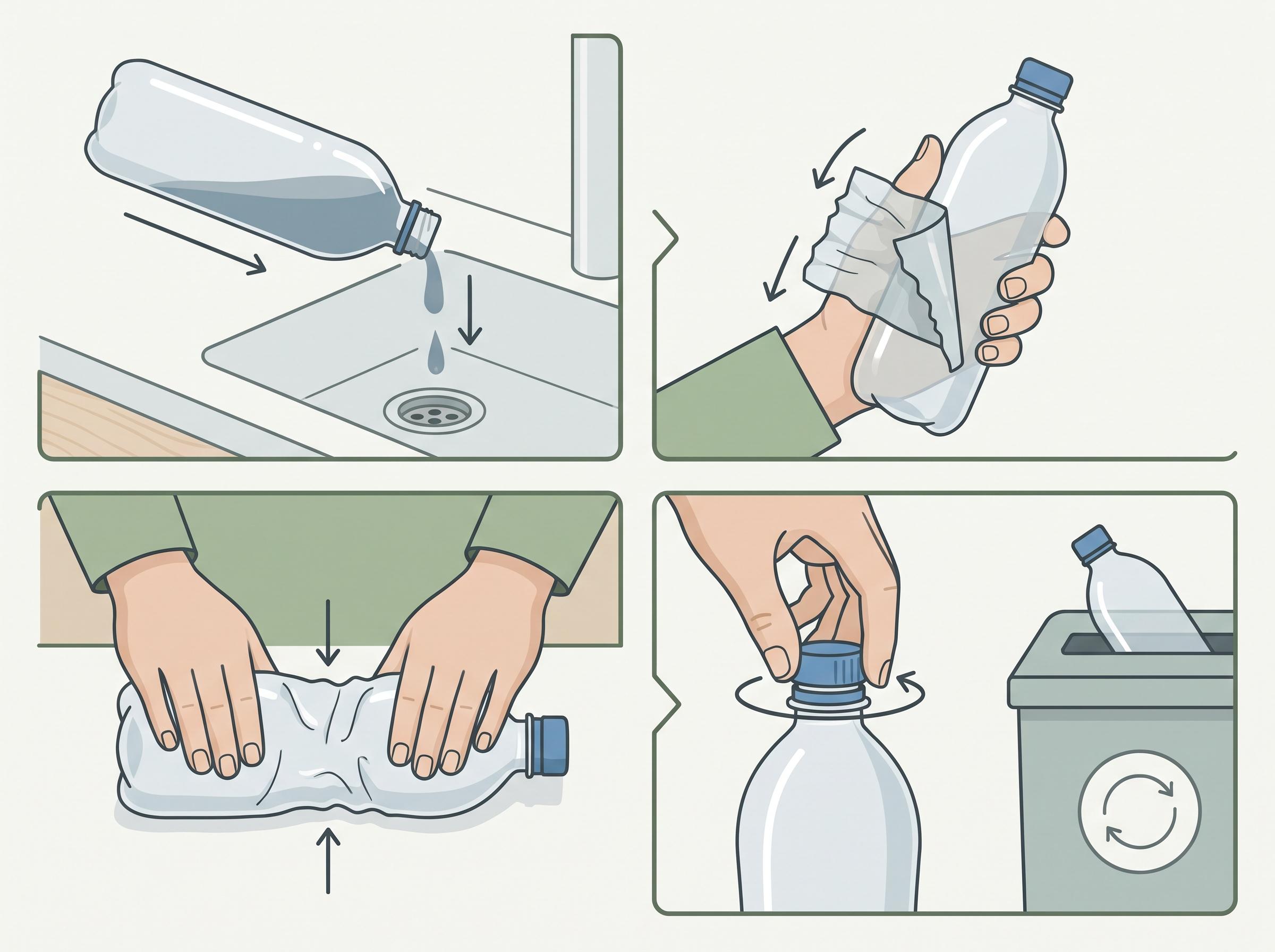
The fourth and most rigorously monitored stream is clear colorless PET bottles, governed by municipal and national guidelines enforcing separate discharge for transparent drinking containers2. Transparent plastic bottles that once held drinking water or non-carbonated beverages cannot simply be tossed into the mixed plastics bin. In multi-family residential complexes and residential housing, regulations require transparent PET bottles to be collected separately from colored plastics and other synthetic resin containers2. The core sorting principle requires individuals to empty all contents, rinse residual liquid, peel off exterior vinyl labels for disposal with plastics or vinyl, and compress the bottle before placing it into the designated transparent PET container23.
Recycling Nuances and Common Contamination Pitfalls
Sorting dry recyclables requires close attention to material cleanliness and composite elements. Clean paper and cardboard boxes must have foreign materials—such as plastic adhesive packing tape and shipping label stickers—completely stripped off before being flattened and stacked3. However, receipts, thermal paper, parcel shipping stickers, waterproof coated paper, and heavily soiled food packaging cannot be recycled and must be discarded into the standard Jongnyangje general waste bag3. Similarly, clean vinyl wrappers and plastic films can be recycled, but vinyl contaminated with food residues or greasy oils that cannot be rinsed clean must be thrown into general waste3.
Kitchen and bathroom items often cause sorting mistakes. Food containers contaminated with heavy grease, such as oily chicken delivery boxes, instant noodle cups, and stubborn condiment bottles (like mayonnaise or chili paste containers that cannot be fully cleansed), are rejected at sorting centers and must go directly into the general waste bag3. Broken glass windows, plate glass, ceramics, and earthenware bowls cannot be mixed with recyclable glass bottles; non-recyclable glass should be wrapped safely in newspaper for general waste or disposed of in designated incombustible bags (PP Madae) depending on district guidelines3. Small personal items like toothbrushes, pens, rubber gloves, and contaminated foam fruit mesh also belong strictly in general trash3.
Disposal Locations and Protocols: Apartments vs. Multi-Family Villas
Where and when you actually discard your sorted bags depends entirely on your rental property's architectural classification. If your vacation rental is located inside a modern high-rise complex ('Apart' or large commercial 'Officetel'), you will enjoy considerable flexibility. These developments maintain central outdoor or basement recycling stations operating continuously or on set collection days. In apartment complexes, recyclables are separated into dedicated bins for cardboard, clear PET, mixed plastic, glass, steel cans, and vinyl. Food waste in modern complexes is typically deposited into automated RFID weight-measuring bins, which unlock upon tapping a digital key fob provided by your host, weighing your deposit and logging the fee directly to the building account.
Conversely, if your booking is inside a low-rise multi-family building ('Villa'), a traditional studio 'One-room', or a detached Hanok residence, waste collection follows rigid curbside schedules governed by district-level ordinances. Most residential neighborhoods operate on designated night-collection systems, where residents may only place sealed Jongnyangje bags and transparent bags of sorted recyclables outside the building's ground-floor entry gate during specific evening windows (typically after 18:00 or 19:00 on designated weekdays). Placing bags on the curb during daylight hours or on non-collection nights is prohibited under local district rules and frequently draws complaints from neighbors and local sanitation wardens.
Guest Liability, Host Communication, and Checkout Checklist
Understanding your responsibilities as a guest protects both your security deposit and your platform reputation. While commercial hotels handle all housekeeping internally, peer-to-peer vacation rentals in South Korea expect departing visitors to leave waste organized according to building house rules. Leaving unseparated food trash decomposing in an open plastic shopping bag can result in extra cleaning surcharges or disputes through booking platform resolution channels. Local district sanitation workers inspect unbagged trash or improper roadside dumping, which can lead to formal complaints against the property owner. Guests should always double-check house manuals or message hosts if curbside pickup days are unclear.
Before you complete your final checkout, execute a disciplined final walkthrough of your rental unit. Gather all takeout beverage cups, peel off the plastic film seal, rinse the cups with water, and place the plastic cup and straw into recyclables. Compress delivery cardboard pizza boxes and parcel packages flat, stripping away adhesive packing tape and shipping label stickers3. Tie off your official general waste bag tightly by its drawstring handles. If your villa host requires you to take your bags down to the street level, deposit them precisely at the designated curbside collection spot during allowed hours. If your listing instructions state that the host prefers to conduct final curbside transfer themselves, ensure that your indoor bins are cleanly sorted so your host can bag them without sorting through mixed debris.
Frequently asked questions
Q. Can I use standard plastic shopping bags from convenience stores as trash bags in Korea?
A. No. Standard disposable shopping bags cannot be used for general garbage. However, if you purchase a special purple or blue 'reusable shopping bag' (Jaesayong bongtu) at checkout in a grocery store or supermarket, it doubles as an officially certified municipal Jongnyangje bag that collection crews will accept.
Q. Where do I dispose of used takeout coffee cups and chicken delivery boxes?
A. Plastic iced coffee cups must be rinsed thoroughly, have exterior stickers removed, and go into plastic recycling. Paper delivery boxes, such as fried chicken or pizza containers, can only go into paper recycling if they are completely free of grease and food stains; if heavily stained with oil or sauce, they must be discarded into the general waste bag.
Q. What happens if I make an honest mistake sorting trash during my rental stay?
A. Minor sorting errors inside indoor rental bins are typically adjusted by hosts or custodial staff. However, gross negligence—such as dumping unbagged domestic trash on the street or abandoning unsorted rotting food—violates municipal disposal guidelines and Waste Management Act obligations, creating friction with property owners and potential hosting penalty charges.
Sources
- 대한민국 폐기물관리법 제15조(생활폐기물배출자의 처리 협조 등)대한민국 법제처 국가법령정보센터
- 서울시, 25일부터 공동주택`투명 페트병 분리배출`의무 시행서울특별시 환경에너지기획관 자원순환과
- 헷갈리기 쉬운 재활용품, 올바른 분리배출 방법은 이렇게!서울특별시 내 손안에 서울 (시민기자 김아름)
- 종량제규격봉투현황 및 판매가격 공시서초구청 청소행정과