 Korea Experience Finder
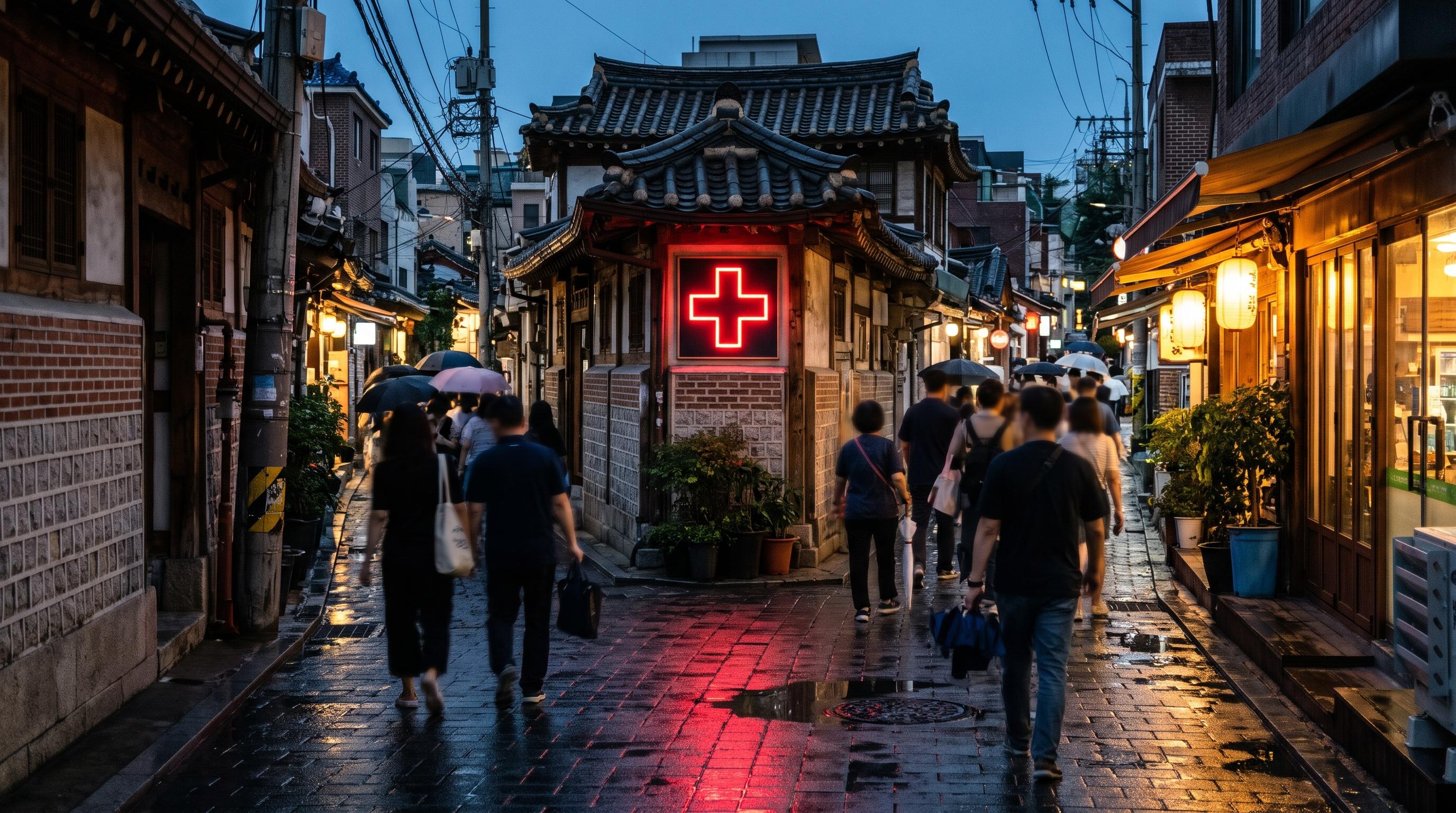
Show your written symptoms in Korean or call the free 1330 hotline for live three-way interpretation at any pharmacy, or buy basic OTC relief at 24-hour convenience stores.
- Headache / Fever: 머리가 아프고 열이 나요 (Meoriga apeugo yeori nayo)
- Stomachache / Indigestion: 배가 아프고 소화가 안 돼요 (Baega apeugo sohwaga an dwaeyo)
- Diarrhea: 설사를 해요 (Seolsareul haeyo)
Traveling abroad while handling unexpected minor health issues can be daunting, especially when navigating a new country without local language skills. In South Korea, foreign travelers experiencing headaches, mild indigestion, allergic reactions, motion sickness, or sudden muscle aches can obtain safe, regulated over-the-counter (OTC) medication quickly and affordably. Korean pharmacies, known as yakguk (약국), are ubiquitous across both metropolitan districts like Seoul and rural areas. However, independent neighborhood pharmacies rarely employ fully multilingual staff, creating potential communication friction during an urgent consultation.
Understanding how Korea's pharmaceutical retail landscape functions helps international visitors make informed decisions about where to go and what assistance channels to use. South Korea maintains a strict division between dispensary-based prescription medication, general OTC pharmacy drugs, and designated non-pharmacy emergency supplies. By knowing how to identify symptoms, utilize state-supported translation hotlines, and distinguish licensed community pharmacies from 24-hour retail stores, international travelers can address acute symptoms safely without unnecessary clinic visits.
Understanding Korea's Pharmaceutical Landscape: Yakguk vs. Convenience Stores
The primary retail venue for medical relief in South Korea is the licensed community pharmacy, marked prominently with the Korean character '약' (yak, meaning medicine) in illuminated red or blue signage. Under South Korean pharmaceutical regulations, only a licensed pharmacist may own and operate a community pharmacy. OTC medications sold in a pharmacy encompass a broad selection of clinical treatments, including potent pain relievers, concentrated digestive enzymes, specialized antihistamines, nasal sprays, and topical antibiotic ointments. When visiting during standard weekday business hours—typically between 09:00 and 19:00—pharmacists evaluate your personal condition before dispensing appropriate boxed formulations.
For travelers facing symptoms late at night or during public holidays when standard neighborhood pharmacies are closed, South Korea permits registered retail businesses to vend designated basic household remedies. Registered 24-hour convenience stores that operate 365 days a year without closing are authorized to stock safety household medicines, known as anjeon sangbi uiyakpum. However, this retail inventory is strictly capped by public health authorities. While adequate for sudden nocturnal fevers or mild indigestion, convenience stores cannot substitute for the extensive clinical range available at a licensed pharmacy.
| Retail Channel | Operating Hours | Available Product Scope | Dispensing Consultation | Purchase Quantity Limits |
|---|---|---|---|---|
| Standard Community Pharmacy (Yakguk) | Typically 09:00–19:00 (Mon–Fri), half-day Saturday | Comprehensive OTC range (antihistamines, eyedrops, multi-symptom cold syrups, topical ointments) | In-person pharmacist consultation and customized dosage guidance | Discretion of the attending pharmacist based on patient condition |
| Designated Public Night Pharmacy (Simya Yakguk) | Varies by local municipality (typically 22:00–01:00 or 20:00–01:00; prior confirmation via E-Gen or 1330 required) | Full OTC pharmacy inventory and night-time professional dispensing | Qualified licensed pharmacist physically on site for intake | Professional clinical discretion |
| 24-Hour Convenience Stores (CU, GS25, 7-Eleven) | 24 hours, 365 days a year without closure | Maximum 13 designated household items (antipyretics, cold tablets, digestives, pain relief patches) | No pharmacist; self-selection via retail counter checkout | Strictly 1 package per item per transaction; not sold to children under 12 |
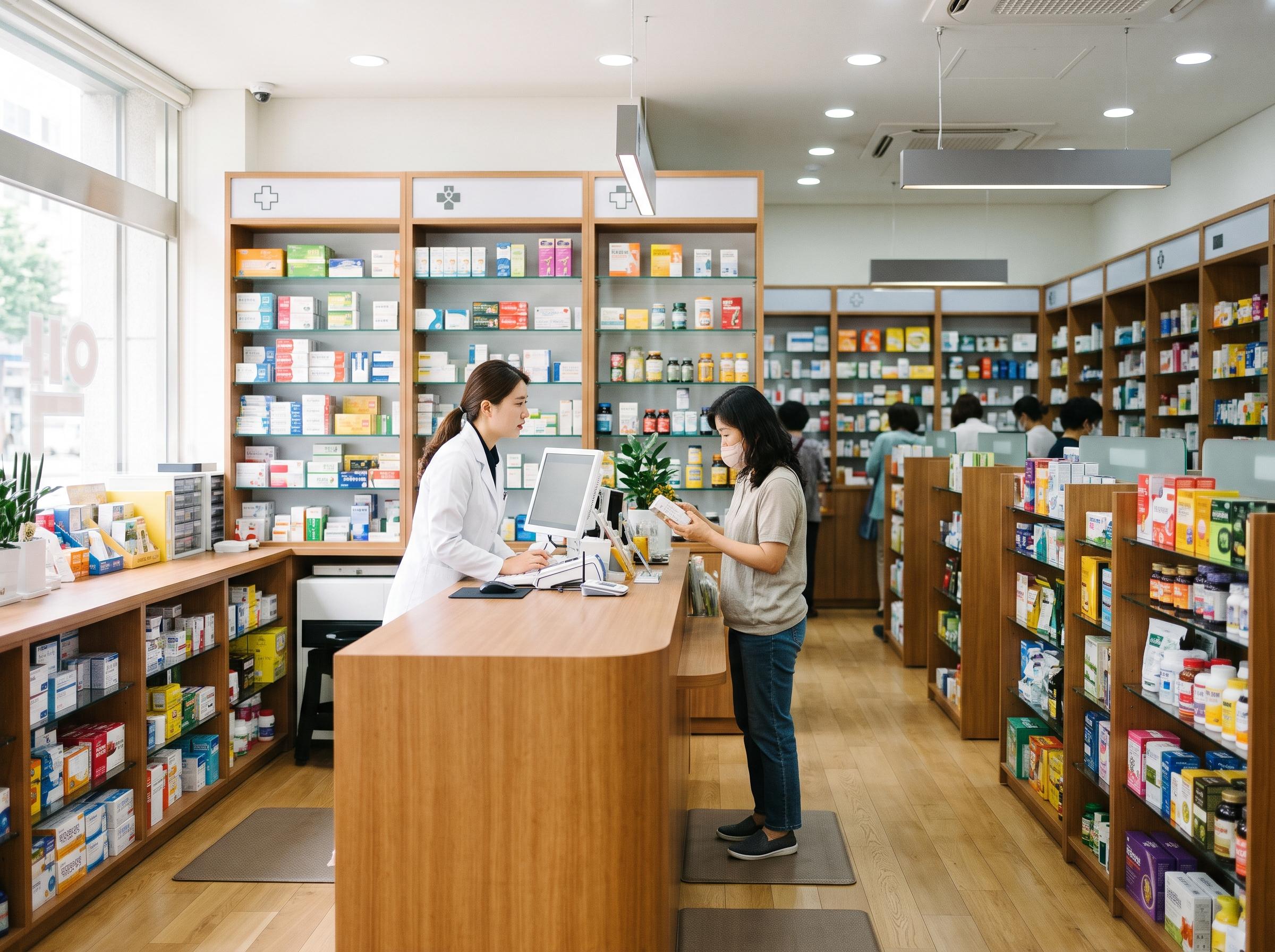
Communicating Symptoms at a Pharmacy Without Speaking Korean
If you do not speak Korean, walking up to a pharmacy counter can feel intimidating, but simple preparations ensure you receive the correct remedy. Rather than asking for a specific Western commercial trade name that local staff may not recognize, focus on communicating your physiological symptoms, their onset, and the generic active ingredient you prefer. Writing down your core complaint in clear text or taking a screenshot of your home prescription's generic chemical name (such as acetaminophen, ibuprofen, cetirizine, or loperamide) allows the pharmacist to immediately match it to domestic therapeutic equivalents.
Visual translation software that translates typed English into Korean script works well for straightforward requests. However, automated text translators can occasionally mangle nuanced medical terms or fail to express critical drug allergies. When describing your symptoms, specify the precise location of pain, whether you have a fever, if you are pregnant, and if you are currently taking any other chronic prescriptions. The pharmacist will select a domestic product, write dosage directions on the paper packaging or a small attached sticky label, and collect payment at the counter.
- Headache / Fever: 머리가 아프고 열이 나요 (Meoriga apeugo yeori nayo)
- Stomachache / Indigestion: 배가 아프고 소화가 안 돼요 (Baega apeugo sohwaga an dwaeyo)
- Diarrhea: 설사를 해요 (Seolsareul haeyo)
- Runny nose / Stuffy nose: 콧물이 나고 코가 막혀요 (Kongmuri nago koga makhyeoyo)
- Sore throat / Cough: 목이 아프고 기침이 나요 (Mogi apeugo gichimi nayo)
- Skin allergy / Itching: 알레르기가 있어서 가려워요 (Allereugiga isseoseo garyeowoyo)
- Motion sickness: 멀미약 주세요 (Meolmiyak juseyo)
- I need a non-drowsy medication: 졸리지 않은 약으로 주세요 (Jollijei aneun yageuro juseyo)
Using Official Free Interpretation Services: The 1330 Helpline
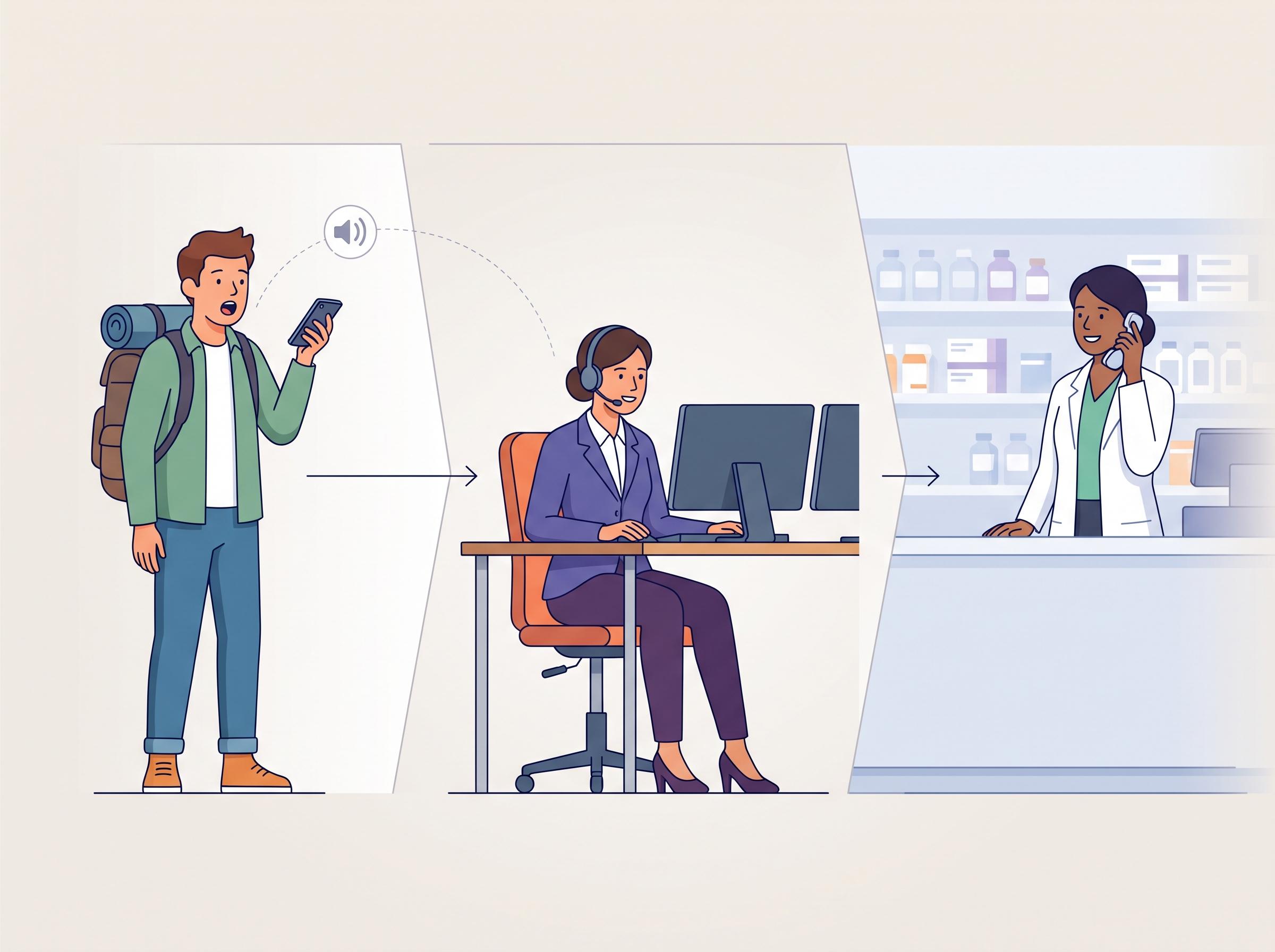
When your condition involves complex symptoms, pre-existing chronic disorders, pediatric dosing, or severe allergies, do not rely on visual charades. The Korea Tourism Organization (KTO) operates the 1330 Korea Travel Helpline, a round-the-clock public assistance service providing real-time interpretation for international visitors12. English, Japanese, and Chinese translation services are staffed 24 hours a day, 365 days a year1. While standard local mobile voice fees apply to your regular carrier plan, the professional interpretation service itself is completely free of charge12.
To utilize this service at a pharmacy counter, dial 1330 from any local Korean SIM or roaming mobile phone without an area code (or +82-2-1330 if dialing via certain foreign setups) and select language extension '2' for English12. Once connected to the operator, state that you are standing inside a community pharmacy and request three-way interpretation. Place your phone on speaker mode or pass the handset to the pharmacist. The professional KTO interpreter will convey your detailed medical history, existing medications, and exact symptoms to the pharmacist, ensuring safe dispensing without misunderstandings.
Buying Safety Household Remedies at 24-Hour Convenience Stores
If symptoms arise in the middle of the night or in rural resort areas lacking night-shift pharmacies, standard corporate convenience stores (such as GS25, CU, 7-Eleven, and Emart24) serve as emergency access points. Under administrative designations for safety household medicines, the non-pharmacy retail inventory consists of 13 approved items across four primary categories: antipyretic analgesics, cold medications, digestive aids, and transdermal pain relief patches. These items are positioned in dedicated small display cabinets behind or adjacent to the checkout cash register.
Purchasers must adhere to regulatory limitations established for retail safety medicines. First, a customer is restricted to purchasing only one single package unit per product during each transaction to prevent accidental stockpiling and acute drug toxicity. Second, convenience clerks are prohibited from selling any safety household medicine to children under 12 years of age. Furthermore, because store clerks possess no pharmacological training and are prohibited by law from opening sealed boxes to sell loose pills, you must inspect the packaging yourself to verify active ingredients and dosage guidelines.
- Fever & Pain (Acetaminophen): Tylenol Tablet 500mg (8 tablets), Children's Tylenol Suspension (100ml), Tylenol Tablet 160mg, Children's Tylenol Tablet 80mg
- Pediatric Pain & Inflammation (Ibuprofen): Children's Brufen Syrup (80ml)
- Cold Relief Tablets & Liquids: Pancold-A Oral Solution (3 bottles), Pynpyrin-T Tablet (3 tablets)
- Digestive Aids: Bearse Tablet (3 tablets), Doctor Bearse Tablet (3 tablets), Festal Gold Tablet (6 tablets), Festal Plus Tablet (6 tablets)
- Topical Analgesic Patches: Sinsin Pas Arex (4 sheets), Jeil Cool Pap (4 sheets)
Finding Late-Night and Holiday Pharmacies via Public Portals
When medical needs exceed the limited convenience store items—for instance, if you require motion sickness pills, burn cream, antiseptic spray, oral rehydration solutions, or specialized antihistamines—you must locate an active pharmacy. Under the Pharmaceutical Affairs Act, municipal governments designate and subsidize Public Night Pharmacies (gonggong simya yakguk). While statutory baseline hours are set from 20:00 to 01:00 the following morning, local government ordinances allow flexible operating windows of three hours or more within that time frame (for instance, Seoul commonly operates designated night pharmacies from 22:00 to 01:00, and participating pharmacies may operate on rotating weekly schedules). Because operating hours and open days differ by pharmacy, travelers must confirm daily operation via official channels before traveling to a site.
To find open facilities near your hotel, travelers can access the national Emergency Medical Information Portal (E-Gen), administered by the National Medical Center under the Ministry of Health and Welfare. The E-Gen portal gathers real-time administrative status reports across South Korea's medical networks, highlighting nearby public night dispensaries, holiday guard pharmacies (Hyuil Jikimi Yakguk), and pediatric urgent clinics. If navigating local web maps presents a language barrier, calling 1330 allows operators to look up your coordinates immediately and direct you to the nearest open dispensary1.
Recognizing Medical Boundaries: When to Visit an Urgent Care Clinic
Over-the-counter self-medication is designed exclusively for mild, transient conditions. International visitors must recognize clear boundaries where OTC treatments are neither legal nor clinically sufficient. In South Korea, oral systemic antibiotics, strong prescription anti-emetics, steroid regimens, cardiac medications, and potent sleep aids cannot be sold over the counter under any circumstances; they require formal evaluation and a physical prescription written by a licensed physician. If you experience severe abdominal pain, persistent high fever exceeding 39°C, breathlessness, deep lacerations, or suspected bone fractures, do not spend time browsing pharmacy aisles.
In life-threatening situations, dial 119 immediately for national emergency medical transport. For urgent but non-life-threatening conditions, South Korea's secondary hospitals and international clinic departments provide prompt outpatient care, often accepting overseas travel health insurance guarantees. Always retain your paper pharmacy itemized receipts (yeongsujeung) and doctor diagnostic certificates, as foreign travel insurers require original documentary proof detailing the diagnosis, treatment date, and prescribed drug breakdown to process overseas expense reimbursements.
Frequently asked questions
Q. Can I buy antibiotics over the counter at a pharmacy in South Korea?
A. No. Under the South Korean Pharmaceutical Affairs Act, oral systemic antibiotics are classified as prescription-only drugs. You must consult a doctor at an outpatient clinic or hospital to obtain an official physical prescription before a pharmacy can dispense them.
Q. What is the 1-package purchase rule at Korean convenience stores?
A. Under South Korean pharmaceutical regulations, convenience stores are legally restricted to selling only one single packaging unit of an approved safety household medicine per customer per transaction, preventing drug misuse.
Q. How do I communicate drug allergies to a Korean pharmacist if I don't speak the language?
A. You can write the generic ingredient name in English or dial the free 1330 Korea Travel Helpline. An English-speaking operator will connect on speakerphone and translate your allergy history directly to the pharmacist.
Q. What hours are Public Night Pharmacies open in Korea?
A. Under the Pharmaceutical Affairs Act and its Enforcement Rule, the standard reference hours are 20:00 to 01:00 the next day, but local municipal ordinances permit flexible operations of 3 hours or more within that window (such as 22:00 to 01:00 in Seoul), and participating pharmacies may operate on rotating schedules. Tourists should always verify current operating status via the E-Gen portal or by calling 1330 before visiting.
Sources
- Free Interpretation Services - 의료관광 (1330 Guide)한국관광공사 / 영등포구청
- 1330 Travel Helpline & Complaint CenterVISITKOREA (한국관광공사)