 Korea Experience Finder
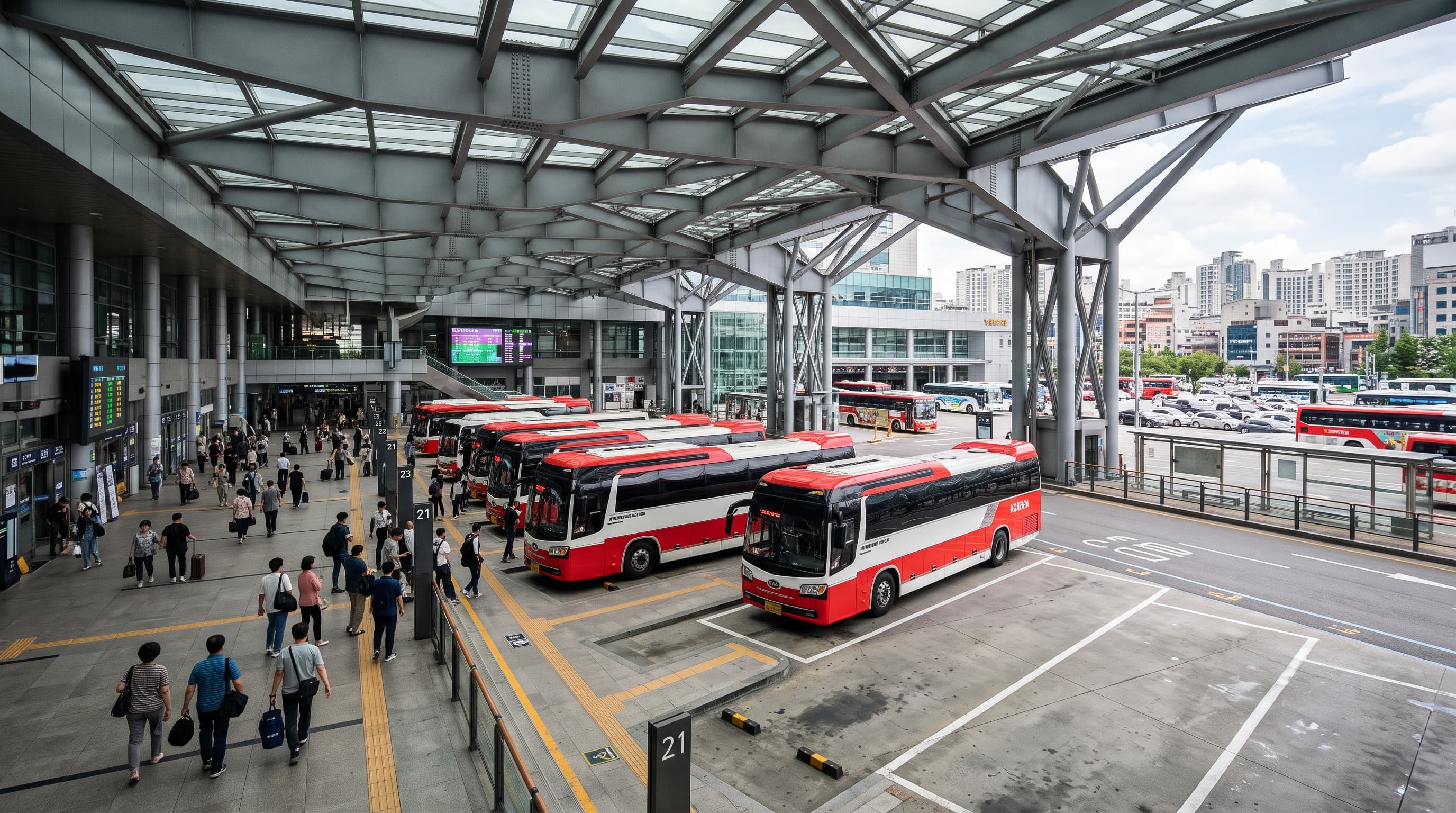
Foreign travelers can book online with international cards via Kobus (official web), KTO partners Klook and Go Hanpass, or apps like Bustago and InterCity Bus.
The Domestic Verification Barrier: Why Standard Korean Apps Block Visitors
Planning regional travel across South Korea often leads international visitors toward long-distance buses, which connect rural national parks, coastal towns, and mid-sized cities unreachable by the KTX or SRT bullet train networks. However, attempting to reserve these seats through domestic mobility apps frequently results in an impassable digital barrier. The country's premier all-in-one transportation application, TmoneyGO, requires users to authenticate through an integrated Tmoney membership account before reserving express or intercity bus seats2. This registration flow provides exactly four identity verification pathways: domestic mobile phone authentication tied to a Korean telecommunications carrier, KakaoBank identity verification, Toss financial authentication, or an Internet Personal Identification Number (i-PIN) linked to a Korean resident registration or alien registration number2. For short-term tourists holding foreign passports, overseas SIM cards, or data-only eSIMs, every one of these domestic authentication channels fails simultaneously2.
The web reservation landscape previously mirrored this friction. On February 24, 2026, Kobus restructured its non-member web checkout by discontinuing direct credit and debit card number inputs, restricting non-member transactions to domestic digital wallets such as TossPay and Naver Pay, both of which require Korean resident verification2. However, following mounting concerns over foreign tourist access, Kobus officially introduced foreign-issued credit card support for non-members in August 2026, enabling overseas visitors to book tickets directly on its multilingual website without domestic phone authentication6. Crucially, non-member international card booking on the Kobus website is strictly limited to Express Bus (Gosok Bus) routes; intercity bus lines are not covered by Kobus and must instead be booked through dedicated intercity systems such as Bustago, InterCity Bus, or official partner platforms like Klook and Go Hanpass6. Addressing this reservation accessibility was critical: mobility data analyzed by the Korea Tourism Organization (KTO) between June 2025 and May 2026 revealed that 56.9 percent of foreign tourist movements remained heavily concentrated in Seoul, Incheon, and Gyeonggi Province, with limited regional dispersal to cities like Gwangju (0.6 percent), Daejeon (0.7 percent), and Daegu (1.2 percent)6.
Verified Online Portals: Official Multilingual Booking Channels
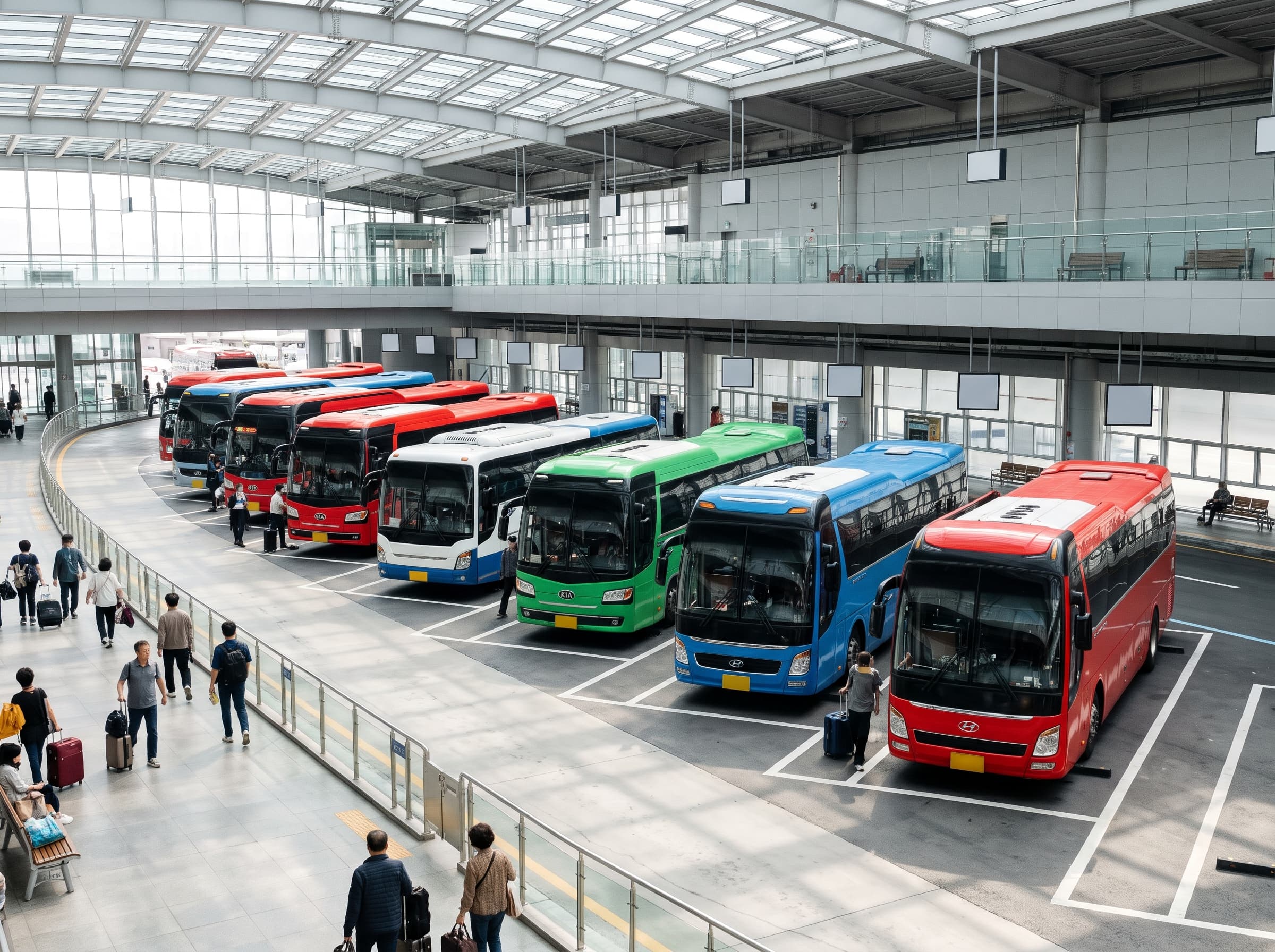
To address digital exclusion and encourage international tourism into provincial regions, the Korea Tourism Organization officially designated and partnered with authorized multilingual distribution platforms, primarily Klook and Go Hanpass4. These platforms operate synchronized real-time booking interfaces connecting directly to the central transit reservation databases, allowing international tourists to check departure times, seat configurations, and boarding gates without navigating Korean-language forms4. More importantly, they eliminate the domestic identity verification wall entirely, allowing travelers to register using an international email address and pay with overseas-issued credit cards including Visa, Mastercard, JCB, and American Express4. However, travelers should exercise practical diligence: third-party platforms may apply booking convenience fees or dynamic currency conversion (DCC) markups if transactions are processed outside your home billing currency, and specific intercity itineraries may issue an exchange voucher requiring redemption for a physical ticket rather than a direct mobile boarding pass.
When using these approved cross-border booking portals, travelers receive a confirmed reservation voucher or a mobile digital ticket directly on their smartphone. On high-demand express bus routes equipped with automated QR scanners at the vehicle door, the generated digital barcode can frequently be scanned directly upon boarding. However, when booking intercity routes operated by regional operators, travelers must note whether their reservation confirmation contains an actual electronic boarding pass or an internet exchange voucher that requires printing a physical paper ticket at the departure terminal before departure5.
Direct Mobile Applications: Navigating Bustago and InterCity Bus
Travelers seeking direct mobile reservations without third-party travel agency booking fees can utilize official intercity bus applications that support overseas credit cards. Following nationwide service expansions initiated by the Ministry of Land, Infrastructure and Transport, online ticketing capabilities expanded across 2,749 intercity bus routes nationwide, covering approximately 74 percent of all intercity routes originating from terminals and transfer waypoints1. Two dedicated applications facilitate these transactions: Bustago, the nationwide reservation interface integrated with the EZL transit card framework, and InterCity Bus, a specialized application framework developed through Tmoney for non-resident users1.
Unlike the primary TmoneyGO application, both Bustago and the InterCity Bus app provide dedicated foreign card checkout options that accept global payment schemes including Visa, Mastercard, JCB, and UnionPay1. When booking via these platforms, users are not forced into the four-way Korean domestic identity verification sequence. Instead, booking confirmation relies on the traveler's email address, birth date, and international mobile phone contact. When utilizing Bustago or InterCity Bus, keep your payment card details accessible during checkout, as transactions trigger 3D Secure authentication through your home banking institution.
| Platform / Channel | Bus Types Covered | Accepted Payment Methods | Korean ID / Phone Required? | Ticketing Output |
|---|---|---|---|---|
| TmoneyGO App | Express and Intercity Buses | Domestic Korean cards and local accounts only | Yes (Mandatory domestic phone/i-PIN authentication) | In-app mobile boarding pass |
| Kobus Website (Non-member) | Express Buses strictly (Intercity buses excluded) | Foreign cards (since Aug 2026); TossPay & Naver Pay for domestic | No for foreign cards (Yes if using domestic TossPay/Naver Pay) | Home-printed ticket or counter issuance |
| Klook / Go Hanpass (KTO Partners) | Express and select Intercity routes | International Visa, Mastercard, Amex, JCB, digital wallets | No (Foreign email and international phone accepted) | Digital QR pass or terminal exchange voucher |
| Bustago / InterCity Bus Apps | Intercity Buses specifically (2,749 routes nationwide) | International Visa, Mastercard, JCB, UnionPay | No (Simplified checkout with basic traveler details) | Mobile barcode or terminal kiosk physical printout |
| Terminal Ticket Windows & Hub Kiosks | All originating Express and Intercity departures | Cash (KRW) and International Visa, Mastercard, JCB, UnionPay | No (In-person counter or automated kiosk purchase) | Physical paper ticket printed instantly |
On-Site Purchases: Kiosks and Manned Counters Across 243 Terminals
For travelers unable to complete an online reservation or those planning open-ended itineraries without rigid schedules, in-person purchasing at departure terminals represents a fully reliable, government-backed alternative. Under administrative reforms enacted by the Ministry of Land, Infrastructure and Transport, all 243 intercity bus terminals across South Korea support point-of-sale payment via international credit cards including Visa, Mastercard, JCB, and UnionPay at physical ticketing counters1. Terminal ticketing staff can process foreign credit cards across standard credit terminals without requiring any domestic verification credentials1.
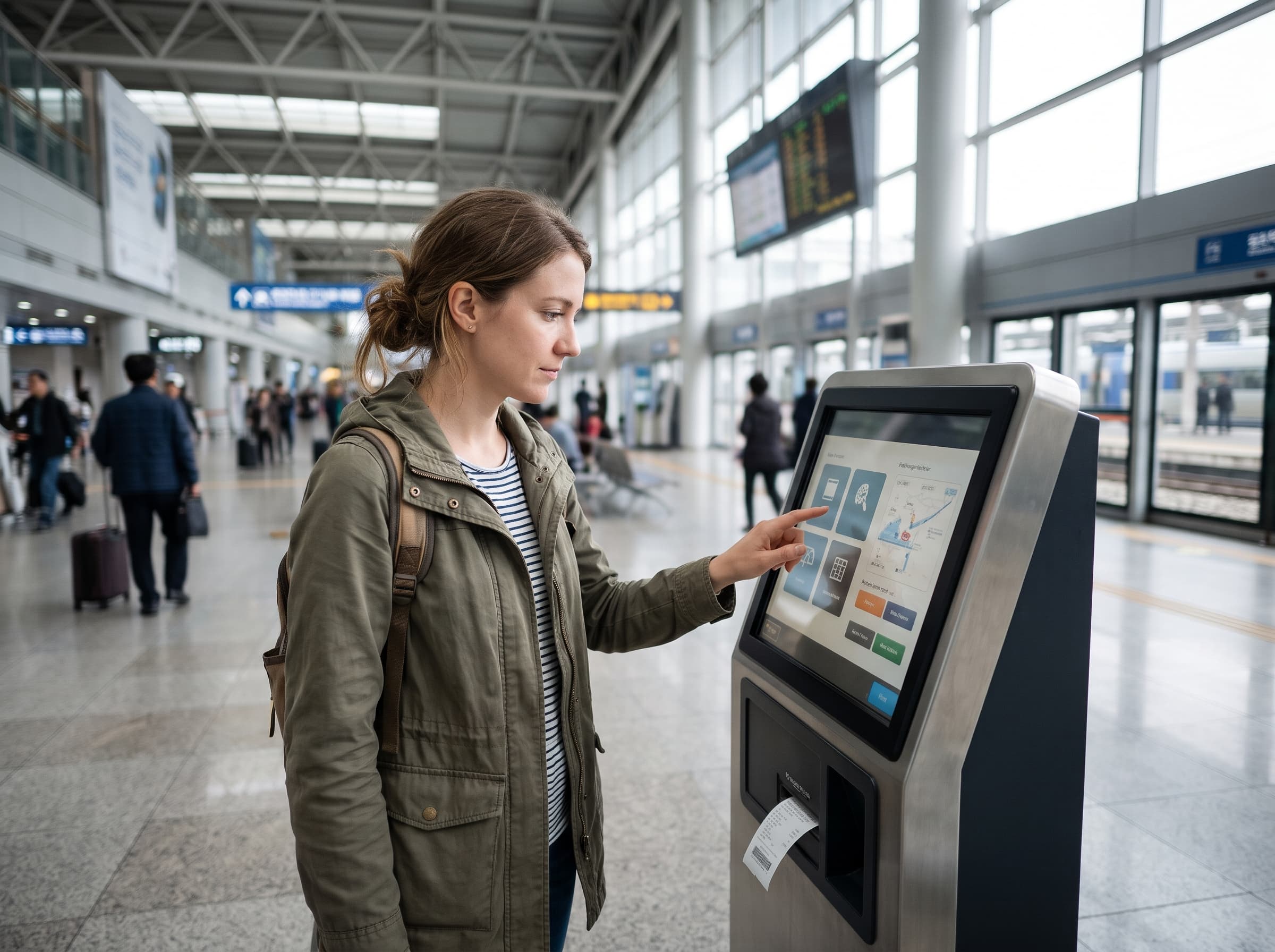
In addition to staffed ticket windows, major hubs such as the Seoul Express Bus Terminal (serving the Gyeongbu and Yeongdong lines) and Central City Terminal (serving the Honam line) feature automated self-service kiosks with multilingual interfaces operating in English, Japanese, and Chinese3. These kiosks allow passengers to select departure times, seat grades (Standard, Excellence, or Premium), and pay using foreign credit cards equipped with EMV chip-and-PIN functionality or standard Korean Won cash. When traveling on regular weekdays outside public holidays, purchasing tickets directly at the terminal 30 to 60 minutes prior to departure is often sufficient for most popular regional corridors.
Ticketing Rules, Physical Collection, and Cancellation Surcharges
Understanding boarding procedures and cancellation fee structures prevents unexpected financial penalties and missed departures. Under standard intercity reservation terms established across national networks such as TxBus, travelers may reserve up to 10 tickets in a single online transaction, with same-day reservations permitted up to one hour prior to the coach's scheduled departure5. If an online reservation requires collecting physical paper tickets at the terminal, passengers must insert the physical credit card utilized during the online booking into an automated internet reservation ticketing kiosk, or present the card to an attendant at a staffed ticket window5.
In instances where a traveler has misplaced the payment card or cannot recall the card number, ticket agents at manned booths can manually issue physical tickets upon verifying the traveler's birthdate and phone number registered during online booking5. Cancellation fees follow strict official schedules. Under the TxBus regulatory framework applicable as of 2026, cancelling an intercity bus ticket at least 2 days before departure incurs a 0 percent fee across all days5. Between 1 day and 3 hours prior to departure, weekday cancellations incur a 5 percent surcharge (7.5 percent on weekends; 10 percent on traditional holidays), rising to 10 percent within 3 hours of departure on weekdays5. Cancelling within 1 hour after scheduled departure incurs a 40 percent penalty, while cancellations between 1 and 4 hours post-departure incur a 60 percent fee under 2026 regulations, after which all refund eligibility lapses completely5. Cancellation policies and surcharges reflect official TxBus terms as of 2026 and are subject to change by transportation operators. Always verify the refund terms displayed during your booking confirmation before finalizing payment.
Practical Itinerary Planning: Distinguishing Express vs. Intercity Terminals
A frequent source of confusion among foreign visitors is the distinction between Express Buses (Gosok Bus) and Intercity Buses (Siwe Bus). Express buses travel primarily on expressways without stopping in intermediate towns, offering fast point-to-point connections between primary metropolitan centers3. Intercity buses utilize a mix of expressways and national secondary highways, making intermediate stops at smaller towns, rural transfer intersections, and county seats, providing comprehensive transit across regional South Korea3. Both vehicle types offer tiered comfort classes, such as Standard (Ilban), Excellence (Udeung) with spacious 2+1 seating layouts, and luxury Premium coaches featuring personal infotainment screens and reclining privacy partitions3.
Crucially, express buses and intercity buses frequently operate from completely separate terminal buildings, even within the same municipality3. In Seoul, for instance, travelers departing for Gangwon Province or Gyeongsang Province via express bus generally depart from the Seoul Express Bus Terminal, whereas those traveling via intercity bus may depart from East Seoul Bus Terminal (Dong Seoul) or Seoul Nambu Terminal3. If a facility is officially designated as an Integrated Terminal (Jonghap Terminal), it serves both coach categories under one roof3. Always check the specific Korean terminal name on your confirmation voucher rather than relying solely on the city name, ensuring you arrive at the correct boarding concourse at least 15 minutes prior to scheduled departure.
Frequently asked questions
Q. Can I use the TmoneyGO smartphone app with an overseas credit card?
A. No. TmoneyGO requires domestic identity verification via a Korean mobile carrier, KakaoBank, Toss, or a local i-PIN, making registration impossible for visitors without Korean domestic credentials.
Q. How can foreign tourists book express bus tickets online in English?
A. International travelers can book express buses directly via the official Kobus English website using foreign cards (supported since August 2026), through official VisitKorea partners Klook and Go Hanpass, or via mobile apps like Bustago and InterCity Bus.
Q. Do physical bus terminal counters in Korea accept foreign credit cards?
A. Yes. All 243 intercity bus terminals nationwide accept foreign credit cards at manned ticket windows. Modern multilingual self-service kiosks at major hub terminals (such as Seoul Express Bus Terminal and Central City) also accept overseas cards, but travelers at smaller regional terminals should purchase tickets directly at the counter.
Q. What is the cancellation penalty if I miss my intercity bus?
A. Under official TxBus regulations as of 2026, cancelling within 1 hour after departure incurs a 40 percent surcharge, and cancelling between 1 and 4 hours after departure incurs a 60 percent fee. After 4 hours, no refund is granted.
Sources
- Intercity bus services to expand no. of routes, take int'l cardsKorea.net (Ministry of Land, Infrastructure and Transport)
- The Real Reason TmoneyGO Blocks Your Signup — The Four-Way Verification Wall, and the Other Ways to Buy a Bus TicketLACHA Guide Team
- Express Bus & Intercity Bus - VISITKOREAKorea Tourism Organization
- Discover Every Corner of Korea by Bus Promotion with Klook and Go HanpassKorea Tourism Organization
- TxBus Ticket Reservation - Usage Guide and Cancellation RegulationsTmoney TxBus Integrated Intercity Bus System
- Express bus booking to open to foreign-issued cardsThe Korea Herald