 Korea Experience Finder
The short-term Climate Card pays off for trips of 3 days or longer with at least 3 daily rides, but T-money is better for 1–2 days and regional travel.
Understanding the Seoul Climate Card Tourist Pass System
Seoul's extensive public transit network delivers exceptional efficiency, yet selecting the most economical transit card requires navigating distinct pass rules. The Seoul Metropolitan Government offers dedicated short-term tourist editions of its Climate Card pass in fixed durations of 1, 2, 3, 5, and 7 consecutive calendar days, granting unlimited rides across municipal subway lines and city buses1. Unlike the 30-day commuter pass engineered for domestic residents—which, as of September 1, 2026, transitioned into the K-Pass linked Climate Transit Pass model requiring Korean resident registration and domestic bank accounts—the short-term tourist card remains a pure, standalone flat-rate pass unlinked to local residency credentials1. This separation enables international visitors to purchase and use the card without administrative hurdles1. However, unlike certain domestic commuter passes, short-term tourist cards exclude Ttareungi municipal bike rentals, requiring travelers to rent public bikes separately via the foreigner-friendly Ttareungi web platform1.
Using a short-term Climate Card begins with purchasing a physical plastic card for a non-refundable baseline issuance fee of 3,000 KRW, followed by loading a chosen pass duration at station automated kiosks1. Crucially, the system does not permit travelers to designate or defer a future activation date: pass validity begins immediately upon recharge and remains active until the end of that same calendar day's transit schedule1. Recharging late at night—such as 11:00 PM to prepare for the next morning—creates an expensive mistake, as the first day expires at midnight after just one hour1. Travelers must therefore recharge their card on the actual morning their transit journey starts1. Furthermore, because the card is an anonymous bearer medium, lost, stolen, or damaged cards cannot be tracked, replaced, or refunded1. Unused recharged passes can only be refunded prior to activation through designated customer centers where administrative fees apply1.
Financial Break-Even Analysis: Climate Card vs. Pay-Per-Ride T-money
Evaluating whether a Climate Card yields tangible savings against standard reloadable cards like T-money requires examining Seoul's base transit fare structure. Following municipal fare adjustments, the standard adult base subway fare using a reloadable smart card stands at 1,550 KRW for journeys up to 10 kilometers3. Travel beyond 10 kilometers incurs an additional distance surcharge of 100 KRW every 5 kilometers, shifting to 100 KRW per 8 kilometers past 50 kilometers. Standard city bus fares cost 1,500 KRW for trunk (blue) and branch (green) routes, while local community (maeul) buses cost 1,200 KRW3. Korea's integrated metropolitan transit transfer system automatically grants transfer discounts when switching between subways and buses within 30 minutes (extended to 60 minutes between 21:00 and 07:00), treating combined legs as a unified continuous journey3.
When calculating financial break-even points against the 1,550 KRW base subway fare, travelers must distinguish between pure pass recharge costs and the real out-of-pocket investment that includes the non-refundable 3,000 KRW physical card fee1. On pass recharges alone, the 1-day pass (5,000 KRW) requires 3.23 rides (4 trips); the 2-day pass (8,000 KRW) requires 5.16 rides (3 trips daily); the 3-day pass (10,000 KRW) requires 6.45 rides (2.15 daily); the 5-day pass (15,000 KRW) requires 9.68 rides (2 daily); and the 7-day pass (20,000 KRW) requires 12.9 rides (1.84 daily)1. However, factoring in the 3,000 KRW sunk card cost shifts the equation considerably: a 1-day pass totals 8,000 KRW, demanding at least 6 base subway rides (8,000 ÷ 1,550 ≈ 5.16) in a single day to outperform pay-per-ride T-money, a threshold rarely reached by leisure sightseers1. A 2-day pass totals 11,000 KRW, requiring 8 total rides (4 rides daily) to break even1. In contrast, longer passes dilute the card fee smoothly: the 3-day pass totals 13,000 KRW (9 total rides, or 3 daily), the 5-day pass totals 18,000 KRW (12 total rides, or 2.4 daily), and the 7-day pass totals 23,000 KRW (15 total rides, or 2.1 daily)1. Consequently, tourists visiting for only 1 or 2 days save more money using standard T-money, whereas active visitors staying 3 to 7 days secure substantial cumulative savings with the Climate Card1.
Feature Comparison: Climate Card, T-money, and WOWPASS Compared
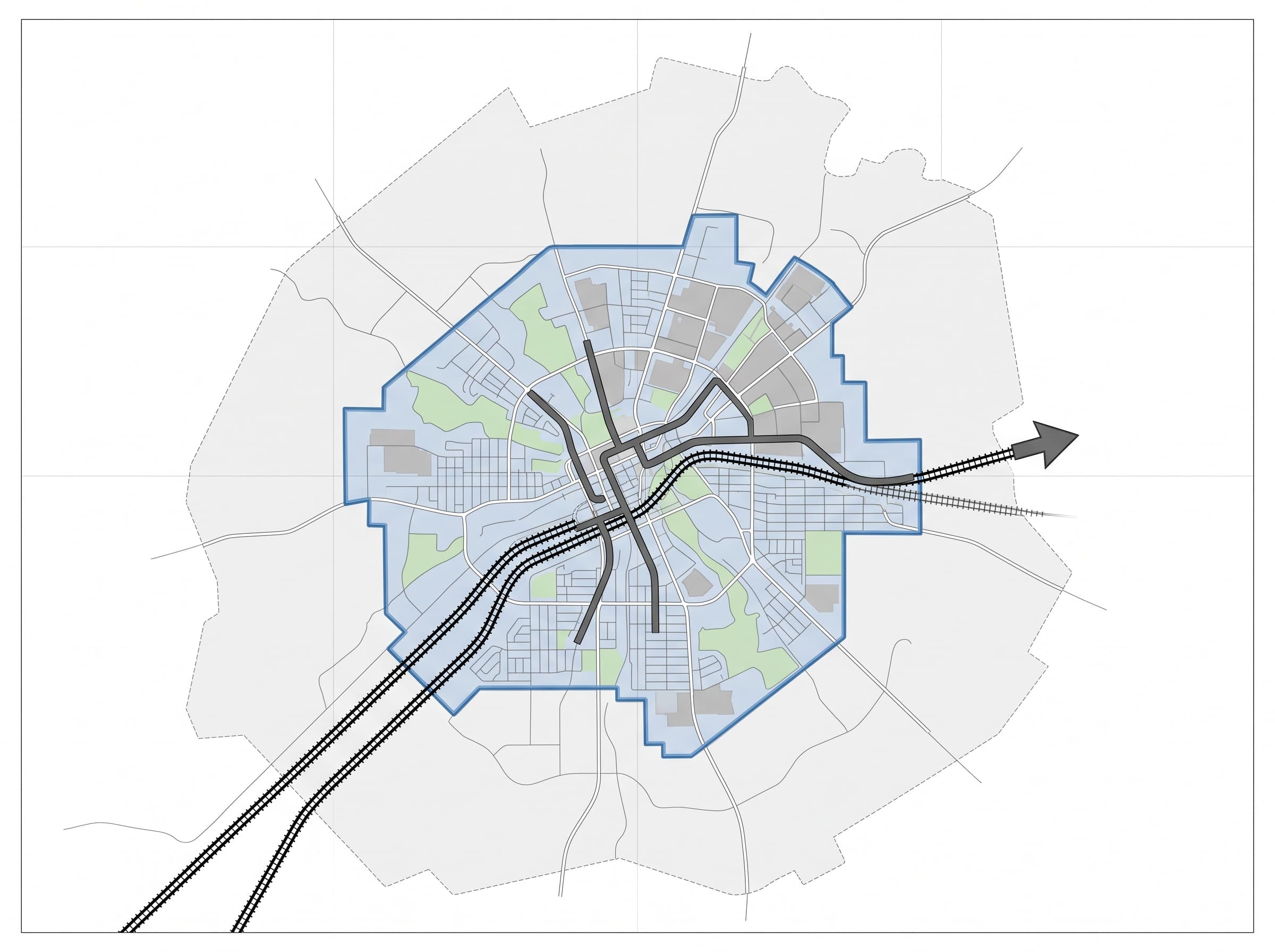
Beyond fare calculations, selecting the ideal card requires understanding core differences in nationwide reach and payment features. T-money serves as Korea's universal pay-as-you-go smart card, fully interoperable across municipal subways, regional buses, commuter trains, highway toll gates, and street taxis nationwide3. WOWPASS pairs an international foreign-exchange prepaid debit card with an independent onboard T-money transit chip3. With WOWPASS, travelers convert foreign currency cash or use international credit cards at dedicated kiosks to fund a retail shopping balance accepted across South Korea, while recharging the transit chip separately for turnstile access3.
In sharp contrast, the Seoul Climate Card is engineered exclusively as a municipal transit pass with no retail debit functions1. Cardholders cannot tap a Climate Card to buy snacks at convenience stores, settle cafe checks, or hail street taxis1. It functions strictly as an electronic gate pass for authorized transit turnstiles, bus card readers, and discounted admissions at select municipal cultural venues including the Seoul Museum of Art and Seoul Grand Park11. While T-money and WOWPASS balances remain valid for years, the Climate Card functions strictly within its active calendar block, after which transit access terminates until the next recharge1.
| Comparison Metric | Seoul Climate Card (Short-Term) | Standard T-money Card | WOWPASS Tourist Card |
|---|---|---|---|
| Fare Structure | Unlimited fixed-rate flat fee for 1, 2, 3, 5, or 7 days | Pay-as-you-go per journey with unified transfer rebates | Pay-as-you-go transit via onboard T-money chip |
| Card Issuance Cost | 3,000 KRW physical card purchase fee (non-refundable) | 2,500 KRW to 5,000 KRW depending on card exterior design | 5,000 KRW initial membership and card setup fee |
| Geographic Transit Scope | Strictly within Seoul municipal boundaries and select lines | Nationwide coverage (Seoul, Busan, Daegu, Jeju, etc.) | Nationwide transit coverage via integrated T-money |
| AREX Airport Railroad Rules | Disembarking at Incheon Airport allowed; boarding prohibited | Fully valid for boarding and alighting on All-Stop train | Fully valid for boarding and alighting on All-Stop train |
| Excluded Transit Lines | Shinbundang Line, GTX, Red intercity/express buses | None (valid across all standard commuter rail and buses) | None (valid across all standard commuter rail and buses) |
| Ttareungi (Seoul Bike) | Excluded from tourist short-term passes (separate rental) | Pay-as-you-go rental via bike app linkage | Pay-as-you-go rental via bike app linkage |
| Retail & Dining Payments | Not supported (transit and cultural venue discounts only) | Convenience stores, select franchised cafes, and taxis | Universal prepaid IC debit accepted at virtually all shops |
| Reload Payment Methods | KRW cash and Visa/Mastercard at kiosks (~3.7% fee) | KRW cash only at ticket kiosks and convenience counters | Foreign currencies/cards for debit; cash only for transit |
Critical Geographic Boundaries and Border Exclusion Pitfalls
The most frequent issue encountered by tourists using the Climate Card involves jurisdictional limits across the Greater Seoul area. Because the program is subsidized by the Seoul Metropolitan Government, coverage is legally restricted to lines and stations within municipal borders1. Higher-speed commuter services operating under specialized private concessions—most notably the Shinbundang Line connecting Gangnam to Pangyo and Bundang, alongside the Great Train eXpress (GTX-A)—are completely excluded from Climate Card coverage1. Similarly, red intercity express buses (Gwangyeok buses) connecting Seoul with outer cities like Suwon, Yongin, and Seongnam will reject Climate Card taps, requiring standard transit cards instead1.
Navigating the Airport Railroad Express (AREX) presents another crucial operating rule. Passengers boarding an AREX All-Stop train at participating Seoul stations, such as Seoul Station, Hongik University, or Gimpo Airport, are permitted to tap out and disembark at Incheon International Airport Terminal 1 or 2 without turnstile lockouts1. However, the reverse journey is strictly prohibited: passengers cannot initiate travel or tap into turnstiles at Incheon International Airport using a Climate Card1. Incoming tourists arriving at Incheon Airport cannot use a Climate Card to reach downtown Seoul, as gates will trigger an immediate rejection error1. Inbound travelers must instead use pay-per-ride T-money, purchase an AREX Express Train ticket, or buy a single-journey token to enter Seoul before activating their Climate Card1.
Step-by-Step Purchase, Recharge, and Validation Procedures
Obtaining and setting up a short-term Climate Card involves a two-step process upon arriving in central Seoul. First, travelers must purchase an uncharged physical plastic card for 3,000 KRW1. These blank cards are sold at Seoul Metro Customer Safety Centers across Lines 1 through 8, the Seoul Tourism Plaza Information Center, the Myeongdong Tourist Information Center, and partner convenience stores near major stations1. Foreign tourists using Android phones cannot utilize the Mobile Climate Card because the underlying Mobile T-money app requires domestic mobile network identity verification tied to a Korean resident registration or Alien Registration Card. While certain iPhone users running recent iOS versions can access limited foreigner options, international payment card compatibility remains uneven. Acquiring a physical plastic card remains the most reliable option for visitors1.
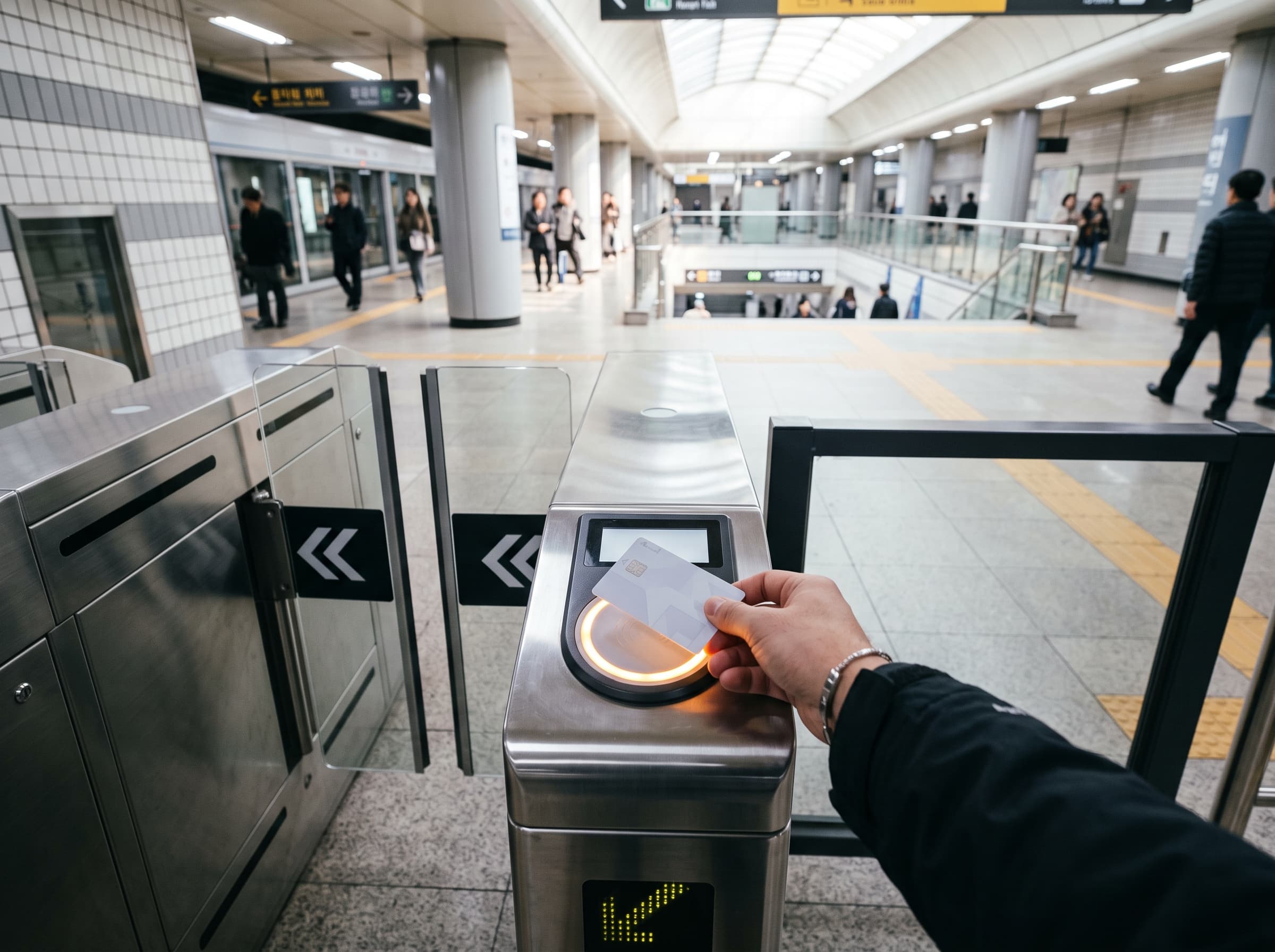
Once travelers hold a physical card, pass recharging takes place at automated ticket vending machines across Seoul Metro Lines 1 to 8, which feature multilingual touchscreen interfaces in English, Japanese, and Chinese2. At the kiosk, users place the card on the scanner tray and select their intended pass duration (1, 2, 3, 5, or 7 days), with validity beginning immediately on that exact date1. Payment methods and fee structures require careful attention: while the initial blank plastic card is bought separately at station counters or convenience stores for a flat 3,000 KRW, pass recharge at the station kiosks can be settled using either Korean cash or international payment cards2. Across 440 upgraded kiosks at 273 stations, machines accept overseas-issued Visa and Mastercard credit and debit cards, but transactions incur an average 3.7% card processing fee2. Travelers seeking to avoid this credit card surcharge should insert Korean Won banknotes (1,000, 5,000, 10,000, or 50,000 KRW), which process at face value without any additional service charge2.
Choosing the Right Card for Your Specific Korean Travel Itinerary
Choosing between the Climate Card, T-money, and WOWPASS depends primarily on your daily transit density and travel radius. If your travel is focused exclusively within Seoul for three consecutive days or longer, and your plans involve hopping across multiple neighborhoods each day—such as touring Gyeongbokgung in the morning, exploring Seongsu cafes in the afternoon, and dining in Hongdae or Gangnam at night—the Climate Card offers compelling financial value1. It eliminates the need to constantly monitor transit balances, avoids repeated cash top-ups at busy stations, and provides bonus admission discounts at municipal cultural venues1.
Conversely, travelers planning broader regional journeys with day trips to Suwon, Incheon, or Chuncheon, or onwards to Busan, Gyeongju, and Jeju, should rely on standard T-money as their primary transit tool13. Standalone T-money cards remain universally compatible across all Korean transit systems and avoid boundary issues3. Meanwhile, travelers wanting seamless cashless shopping, competitive foreign currency exchange, and integrated transit should opt for WOWPASS3. Many seasoned travelers deploy a hybrid setup: holding WOWPASS or credit cards for shopping, dining, and airport train fares, while loading a 3-day or 5-day Climate Card for intensive sightseeing days within Seoul13.
Policy & Fare Verification Notice (as of October 2026)
All transit fares, card issuance prices, kiosk surcharge rates, and operational parameters detailed in this guide reflect official regulatory standards confirmed in October 2026 by the Seoul Metropolitan Government, Seoul Metro, and T-money Corporation12. Transport authorities in the Seoul Capital Area periodically evaluate tariff structures, card terminal features, and pass route boundaries. Travelers should be aware that metropolitan transit policies, line integration agreements, and ticketing surcharge schedules remain subject to administrative revision under future municipal enactments1.
Before traveling, visitors are advised to verify live route operational statuses through Seoul Metro information desks or official municipal transit portals, particularly regarding recent station additions or temporary line maintenance. Those planning complex itineraries crossing outside municipal borders should monitor station turnstile announcements and ensure backup payment methods—such as a loaded standard T-money card or Korean Won cash reserves—remain on hand3.
Frequently asked questions
Q. Can I use the short-term Seoul Climate Card to travel to Busan or Incheon?
A. No. The Seoul Climate Card is restricted strictly to Seoul municipal transit boundaries. It does not function on subways or buses in Busan, Daegu, Daejeon, or regional Incheon transit routes.
Q. Can I ride the AREX Airport Railroad train from Incheon Airport to Seoul using a Climate Card?
A. No. You cannot tap in or board an AREX train at Incheon International Airport using a Climate Card. However, you can board at designated stations within Seoul and disembark at Incheon Airport when departing Korea.
Q. Can foreign credit cards be used to recharge the short-term Climate Card at subway kiosks?
A. Yes. Modernized automated ticket vending machines across 273 stations on Seoul Subway Lines 1 through 8 accept internationally issued Visa and Mastercard credit and debit cards, but an average 3.7% service fee applies to foreign card transactions. Recharging with Korean Won cash carries zero fee.
Q. Does the short-term tourist Climate Card include Ttareungi public bike rentals?
A. No. While the 30-day resident Climate Card offers an optional bicycle bundle, tourist short-term passes (1, 2, 3, 5, and 7 days) do not include Ttareungi bike rentals. Visitors must rent bikes separately via the foreigner-friendly Ttareungi mobile service using a credit card.
Q. What happens if I lose my physical Climate Card during my trip?
A. Lost, stolen, or physically damaged Climate Cards cannot be replaced, suspended, or refunded because they are anonymous bearer cards. Any remaining travel days are forfeited, and travelers must purchase a new card.
Sources
- Climate Card: Unlimited Transit PassSeoul Metropolitan Government
- Climate Cards and Single-Journey Transit Tickets Now Accepting International Credit Cards, No Cash NeededSeoul Metropolitan Government
- Transportation CardsKorea Tourism Organization (VISITKOREA)