 Korea Experience Finder
Book a 6:00-6:30 AM express bus to Sokcho, buy same-day cable car tickets at Sogongwon by 9:00 AM, and depart back to Seoul before 3:30 PM to bypass severe highway gridlock.
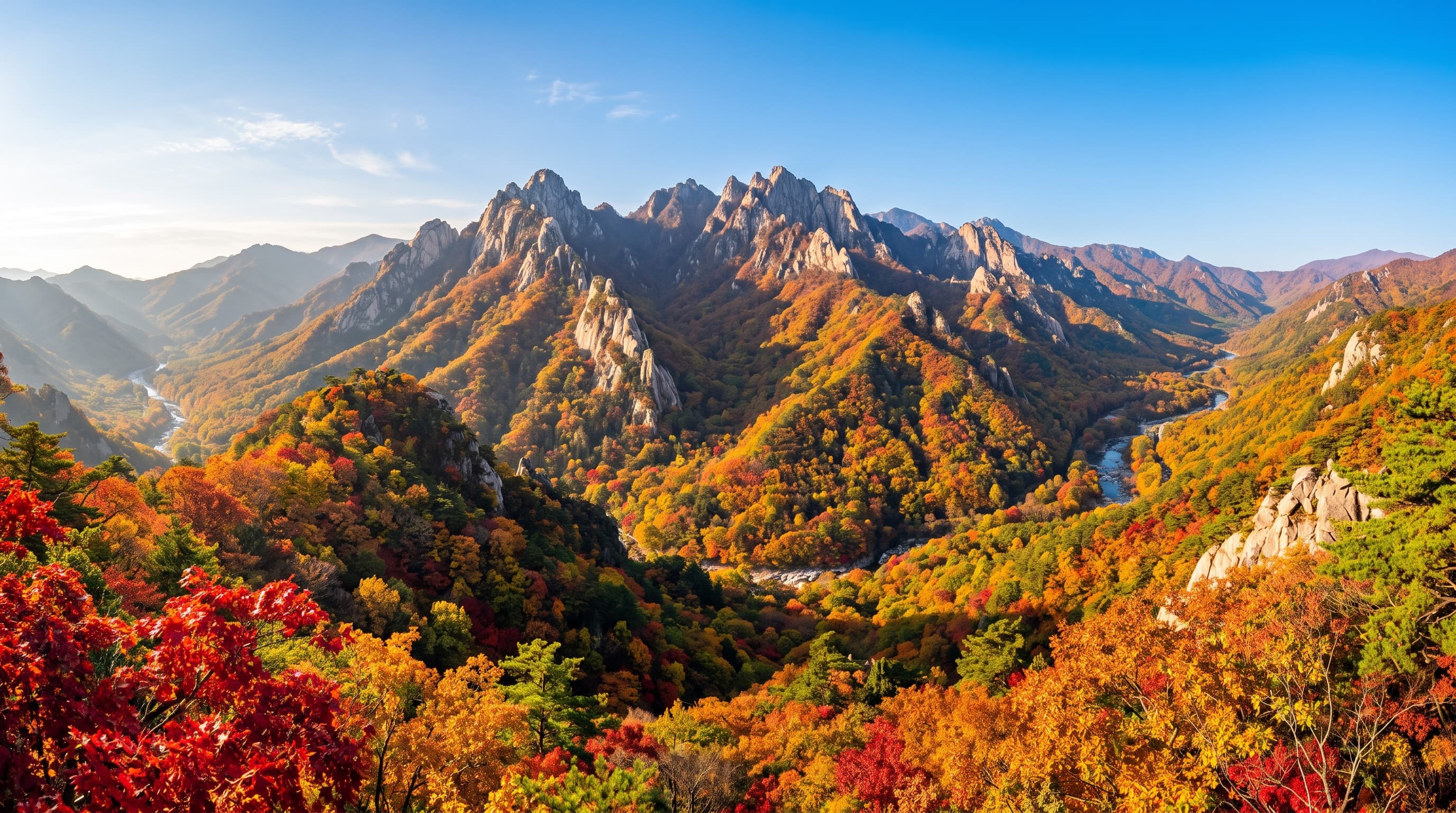
Every late October, Seoraksan National Park transforms into South Korea's premier autumn spectacle, blanketing craggy granite pinnacles in vibrant crimson maples, amber oaks, and radiant ginkgoes. Because Seoraksan is located in northeastern Gangwon Province roughly 190 kilometers from Seoul, many travelers hesitate, assuming an autumn day trip is too demanding or logistically complex. The reality is that an independent day trip is entirely practical if you understand transit dynamics, mountain elevations, and the strict on-site ticketing rules governing park facilities. Without advance preparation, however, visitors risk sitting in multi-hour traffic jams or finding that cable car tickets are sold out hours ahead of time.
This guide provides an evidence-based roadmap tailored for international travelers seeking maximum autumn scenery with minimum friction. We examine the exact transit options connecting central Seoul to Seoraksan's primary eastern hub at Sogongwon, analyze trail options based on personal stamina, and highlight the operational mechanics of the famous Gwongeumseong Cable Car. By adopting strategic early departure windows and contingency plans for weather or road congestion, you can complete a breathtaking alpine excursion and return to Seoul comfortably in time for dinner.
Understanding the Late October Foliage Window and Elevation Dynamics
Autumn color does not descend upon Seoraksan simultaneously; it travels as a rolling front from the high peaks down into the river valleys. According to annual observational benchmarks by the Korea Meteorological Administration and the Korea Forest Service, first foliage begins at the highest summits like Daecheongbong in late September, with the mountain-wide peak generally arriving between October 17 and October 25 1. In official meteorological terms, peak foliage is defined when approximately 80 percent of the mountain canopy displays seasonal coloration 1.
For a standard day trip starting from the lower eastern valley at Sogongwon in Outer Seorak, late October offers the ideal aesthetic balance. While the windswept summit ridges at 1,708 meters may already be shedding their leaves by the fourth week of October, the lower gorges, temple grounds, and mid-elevation granite towers around Gwongeumseong and Biseondae reach their visual climax. Planning your visit for late October guarantees dense foliage along accessible walking routes without requiring specialized mountaineering gear or overnight shelter reservations.
Transportation Breakdown: Express Bus, Organized Tour, or Rental Car?
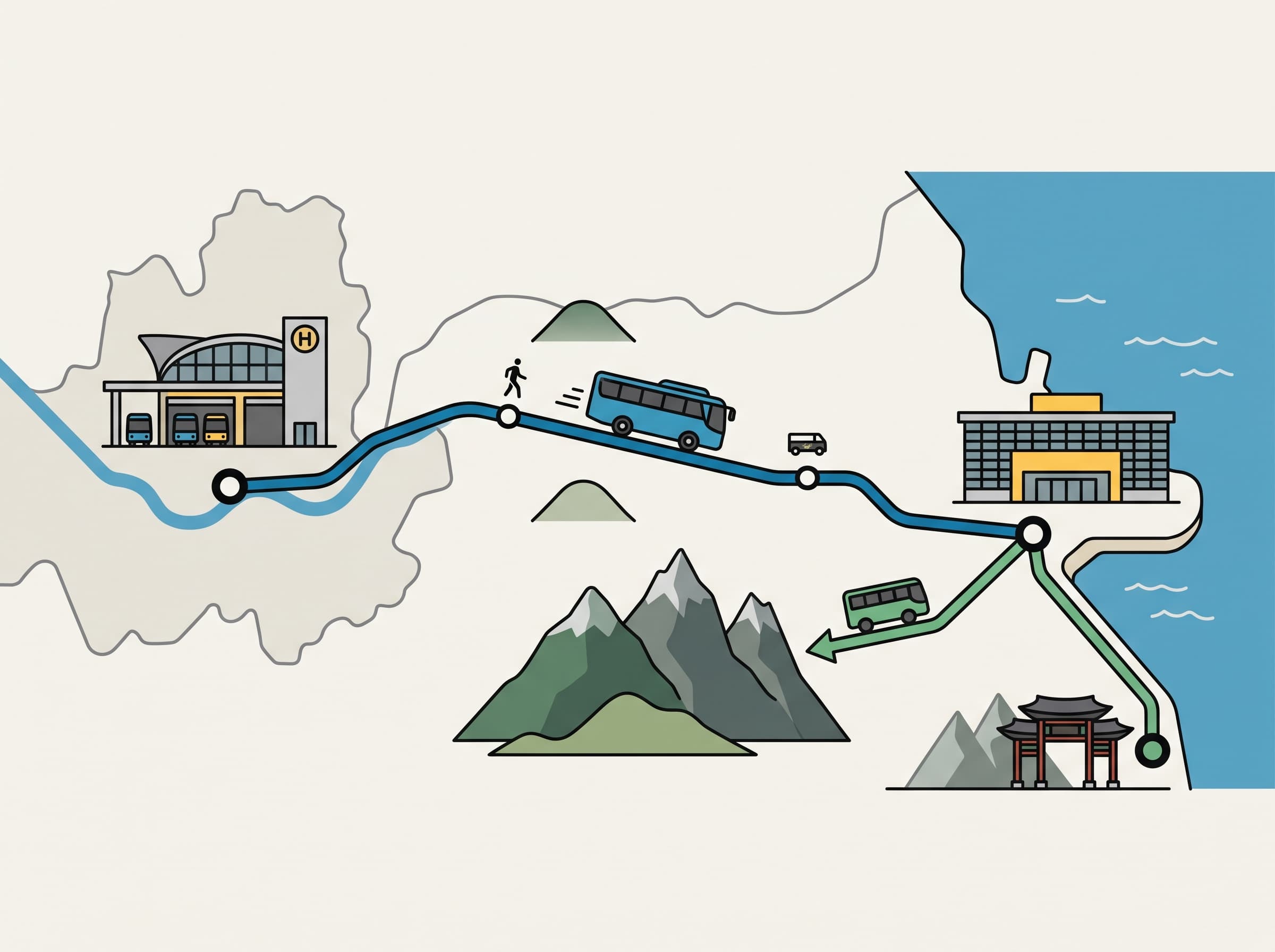
Choosing the right conveyance is the single most critical decision for a successful day trip. In 2026, there is no direct high-speed KTX railway line operating directly into Sokcho; construction on the Chuncheon-to-Sokcho high-speed line remains underway with full opening scheduled for future years 3. Consequently, all direct surface transit relies on regional expressways. The primary public transit option for independent travelers is the express bus departing from either Seoul Express Bus Terminal (Express Bus Terminal Station, Subway Lines 3, 7, and 9) or Dong Seoul Terminal (Gangbyeon Station, Subway Line 2) to Sokcho 3. Standard journeys take approximately 2 hours and 10 minutes to 2 hours and 30 minutes in normal traffic conditions, with one-way fares ranging from 16,400 KRW to 27,600 KRW depending on seating tier 3. However, international travelers should note that the native KOBUS portal and domestic bus apps often fail to process overseas-issued credit cards due to domestic security authentication protocols and Korean phone verification requirements 3. During late-October foliage weekends, early morning departures (6:00 AM to 7:30 AM) regularly sell out days in advance, so relying on same-day walk-up purchases at terminal counters is risky 3. Foreign visitors should either visit terminal ticket counters in Seoul 2 to 3 days beforehand to purchase advance paper tickets in person, or reserve through authorized foreigner-friendly booking platforms recognized by the Korea Tourism Organization (such as Klook or Hanpass) that accept international credit cards seamlessly 3. Checked on October 18, 2026 against official carrier notices and Korea Tourism Organization transit resources; schedules and fares are subject to change.
Upon arriving at Sokcho Express Bus Terminal or Sokcho Intercity Bus Terminal, travelers transfer to local municipal bus 7 or 7-1, which takes 20 to 30 minutes under normal circumstances to reach the Sogongwon park gates 4. However, during peak foliage weekends in late October, the single two-lane access road (Seoraksan-ro) experiences severe vehicular gridlock where municipal buses and taxis get trapped in the exact same congestion as private cars 4. When traffic along Seoraksan-ro grinds to a halt and Sogongwon's terminal parking lot reaches capacity, proactive travelers avoid sitting in stationary traffic for over an hour: alight early at Seorak-dong Parking Lot B or C (B/C지구 주차장) and follow the scenic wooden boardwalk footpath parallel to the stream directly to the Sogongwon gate, easily bypassing queued vehicles on foot. While commercial group day tours departing Hongdae or Myeongdong eliminate transit transfers, they eliminate schedule flexibility. Conversely, renting a private car is strongly discouraged during late October peak weekends due to multi-kilometer tailbacks and intense driver fatigue.
| Transport Method | One-Way Travel Time | Estimated Cost (KRW) | Pros | Cons |
|---|---|---|---|---|
| Express Bus + Local Bus | 2.5 to 3.5 hours | 18,000 - 30,000 | Frequent departures, low cost, comfortable reclining seats | Requires transfer in Sokcho, bus tickets can sell out on weekends |
| Group Shuttle Tour | 3.0 to 4.5 hours | 60,000 - 95,000 | Direct pickup in Hongdae/Myeongdong, zero navigation stress | Fixed schedule, less flexibility for independent hiking pace |
| Rental Car | 2.5 to 5.0+ hours | 70,000+ (rental, fuel, tolls) | Maximum privacy, freedom to visit east coast beaches | Severe parking bottlenecks at Sogongwon, exhausting return drive |
Mastering Sogongwon: The Cable Car Reality and Ticketing Rules
All popular day trip routes converge on Sogongwon (Outer Seorak), which houses the park visitor center, historic Sinheungsa Temple, and the Gwongeumseong Cable Car station. Entrance to Seoraksan National Park itself is completely free of charge, following the nationwide abolition of cultural property fees at national park gates 2. However, the Seoraksan Cable Car is operated by a private entity and requires an independent round-trip ticket costing 16,000 KRW for adults and 12,000 KRW for children as of 2026 2. Checked on October 18, 2026 against official KOBUS and Sorak Cable Car fare notices; fares and schedules are subject to change without prior notice.
The single most critical operational fact for travelers to grasp is that the Seoraksan Cable Car enforces an absolute zero-reservation policy 2. Tickets cannot be purchased in advance via websites, travel apps, or phone reservations; every ticket must be bought in person at the physical counter in Sogongwon on the day of your visit, and each ticket is printed with a designated boarding slot 2. If you arrive at 10:30 AM on a crisp Saturday in late October, the next available boarding slot may not be until 1:30 PM or 2:00 PM. Furthermore, cable car operations are strictly weather-dependent: because the gondolas traverse an exposed alpine gorge, operations can be delayed, suspended mid-day, or canceled entirely without prior warning if sudden high mountain winds or gusts exceed safety thresholds 2. The daily operating schedule is finalized and posted on the official website (www.sorakcablecar.co.kr) the afternoon before 2. As a practical rule, check the official website around 7:00 AM on the morning of your trip while on the bus from Seoul to verify real-time operational status before arriving at the gates.
Tailored Day-Trip Itineraries: Leisure Strollers to Ambitious Trekkers
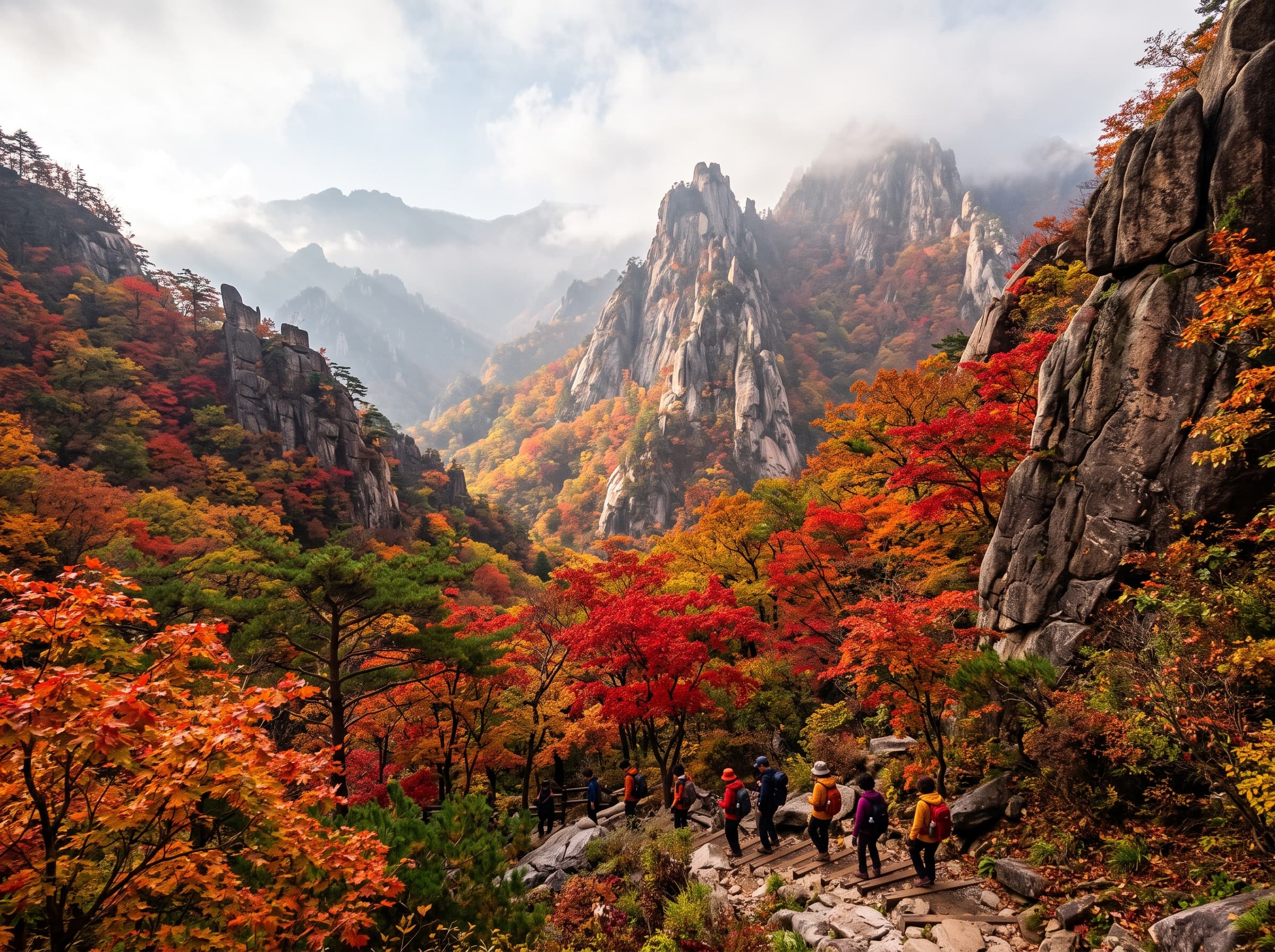
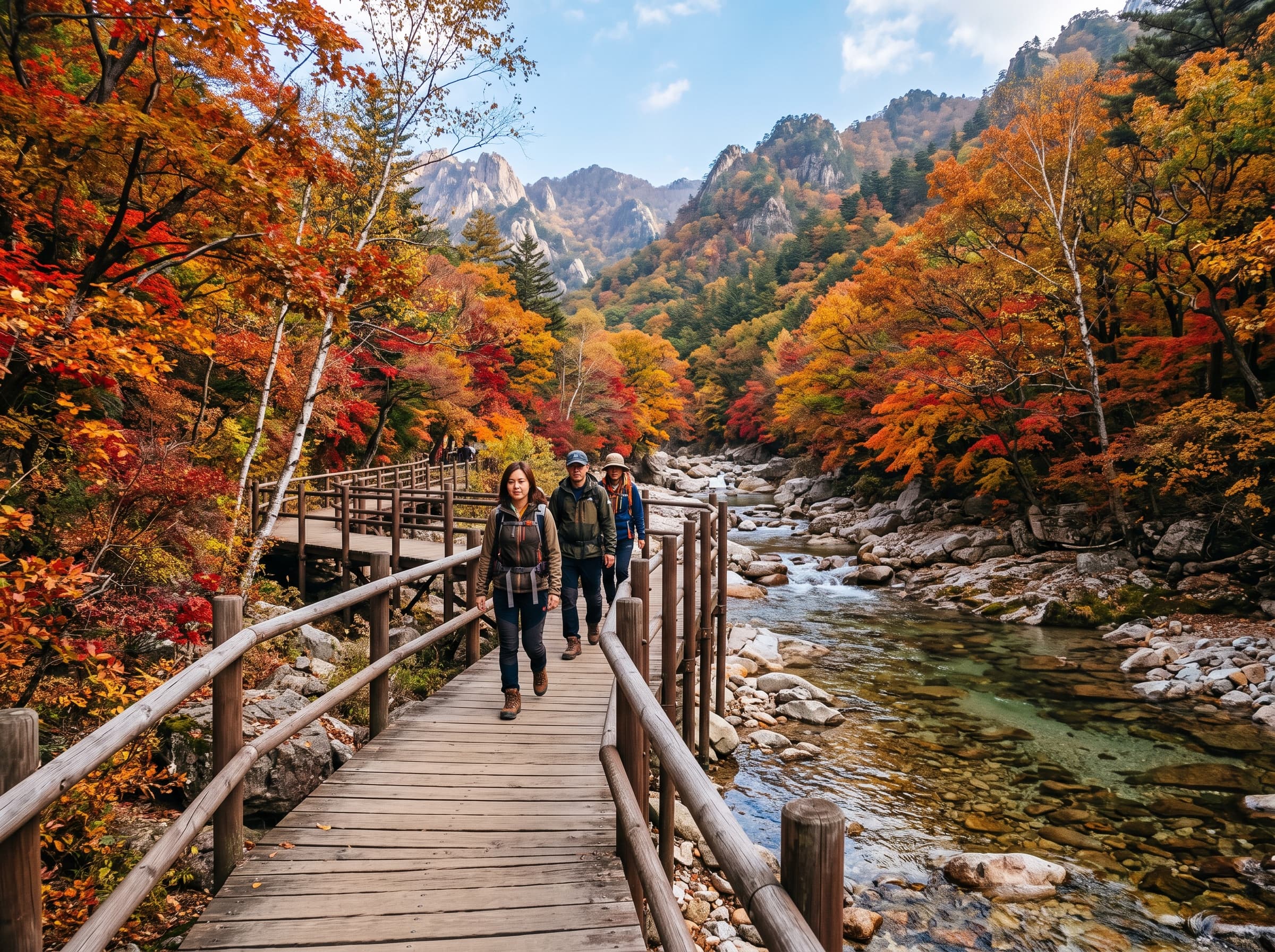
Once you have addressed your cable car schedule, organize your day around realistic hiking routes. Seoraksan's topography is notoriously rugged, but the lower valley offers remarkably accessible paved paths and boardwalks. Leisure travelers holding morning cable car tickets can ride up to Gwongeumseong Fortress and pair it with a gentle cultural walk through Sinheungsa Temple and its colossal Tongil Daebul bronze Buddha. The cable car whisks passengers 700 meters above sea level in roughly five minutes, after which a 15-minute uphill stone staircase leads to the bare granite plateau of Gwongeumseong, delivering expansive 360-degree vistas over Ulsanbawi, Sokcho, and the sparkling East Sea. If high winds force the cable car to halt operations, pivot directly to the Towangseong Falls Observatory trail (토왕성폭포 전망대). Starting from Sogongwon, this 2.8-kilometer route passes Yukdam and Biryong waterfalls before ascending a sustained wooden staircase to an awe-inspiring lookout facing the three-tiered falls framed by amber and crimson foliage.
If you prefer foot travel or encounter a wind-related cable car shutdown, two valley routes offer world-class alternatives. The Biseondae Rocks course (비선대) is an easy, mostly flat 6-kilometer round trip (roughly 2 to 2.5 hours) tracing the Cheonbuldong Valley stream, shaded by incandescent maple canopies and framed by towering vertical rock monoliths. It serves as the ultimate low-barrier autumn walk when high winds ground the cable car. For fit hikers seeking a cardiovascular challenge, the iconic Ulsanbawi Rock trail (roughly 3.8 kilometers one-way, 3.5 to 4.5 hours round trip) ascends past Heundeulbawi (Spherical Rock) before scaling steep steel staircases anchored to a jagged granite ridge. The summit of Ulsanbawi provides arguably the most dramatic geological panorama in South Korea. Pairing Biseondae in the morning with Sinheungsa in the afternoon guarantees an unforgettable foliage experience without depending on mechanical gondolas.
The Return Leg Challenge: Evading the Seoul-Yangyang Bottleneck
A day trip is only hassle-free if the return journey is as seamless as the morning arrival. The Seoul-Yangyang Expressway is the primary eastern artery cutting through Gangwon Province, and on autumn weekend afternoons, it experiences notorious gridlock 5. According to historical traffic flow statistics from the Korea Expressway Corporation (Roadplus), westbound weekend traffic heading toward Seoul surges dramatically beginning at 3:00 PM and remains severely congested until past 9:00 PM 5. A return bus trip that took 2 hours and 15 minutes at dawn can easily stretch to 4.5 or 5 hours if you depart Sokcho between 4:30 PM and 7:00 PM on a Saturday or Sunday 5.
To navigate this severe bottleneck, avoid unreliable transit detours. Some travelers speculate about pivoting south to Gangneung Station to catch the high-speed KTX-Eum train back to Seoul. However, this detour is entirely unfeasible as an on-the-spot backup plan: on autumn foliage weekends, northbound KTX-Eum seats sell out weeks in advance, unreserved standing tickets cannot be guaranteed, and a 60 to 70 kilometer taxi ride from Sokcho to Gangneung Station costs 60,000 KRW to 80,000 KRW without resolving the train sell-out issue. Instead, execute one of two practical plans. The primary tactic is the Early Exit Strategy: conclude mountain activities by 2:00 PM, take a taxi or bus back into Sokcho, and board a pre-booked express bus departing before 3:30 PM, slipping ahead of the heaviest highway wave 5. If your schedule slips past 4:00 PM, pivot to the Late-Night or Overnight Plan B: rather than wasting five agonizing hours trapped in expressway traffic, head into central Sokcho to savor fresh seafood at the Sokcho Tourist & Fishery Market (Jungang Market) or Daepo Port. Then, catch a late-night intercity bus (simya) from Sokcho Intercity Bus Terminal to Dong Seoul Terminal departing after 9:30 PM or 10:00 PM once expressway jams subside, or book an overnight seaside stay in Sokcho and ride the earliest 6:00 AM express bus back into Seoul on Monday morning 5.
Essential Daypack Checklist and Park Etiquette
Autumn in the northern mountains of Gangwon Province features extreme diurnal temperature variations. While early morning temperatures near the Sogongwon gate can drop below 5 degrees Celsius in late October, sunny afternoons and uphill exertion can elevate body heat rapidly. The most common novice mistake is dressing in a single heavy winter coat. Instead, practice strict three-layer thermal management: a moisture-wicking synthetic base layer, an insulating fleece or lightweight packable down jacket, and a windproof outer shell to cut the brisk mountain gusts atop Gwongeumseong plateau or Ulsanbawi.
In addition to proper footwear with rubberized traction for granite slabs, pack essential daily supplies before boarding your morning bus in Seoul. Seoraksan National Park strictly adheres to 'Leave No Trace' principles; waste bins along trails are non-existent, meaning all personal garbage must be carried out in your backpack. Note also that consuming alcohol anywhere within national park boundaries is illegal under Korean park safety laws and subject to on-the-spot fines. Carry at least one liter of water, energy snacks, and a portable mobile battery pack, as chilly mountain air rapidly depletes smartphone batteries used for photo taking and transit navigation.
Frequently asked questions
Q. Can I reserve Seoraksan Cable Car tickets online in advance?
A. No. The Seoraksan Cable Car strictly sells tickets on-site at the counter on the day of your visit on a first-come, first-served basis. No online reservation system exists.
Q. What is the best departure time from Seoul for a late October day trip?
A. Depart Seoul between 6:00 AM and 6:45 AM from Seoul Express Bus Terminal or Dong Seoul Terminal to arrive at Seoraksan by 9:00 AM before crowds peak.
Q. How should international travelers purchase express bus tickets to Sokcho?
A. Because foreign credit cards often fail on the domestic KOBUS site due to local verification rules, buy tickets in advance at terminal kiosks in Seoul 2-3 days ahead, or use affiliated platforms like Klook or Hanpass.
Q. Is there an entrance fee for Seoraksan National Park?
A. Admission to Seoraksan National Park is free. However, independent commercial facilities inside the park, such as the Gwongeumseong Cable Car (16,000 KRW round-trip for adults; verified on October 18, 2026, subject to change without prior notice), charge separate fees.
Q. Which trail is best for someone who does not want a difficult hike?
A. The Biseondae Rocks trail offers an easy, mostly flat 2-hour walk alongside the Cheonbuldong Valley stream with stunning autumn foliage, requiring no specialized mountaineering gear.
Sources
- Seasonal Observation: Famous Mountains Autumn Foliage Status (유명산 단풍현황)Korea Meteorological Administration (KMA)
- Seoraksan Cable Car Operation and Facility GuidanceSorak Cable Car Official Information
- Express Bus & Intercity Bus Travel GuideKorea Tourism Organization (VISITKOREA)
- Sokcho Bus Information System (BIS) Public Transit GuideSokcho City Government
- Real-Time Expressway Traffic Information and Forecast (로드플러스)Korea Expressway Corporation Roadplus