 Korea Experience Finder
Book a Seoul hanok through Booking.com or Airbnb, curated sites like Stayfolio, or SafeStay-certified stays. Before paying, check the property's own cancellation terms, not just the KFTC standard: the full-refund deadline (often 10 days out), peak-season penalties and noise rules.
Demarcating the Stay: Entire House Rentals Versus Shared Guesthouses
Before inputting payment details on any accommodation platform, international travelers must define what operational tier of hanok experience they are procuring. Traditional timber-frame properties in Seoul fall broadly into two operational formats: exclusive detached rentals (dokchae, 독채) and boutique guesthouses (hanok guesthouse, 한옥게스트하우스) where individual private rooms border a communal central courtyard (madang). Exclusive rentals offer complete architectural privacy, private gardens, and curated interior furnishings, but command premium nightly rates. Based on an observational sample verified across primary reservation channels including Stayfolio, Airbnb, and Booking.com as of October 2026, detached dokchae properties generally range between 300,000 KRW and 900,000 KRW per night, with ultra-luxury master-carpenter restorations occasionally exceeding 1,200,000 KRW. Shared boutique guesthouses typically list private rooms between 80,000 KRW and 200,000 KRW per night. Travelers must note that these indicative rate bands represent baseline ranges; exact quotes fluctuate significantly depending on peak holiday periods, autumn foliage rushes, weekend surcharges, and individual operator discount promotions.
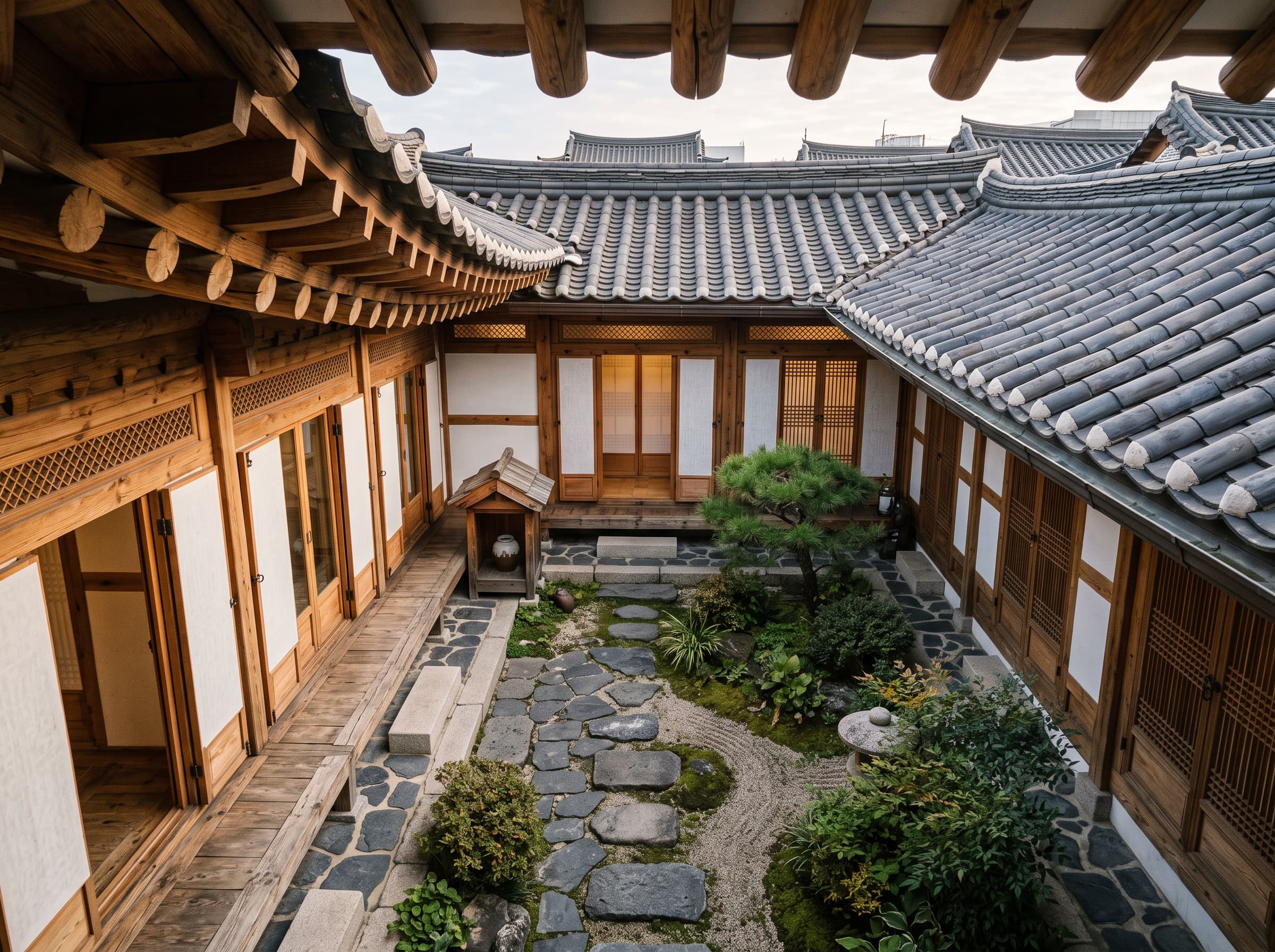
Location fundamentally dictates everyday logistics and influences contractual cancellation exposure. Properties within Bukchon Hanok Village and Gahoe-dong sit atop hilly cobblestone slopes flanked by major Joseon palaces, requiring guests to climb steep stairs with luggage. Seochon, situated west of Gyeongbokgung, presents flat, residential alleyways packed with artisanal cafes, contemporary art galleries, and modern dining spots. Further northwest, Eunpyeong Hanok Village provides modern multi-story residential structures constructed under 21st-century building codes beneath Bukhansan mountain. Because detached dokchae properties operate as a single inventory unit, reserving an inappropriate neighborhood or property layout often triggers last-minute cancellation impulses. However, when an entire property is blocked out for one party, hosts rarely grant late-stage leniency, enforcing rigid contractual forfeiture terms to protect their sole operational income for that date.
Booking Channels: Curated Marketplaces Versus Global Aggregators
The primary booking channel determines how payment security, customer support, and dispute procedures unfold should your travel itinerary alter unexpectedly. Global Online Travel Agencies (OTAs) such as Booking.com and Agoda offer familiar multilingual checkout flows, clear foreign exchange payment processing, and standardized search filters. However, global listings frequently mislabel standard budget motels or reinforced concrete buildings finished with synthetic wood-grain wallpaper as genuine heritage hanoks. When authentic timber-framed houses list on these mass aggregators, they often designate promotional or discounted tariffs as non-refundable immediately upon confirmation, curtailing any modification rights.
For design-conscious travelers seeking high-end historic restorations, specialized Korean booking engines like Stayfolio curate vetted heritage houses with detailed architectural photography, structural drawings, and verified hardware amenities. While Stayfolio supports major international credit cards and offers an English interface, transactions route through Korean merchant gateways, and cancellation terms reflect the individual host's bespoke special agreement (teukyak, 특약) rather than standardized platform-wide refund schedules. Peer-to-peer marketplaces such as Airbnb feature numerous independent neighborhood houses, yet guests must diligently review the host's selected cancellation framework—Flexible, Moderate, or Strict—as well as platform administrative fees, which may remain non-refundable even when the host refunds the nightly lodging rate.
| Platform Category | Typical Inventory Profile | Prevalent Cancellation Tier | Key Risk or Watchpoint |
|---|---|---|---|
| Curated Portals (e.g., Stayfolio) | Exclusive entire-house (dokchae) rentals, high-end renovations | Host-specific tiered schedule (full refund up to 10–20 days out; zero within 7 days) | High booking sums mean late cancellations forfeit substantial capital; entire upfront payment required |
| Global OTAs (Booking.com / Agoda) | Mixed private rooms, commercial hanok hotels, standard guesthouses | Rate-code dependent: fully non-refundable discount rates vs. date-limited free cancellation | Discrepancies between search engine tags and genuine heritage construction; overseas customer support mediation |
| Peer-to-Peer (Airbnb) | Independent courtyard houses, studio hanoks, hosted homestays | Host-selected standard policy (Flexible, Moderate, or Strict) | Platform service fees can remain non-refundable; municipal registration codes require manual review |
| Direct Portals (Naver Booking) | Boutique owner-operated traditional guesthouses in Bukchon and Seochon | Bespoke contracts based on remaining days; heavy peak-season penalties | Demands domestic Korean mobile phone verification and local bank transfer infrastructure |
Legal Licensing Verification: Confirming SafeStay Accreditation
Under South Korea's Tourism Promotion Act, legitimate hanok operators must register with local district offices under designated categories, specifically Hanok Experience Business (한옥체험업) or Foreign Tourist Urban Guesthouse (외국인관광도시민박업) 1. Illegal, uninspected lodging businesses frequently operate inside residential conservation zones, evading mandatory municipal fire inspections, electrical gas safety audits, and public liability insurance requirements. When municipal task forces crack down on unregistered properties, reservations can be canceled unilaterally on short notice without the foreign guest receiving statutory consumer compensation or emergency relocation assistance 1.
Travelers can independently confirm whether an address is legally registered by searching the SafeStay platform (safestay.visitkorea.or.kr), a public certification initiative administered by the Korea Tourism Organization (KTO) 1. Legally compliant properties display their municipal certification certificate in their reception area or publish their official registration number within digital listing descriptions. Furthermore, under the revised Enforcement Decree of the Tourism Promotion Act that took effect upon its official promulgation on August 4, 2026, registered accommodation operators are legally prohibited from collecting fees higher than the rates published on their online booking listings or physical on-site rate cards 1. This regulation does not ban seasonal flexible pricing or peak-period rate adjustments, but strictly prohibits price overcharging beyond published figures, subjecting violators to administrative penalties including a five-day business suspension upon a first offense 1.
The Legal Cancellation Hierarchy: KFTC Guidelines Versus Host Special Contracts
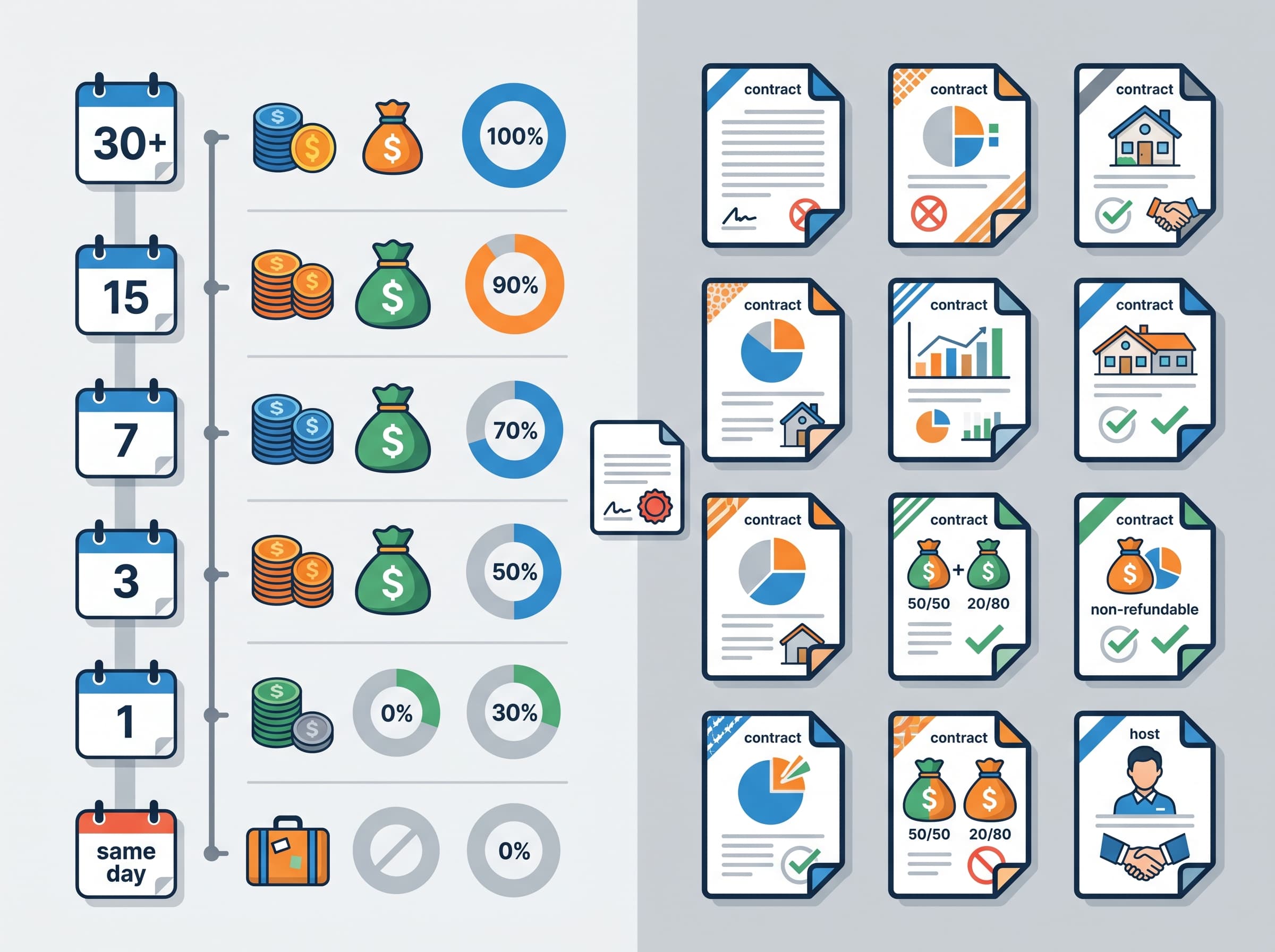
A widespread misconception among overseas travelers is that South Korea's statutory consumer protection frameworks guarantee unconditional booking refunds across all accommodation types. The Korea Fair Trade Commission (KFTC) publishes the Consumer Dispute Resolution Standards (소비자분쟁해결기준, KFTC Notification No. 2025-14), which outlines an equitable refund schedule for accommodations: cancellations submitted 10 or more days before check-in or within 24 hours of booking merit a full deposit refund, even during peak operational seasons 2.
However, under Article 16 of the Framework Act on Consumers and the Act on the Regulation of Terms and Conditions, KFTC standards serve primarily as administrative criteria for dispute mediation, functioning solely when contracting parties have not established an explicit mutual agreement [claim-2, claim-3]. If an operator posts an unambiguous, customized cancellation schedule (teukyak, 특약) on the checkout page and the traveler ticks the agreement box, that bespoke private contract legally supersedes the KFTC's default refund table under Korean contract law 3. Because most boutique hanoks operate single-room or single-building inventories where an unfilled date triggers total operational revenue loss, hosts routinely enforce strict private terms barring any refund within 7 to 14 days of arrival 3.
Key Cancellation Clauses and Structural Waivers to Audit Prior to Card Authorization
Before finalizing any hanok reservation, travelers should methodically audit structural clauses and contractual stipulations that differ sharply between detached dokchae and shared guesthouses. Detached dokchae properties frequently feature specialized structural amenities such as private outdoor cypress soaking tubs (hinoki-tang), detached tea rooms, or open-air garden pavilions. Host cancellation policies for these high-value residences often incorporate strict non-refundable cleaning fees or structural maintenance deposits, and explicit clauses stating that inclement weather, seasonal garden freeze, or minor fixture maintenance does not entitle the guest to full cancellation or rate discounts 3. Conversely, shared guesthouse rules focus heavily on communal friction, enforcing strict forfeitures if travelers bring unauthorized additional visitors or breach courtyard quiet hours.
Travelers must also verify whether the booking engine calculates date thresholds according to Korean Standard Time (KST, UTC+9). An overseas traveler submitting a cancellation at 11:00 PM in London or New York has already crossed into the subsequent calendar day in Seoul, potentially dropping from an 80% refund bracket into complete contractual forfeiture. Additionally, examine peak-season (성수기) brackets. While KFTC guidelines define conventional seasonal windows—July 15 to August 24 for summer, and December 20 to February 20 for winter—individual hanok operators frequently expand peak windows to encompass local autumn foliage spikes, spring cherry blossom weekends, and domestic public holidays like Chuseok or Seollal 2. Lastly, inspect force majeure language; international flight cancellations due to regional blizzards or summer typhoons do not automatically compel a private hanok host to issue a refund unless official governmental travel prohibitions are declared in Seoul 3.
Handling Property Mismatches, Noise Curfews, and Formal Dispute Resolution
A considerable number of refund demands arise from mismatched physical expectations rather than itinerary shifts. Traditional wooden architecture relies on underfloor radiant heating (ondol) and traditional floor sleeping futons (yo and ibul); travelers expecting Western elevated spring mattresses can face severe disappointment if bedding configurations are not verified in advance. Furthermore, timber structures and paper-paneled sliding screens (changhoji) carry sound freely across shared courtyards. Residential heritage districts like Bukchon impose mandatory neighborhood quiet hours, commonly from 9:00 PM or 10:00 PM through 7:00 AM. Legitimate hosts are contractually and legally empowered to evict guests who cause repeated residential noise disturbances without issuing any refund.
When genuine contractual breaches occur—such as bait-and-switch room allocation, unannounced lack of hot water, or unilateral cancellation by an unregistered host—travelers should follow a systematic dispute resolution protocol. Step one is immediate documentary collection: capture high-resolution photos and videos of defects, preserve the original digital reservation confirmation, and maintain timestamped messaging records within the platform. Step two is calling the 1330 Korea Travel Helpline, a toll-free service operated 24/7 by the Korea Tourism Organization offering multi-language assistance, three-way conference mediation with the host, and official complaint filing with local municipal tourism desks 4. Step three, if the host or platform refuses mediation, involves submitting a formal damage relief petition (피해구제 신청) to the Korea Consumer Agency (KCA, 한국소비자원) 4. The KCA reviews whether the operator's private terms contain unfair clauses under the Act on the Regulation of Terms and Conditions, facilitating formal conciliation or issuing compensation recommendations [claim-3, claim-4].
Frequently asked questions
Q. Can I cancel a Seoul hanok stay and get a full refund within 24 hours of booking?
A. Only if the platform or individual host terms explicitly provide a 24-hour grace window, or if the property operates without customized cancellation terms under the Korea Fair Trade Commission standard guidelines. If you accepted an explicitly marked non-refundable special rate contract at checkout, that restriction legally overrides default dispute rules under Korean law.
Q. How do I check if my Seoul hanok is legally registered?
A. You can verify legal status via the SafeStay portal (safestay.visitkorea.or.kr) managed by the Korea Tourism Organization. Legitimate operations are registered under the Tourism Promotion Act as Hanok Experience Businesses or Foreign Tourist Urban Guesthouses and prominently display a municipal registration certificate.
Q. Why are cancellation fees on Stayfolio and boutique hanoks so strict?
A. Boutique hanoks typically feature only one to four rooms or operate as entire-property rentals (dokchae). Unlike large commercial hotels with hundreds of rooms, a single cancellation represents an immediate loss of total operational revenue, prompting hosts to mandate strict 10-to-20-day tiered refund cutoffs.
Q. What happens if a typhoon or heavy snowfall delays my flight into Seoul?
A. Host contracts dictate whether weather disruptions qualify for a waiver. Generally, severe weather cancellations only guarantee full refunds when outbound flights are officially grounded and an official transportation cancellation certificate is submitted, or if Seoul authorities declare natural disaster emergencies. Purchasing independent comprehensive travel insurance is strongly advised.
Sources
- Official Accommodation Registration and SafeStay DatabaseKorea Tourism Organization (KTO)
- Consumer Dispute Resolution Standards (Notification No. 2025-14)Korea Fair Trade Commission (KFTC)
- Act on the Regulation of Terms and Conditions and Consumer Lodging PrecedenceKorea Ministry of Government Legislation
- 1330 Korea Travel Helpline and Tourist Complaint CenterKorea Tourism Organization