 Korea Experience Finder
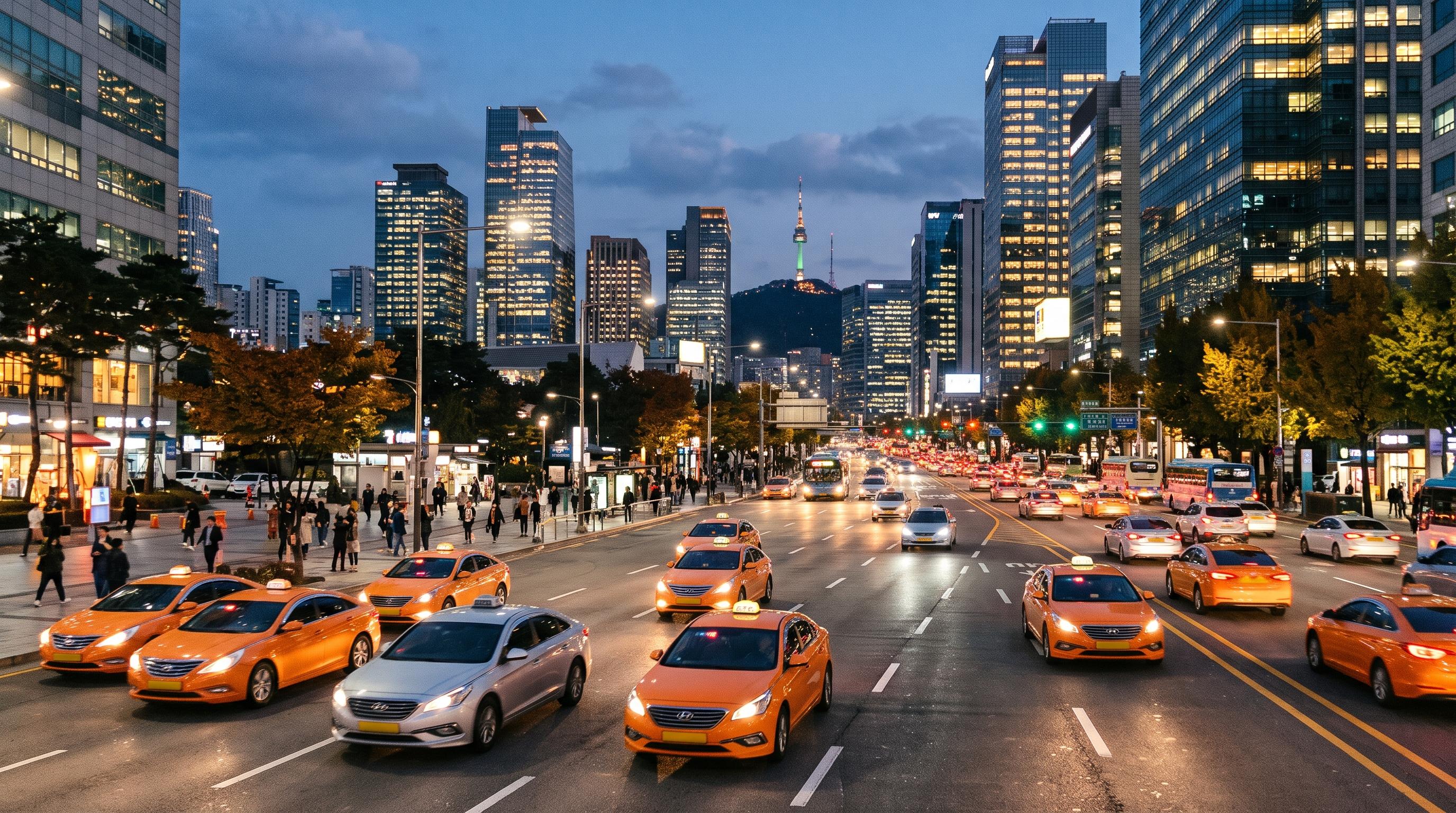
Foreign tourists can hail licensed taxis using Uber or Kakao's dedicated k.ride app. Both work with overseas phone numbers and foreign credit cards, requiring no local SIM or Korean verification.
Understanding South Korea's Taxi App Landscape and Regulations
Navigating ground transportation in South Korea can initially confuse international visitors accustomed to private ridesharing services like UberX or Lyft. Under the Passenger Transport Service Act, operating private, non-commercial vehicles for paid passenger transport is not permitted in South Korea1. Because commercial transport regulations apply nationwide, all app-hailed services across the country—including Uber and Kakao Mobility platforms—dispatch only government-licensed commercial taxis driven by credentialed professional drivers1. This statutory foundation ensures rigorous driver vetting and standardized vehicle inspections, but it also dictates how dispatch platforms operate within municipal boundaries.
For years, foreign independent travelers faced a significant digital barrier: the dominant domestic application, Kakao T, required a KakaoTalk account, domestic credit card validation, or South Korean carrier phone verification to unlock frictionless in-app digital payments2. Visitors without a local registration number or domestic banking credentials were often locked out or restricted to requesting unassigned general taxis where payment had to be negotiated physically with the driver. In response to mounting inbound tourism demands, modern solutions have streamlined access. Today, international tourists have two primary mobile tools designed to bridge this divide: Kakao Mobility's global platform 'k.ride', launched in June 2024, and the standard international Uber application operating as 'Uber Taxi'12.
Setting Up Accounts Without a Korean Phone Number
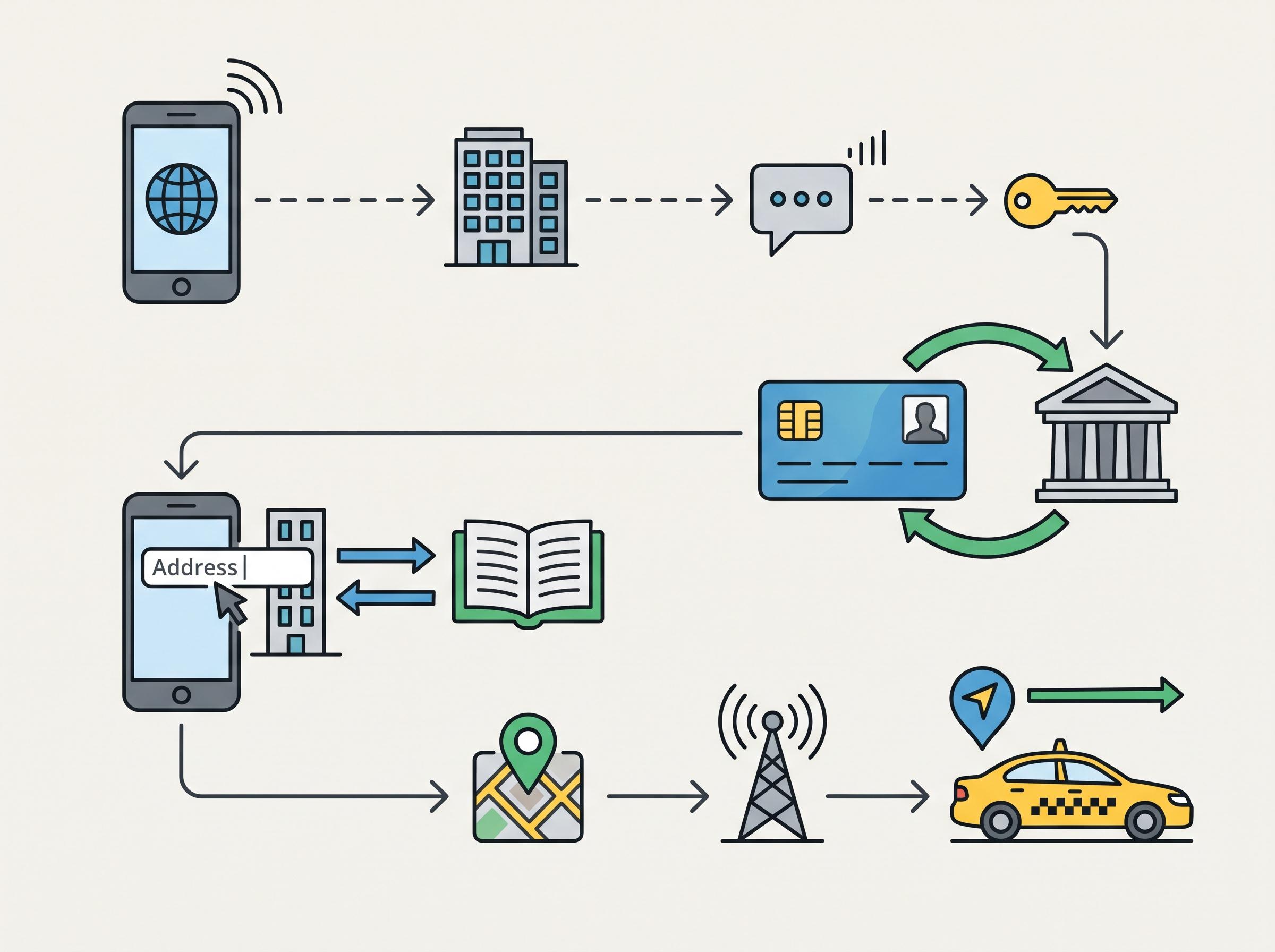
Neither k.ride nor Uber requires a Korean telephone number (+82) or a local identity verification procedure to create a functional account12. The fundamental prerequisite is maintaining access to SMS text messaging on your overseas mobile number during the initial registration process. When onboarding either service, the dispatch platform transmits a standard one-time numeric passcode via international SMS to verify account authenticity23. Consequently, travelers using data-only eSIMs or local physical data SIMs should complete account creation before leaving their home country or ensure their primary international carrier SIM remains enabled for incoming roaming SMS while connected to South Korean data networks13.
Kakao Mobility intentionally developed k.ride to dismantle the barriers embedded in the domestic Kakao T software. Instead of demanding a proprietary Kakao messenger login, k.ride permits direct user registration via an international mobile phone number alongside Google, Apple ID, or verified email single sign-on protocols24. Once the international SMS authentication confirms the mobile device, travelers can input their international credit cards directly without navigating Korean residential authentication barriers23. For Uber users, the onboard procedure is virtually effortless: if you already hold an active, verified account in your home country, the exact same Uber application works immediately upon touchdown at Incheon International Airport or any domestic terminal1.
In-App Payment Methods, Foreign Cards, and Fare Transparency
Financial reconciliation is automated in both applications, circumventing language friction during drop-off. k.ride accepts major internationally issued credit and debit cards, including Visa, Mastercard, American Express, and JCB, while also supporting digital wallet integrations such as Alipay+ and WeChat Pay for seamless automated checkout34. Uber facilitates in-app payment through your pre-existing overseas credit cards, debit profiles, and saved Apple Pay or Google Pay configurations1. In both apps, the fare is automatically settled against the selected card immediately upon the trip's conclusion, eliminating any requirement to handle physical currency or tap physical cards on the dashboard terminal13.
Understanding how fares are calculated prevents unexpected trip receipts. The baseline metered fare for standard mid-size taxis in Seoul is set by the Seoul Metropolitan Government at 4,800 KRW covering the initial 1.6 kilometers, with subsequent distance increments charged at 100 KRW per 131 meters and slow-traffic time charges of 100 KRW per 30 seconds when driving below 15.72 km/h5. Black deluxe taxis and large vehicles start at a higher baseline of 7,000 KRW for the initial 3 kilometers5. However, k.ride operates exclusively with Kakao's premium dispatch tiers—Standard (Kakao Blue), Comfort (Venti), Deluxe (Black), and Luxury—and adds platform service surcharges into the transaction2. Unlike the domestic Kakao T app, k.ride intentionally omits the zero-fee 'General Taxi' option, meaning users pay a modest platform margin in exchange for English UI features and guaranteed automatic billing2.
| Feature / Condition | k.ride (Kakao Mobility Global) | Uber Taxi (Korea) |
|---|---|---|
| Local Phone Number Required? | No (Overseas number with SMS authentication) | No (Existing international mobile profile) |
| Foreign Payment Acceptance | Visa, Mastercard, JCB, Amex, Alipay+, WeChat Pay | Saved international credit cards, Apple Pay, Google Pay |
| Dispatch Network Coverage | Extensive nationwide fleet backed by Kakao network | Strong in Seoul, Busan, Incheon; sparser in rural towns |
| Available Vehicle Tiers | Standard (Blue), Comfort (Venti), Deluxe, Luxury | Standard Taxi, Speed Call, Deluxe, Uber Black |
| In-App Driver Translation | Yes (133 languages supported for search and chat) | Yes (Integrated automated bidirectional text translation) |
| Platform Booking Fee | Variable platform service fee included in fare total | Optional Speed Call fee (₩3,000) or Green fee (₩1,000) |
Overcoming Language Barriers with Built-In Translation
A frequent stumbling block for international travelers in South Korea is communicating precise drop-off points or coordinating meeting spots with drivers who may speak limited English. Both platforms alleviate this friction through integrated machine translation. k.ride features an interface available in English, Japanese, Simplified Chinese, and Traditional Chinese, backed by a neural translation pipeline covering 133 languages for destination search queries and in-app instant messaging34. A traveler can type their location instructions in English or French, and the driver instantly reads the Korean transliteration directly on their dispatch dashboard23.
Uber features a similarly effective bidirectional messaging pipeline built directly into its native chat module. When a driver sends an update regarding boarding bay adjustments or vehicle positioning at major hubs such as Seoul Station or Gimpo Airport, Uber automatically renders the message into your device's primary operating language1. Passengers can reply in their native language, and the system translates the text back into Korean before alerting the driver's screen1. This built-in protocol eliminates the need to cut and paste addresses between external mapping engines and conversational translation apps while standing on busy sidewalks.
Municipal Meter Rates, Late-Night Surcharges, and Regional Rules
Even though booking occurs within digital interfaces, the fundamental trip cost is governed by official local government regulations. As established by the Seoul Metropolitan Government, standard mid-size meter calculations operate on a baseline rate of 4,800 KRW for 1.6 kilometers during standard daytime hours5. Travelers taking cabs late in the evening encounter automated nocturnal surcharges designed to incentivize night-shift drivers: a 20% surcharge applies between 22:00 and 23:00 and again from 02:00 to 04:00, while the peak late-night window between 23:00 and 02:00 commands a 40% surcharge, raising the effective night base fare to 6,700 KRW5.
Another key regulatory nuance involves crossing administrative municipal borders. If a taxi licensed in Seoul travels into Gyeonggi Province—such as to Suwon, Seongnam, or Goyang—a 20% out-of-district surcharge is triggered automatically on the taximeter5. These surcharges can legally stack up to a statutory ceiling of 60% for standard taxis during peak late-night windows outside municipal boundaries5. However, specific commuter exemptions exist: trips operating between Seoul and Incheon International Airport are exempt from regional boundary surcharges, though highway toll road fees remain the passenger's fiscal responsibility and are appended directly to the final invoice5.
Practical Ride-Hailing Protocol and Common Troubleshooting
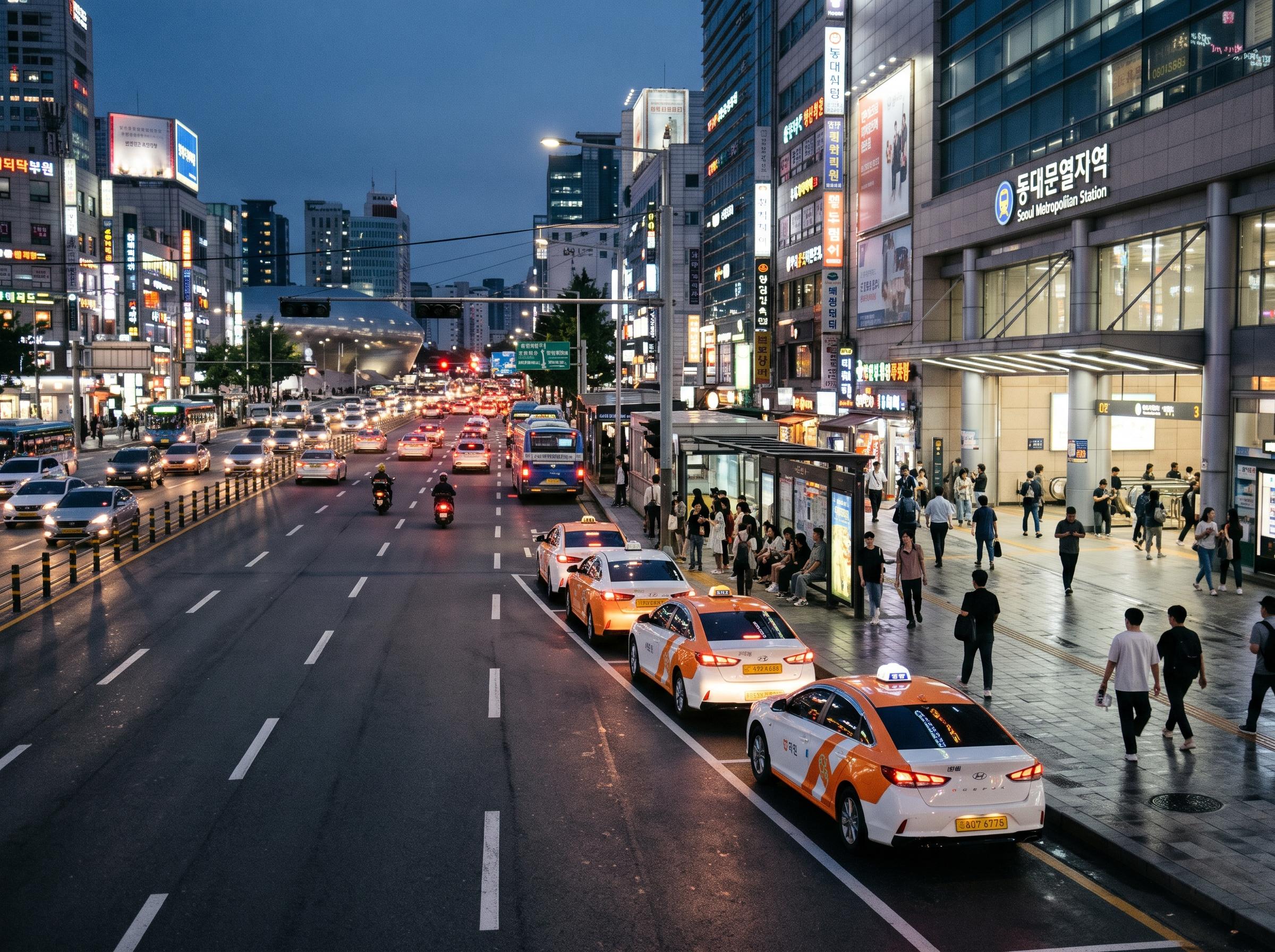
When hailing through either k.ride or Uber, verify your exact physical GPS marker before confirming dispatch. High-density urban corridors with massive skyscrapers, such as Gangnam or Euljiro, frequently produce GPS multi-path errors that shift your pickup pin onto parallel alleyways or opposing traffic lanes. Always manually align your pin to an identifiable roadside landmark, building entrance, or subway exit number. When the car approaches, check the yellow commercial vehicle registration plate and cross-reference the four-digit license plate number displayed in your application before entering the vehicle16.
Should you experience repeated dispatch rejections or prolonged searching times during adverse weather or Friday midnight rush hours in entertainment districts like Hongdae or Itaewon, switch between platforms. Kakao Mobility maintains the largest fleet of affiliated drivers across the nation, making k.ride particularly effective in mid-tier cities, Jeju Island, and outer metro zones where Uber driver density may be noticeably lower13. If technical network disputes arise or you suspect inappropriate billing or forgotten baggage inside a vehicle, always retain the digital receipt generated by the app. Seoul visitors can dial the Dasan Call Center at 02-120 (extension 9 for foreign languages) with their vehicle's license plate number to receive official administrative assistance15.
Frequently asked questions
Q. Can I hail a taxi in Korea with Uber using my home country account?
A. Yes. Uber connects directly to licensed South Korean taxis (Uber Taxi) without requiring a new account, a Korean telephone number, or local payment methods. Your existing international profile, registered foreign cards, and app settings work immediately upon arrival.
Q. What is the difference between Kakao T and k.ride for tourists?
A. Kakao T is South Korea's domestic hailing app, which historically required KakaoTalk integration, domestic payment cards, or Korean phone verification for seamless auto-pay. k.ride is Kakao Mobility's dedicated international app that lets tourists sign up using overseas phone numbers, Google/Apple IDs, and international credit cards.
Q. How much does a standard taxi cost in Seoul?
A. As established by Seoul City regulations (valid as of November 2026), standard mid-size taxis carry a daytime base fare of 4,800 KRW for the initial 1.6 km, plus 100 KRW per 131 meters and 100 KRW per 30 seconds in slow traffic. A 20% to 40% surcharge applies between 22:00 and 04:00.
Q. Do I need to tip taxi drivers in South Korea?
A. No. Tipping is not customary in South Korea. The taximeter or mobile app calculates the exact legal fare, and drivers do not expect or request additional gratuities.
Sources
- Uber Korea Guide: Best Taxi Tips for Tourists (2026)Travel Trend Hub
- Kakao Mobility's 'k.ride' taxi app offers live translation for foreign travelersKorea JoongAng Daily
- k.ride - taxi, cab, korea tripGoogle Play Store (Kakao Mobility Corp.)
- Korea’s Kakao Mobility unveils global ride-hailing app to court UberKED Global
- Taxis in Seoul: 4,800 Won Base Fare, Night Surcharge and Airport Flat Fares (2026)Korea Travel Note
- Taxi - VISITKOREAKorea Tourism Organization (VISITKOREA)