 Korea Experience Finder
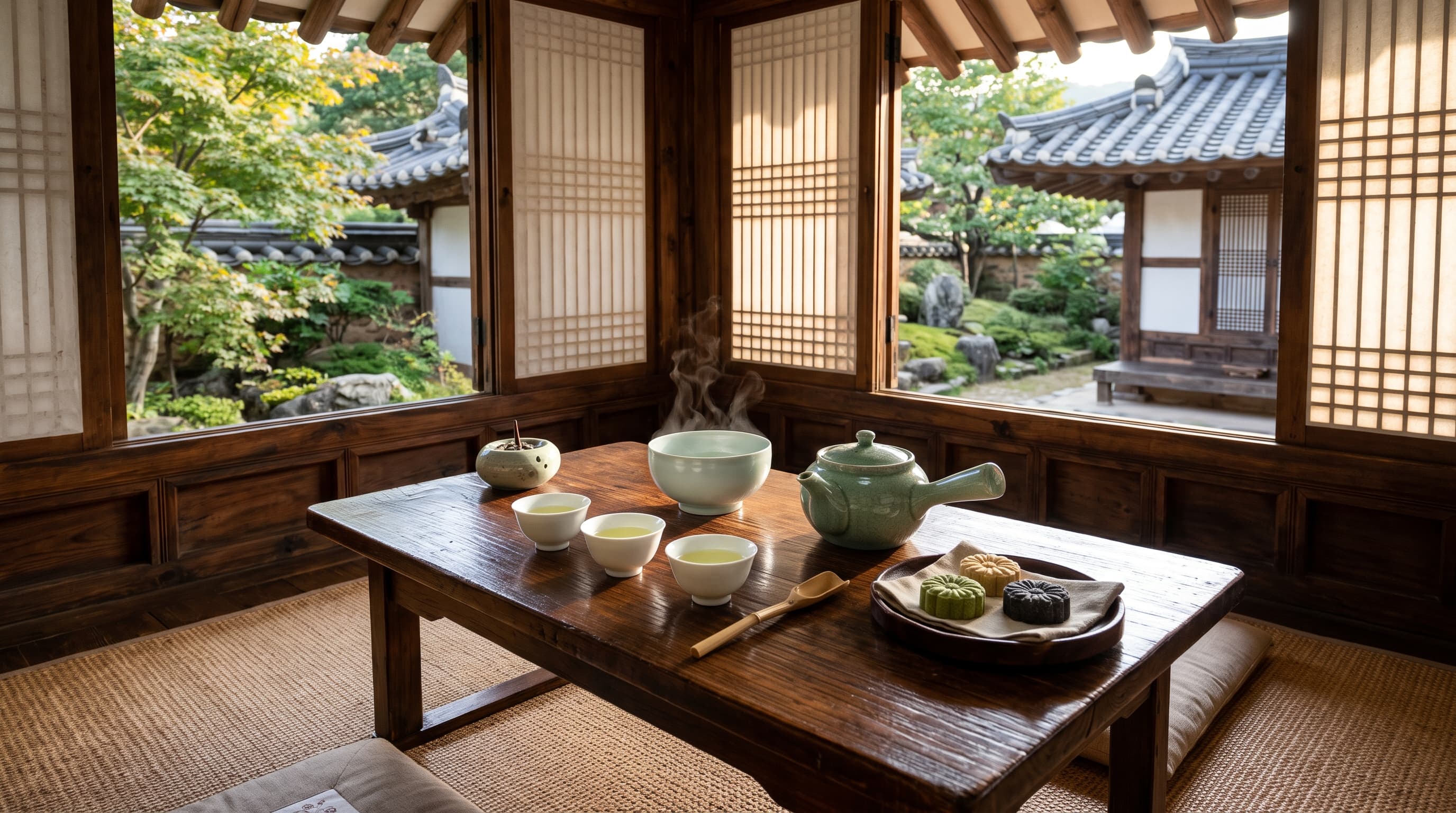
Foreign visitors in Seoul can experience English-guided traditional tea ceremonies at Rakkojae Culture Lounge in Bukchon, Heesum Tea Room near Hoehyeon, and Tea Therapy in Anguk.
Understanding Korean Darye: Ritual, Philosophy, and Practical Setup
Korean tea culture, historically known as darye (tea etiquette) or dado (the way of tea), centers on natural harmony, quiet contemplation, and respectful hospitality rather than strict theatrical rigidity. Unlike the highly choreographed movements of Japanese chado or the rapid scalding rinses seen in southern Chinese Gongfu tea, traditional Korean darye emphasizes ease, mindful awareness, and unforced hospitality. Practical workshops seat participants on floor cushions atop heated wooden floors (ondol), placing them before low wooden tables arranged with classic teaware.
A standard individual set used in hands-on workshops consists of specific celadon or white porcelain vessels: the dagwan (teapot with a side handle), the sugu or sukwoo (cooling bowl used to reduce boiling water to optimal steeping temperatures), matching cups (chatjan), a wooden or ceramic waste basin (toesugi), and a bamboo spoon (chasi) for dry leaf handling. In an instructional class, tea masters demonstrate how green tea leaves require water cooled to roughly 65 to 75 degrees Celsius. Learning to transfer water between vessels smoothly without splashing forms the technical core of practical darye education.
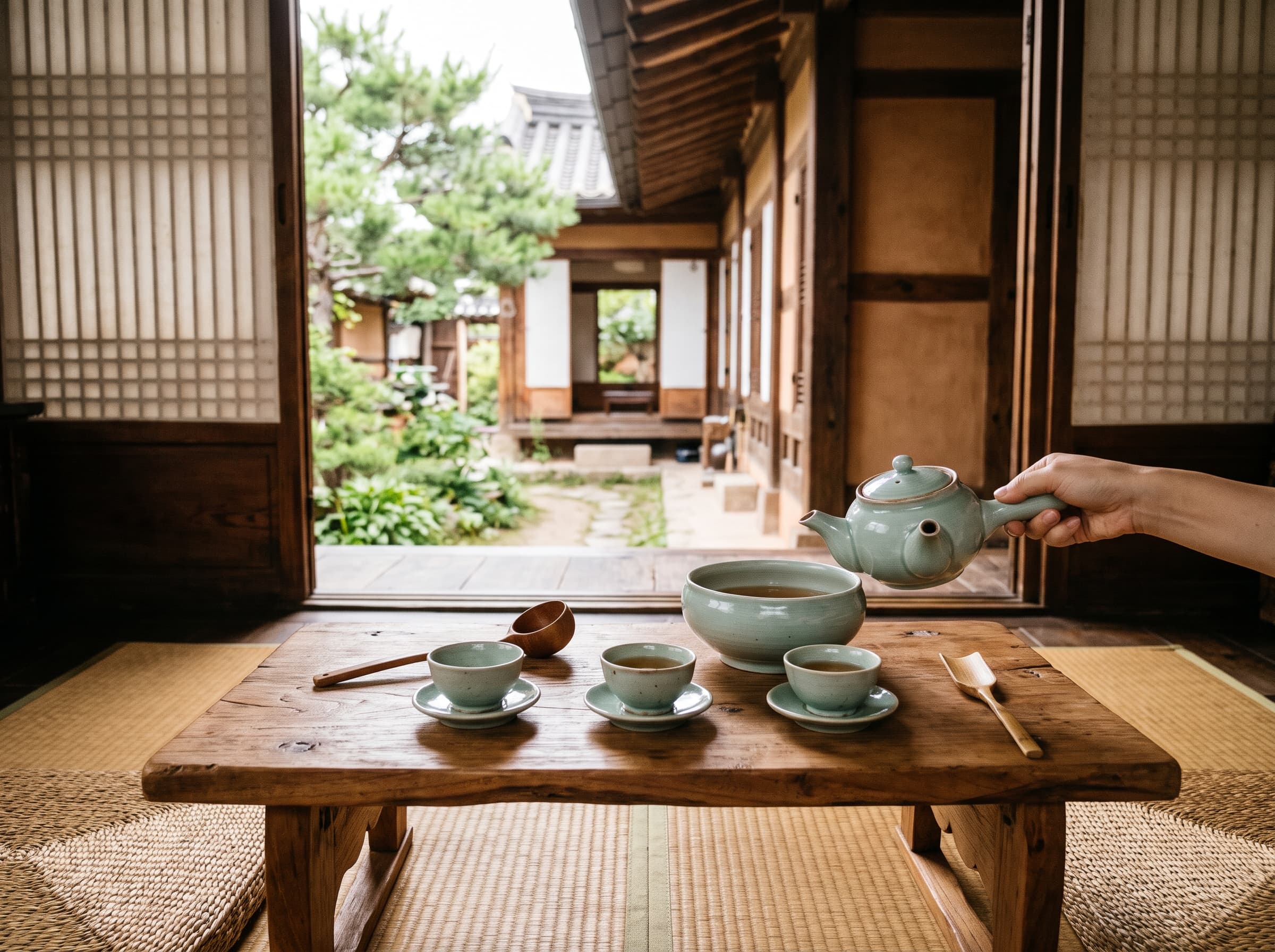
Hands-On Brewing Classes: Heesum Tea Room in Jung-gu
For travelers looking for an intensive, hands-on tea-making session guided directly in English, Heesum Tea Room provides specialized one-day darye classes tailored to individual and small-group visitors. Situated on the second floor of the Isle Building along Sogong-ro near Hoehyeon and Myeongdong stations, this dedicated tea space focuses directly on utensil handling, steeping techniques, and sensory evaluation. Under the guidance of a certified tea master, participants personally handle the teapot, cooling bowl, and cups through multiple sequential infusions.
Operational logistics make Heesum an accessible downtown stop for independent travelers. The studio operates daily between 10:00 and 20:00, with advance booking required so an English-fluent instructor can be arranged. During the interactive session, guests compare leaf harvests, learn proper steeping times, and pair each pour with traditional confectioneries that balance the delicate vegetal notes of Korean green tea. Note that published operational hours and fees are subject to seasonal schedule revisions.
Immersive Hanbok and Hospitality Rituals: Rakkojae Culture Lounge
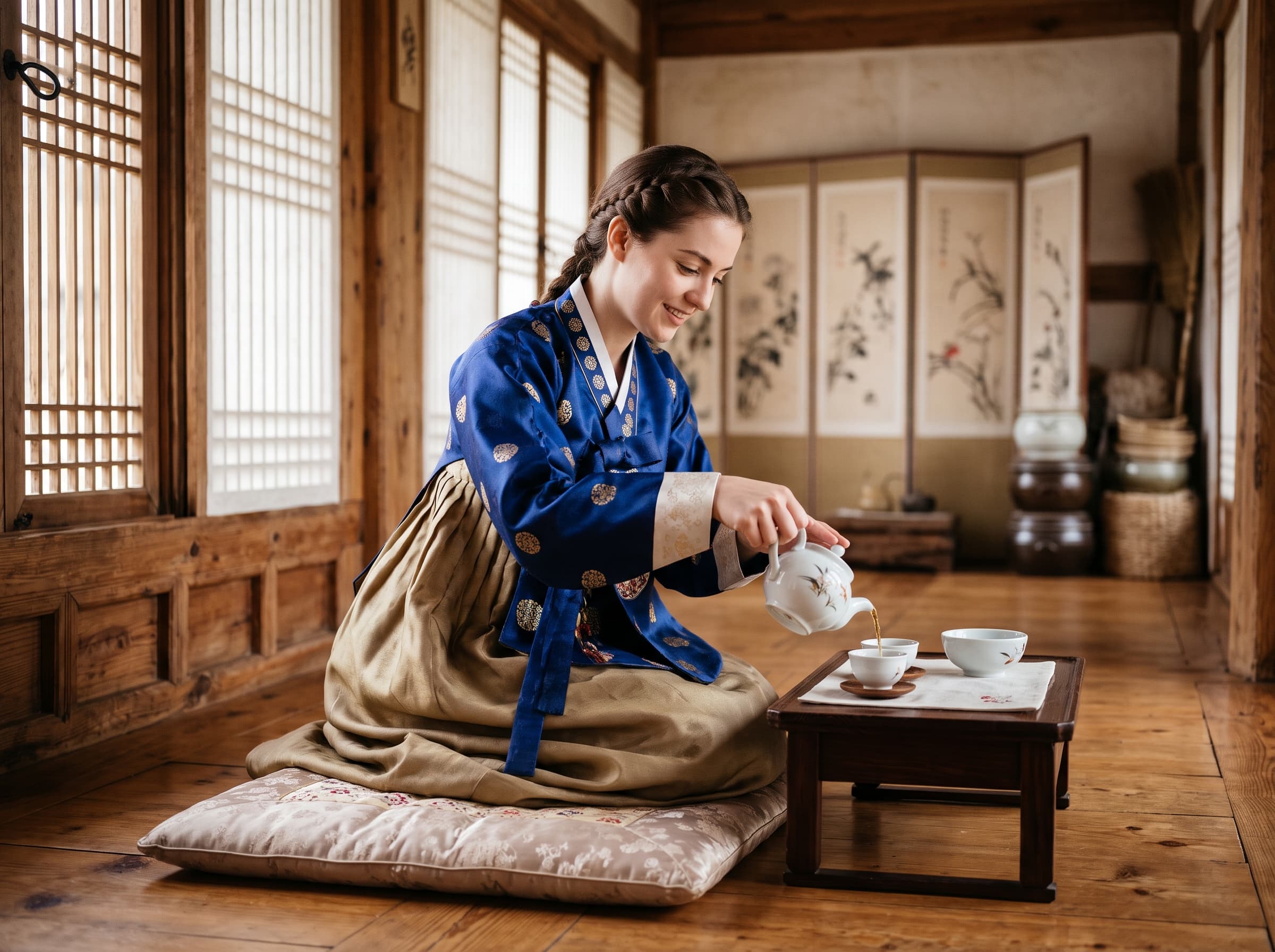
Travelers seeking an atmospheric cultural workshop often look to the Rakkojae Seoul Culture Lounge, set in the historic Bukchon Hanok Village area near Anguk Station. This premium cultural program reconstructs the Joseon-era aristocratic welcoming ritual known as jeopbin-darye, historically practiced when receiving distinguished guests in noble residences. Participants change into fine traditional hanbok garments before entering a restored wooden hanok space with courtyard views.
The Rakkojae experience runs strictly by advance reservation for intimate groups between two and ten guests per session, providing structured bilingual English instruction. Instructors guide visitors through formal seated posture, greetings, vessel handling, and three distinct seasonal tea pairings served alongside handcrafted traditional dasik (pressed tea confections). As of November 2026, standard baseline pricing for the 90-minute hanbok tea ceremony experience is approximately 165,000 to 206,000 KRW (roughly 120 to 155 USD) per person across booking channels, while a live gayageum musical performance is offered as a separate premium add-on option for an additional 250,000 KRW per session. Fees and availability vary by booking platform and season.
Medicinal Blending and Palatial Tastings: Specialized Alternatives
If your primary interest lies in herbal traditions rather than formal aristocratic etiquette, Tea Therapy in Anguk offers an educational lifestyle workshop inspired by traditional Korean herbal knowledge (hanbang). This program is designed strictly as a non-medical wellness experience and casual tea tasting rather than clinical treatment or formal medical diagnosis. Instead of steeping Camellia sinensis green tea, participants complete a simple lifestyle and bodily-condition questionnaire—highlighting everyday personal tendencies such as tension or sensitivity to cold—and blend dried roots and herbs into customized tea bags for personal daily enjoyment. The workshop requires a two-person booking minimum with multilingual instructional sheets, alongside an optional outdoor foot-bath add-on.
Visitors interested in royal culinary aesthetics over self-brewing mechanics can look to Kohojae at Korea House, located in Jung-gu near Chungmuro Station1. Operated under the Korea Heritage Agency, Kohojae presents seasonal royal refreshment courses served on individual small wooden tray-tables (soban)1. Operating four daily 90-minute sessions (11:00, 13:00, 15:00, and 17:00, closed Sundays and Mondays), this experience functions primarily as an appreciation and tasting course where servers present seasonal court sweets and tea, rather than a hands-on physical brewing class1. Reservations are booked in advance online via portals like CatchTable1.
Venue Comparison and Selection Matrix
| Venue / Provider | Experience Format | English Support | Booking Requirement | Estimated Cost / Conditions |
|---|---|---|---|---|
| Heesum Tea Room (Hoehyeon-dong) | Hands-on leaf brewing, utensil handling, and tea philosophy | English instruction available | Advance reservation required (daily 10:00-20:00) | Dedicated class fee / Solo and small groups welcome |
| Rakkojae Culture Lounge (Bukchon) | Aristocratic jeopbin-darye ritual with luxury hanbok dressing | Bilingual English/Korean session | 100% reservation-only (2 to 10 guests) | Approx. 165,000-206,000 KRW (approx. 120-155 USD) per person / Gayageum live music add-on: +250,000 KRW |
| Tea Therapy (Anguk) | Non-medical herbal wellness questionnaire and tea blending workshop | English and Japanese materials & guidance | Advance booking required (minimum 2 persons) | Approx. 50,000 KRW per person / Foot bath +5,000 KRW |
| Kohojae, Korea House (Chungmuro) | Royal court dessert tasting on individual soban trays | Multilingual commentary and menus | Pre-booking via CatchTable/online portals (4 sessions daily) | Approx. 25,000-30,000 KRW / Tasting course format |
| Namsangol Hanok Village (Chungmuro) | Group tea ceremony etiquette class in historic hanok | Group inquiry required | Group reservation only (10+ people; closed Jul-Aug) | 2026 Season ended on Oct 25; operates seasonally Apr-Oct, closed Jul-Aug & winter |
Choosing the appropriate tea ceremony encounter depends heavily on group size, budget constraints, travel pace, and physical mobility. While solo travelers and couples can reserve private tables at commercial hands-on studios, public municipal heritage sites operate under specific group and seasonal parameters2. Examining venue structures side by side ensures you select a program matching your practical requirements.
Noticeable differences exist between private studio classes and public municipal heritage sites. For example, the tea ceremony and etiquette class at Namsangol Hanok Village operates exclusively for groups of 10 or more participants on Tuesdays, Wednesdays, and Thursdays, requiring separate group inquiry2. However, prospective visitors should note that its official 2026 season ran from April 3 to October 25, 2026, meaning the program is completely closed for the winter season as of November 2026 alongside its usual midsummer break in July and August2. Regular operations are expected to resume in the spring of 2027 around April2. Similarly, community cultural centers like the Bukchon Traditional Culture Center primarily hold local neighborhood seminars and irregular seasonal festivals rather than dedicated English darye workshops for international tourists. Independent travelers visiting during the winter months should prioritize private year-round venues like Heesum, Rakkojae, or Tea Therapy to avoid booking restrictions. All rates, schedules, and group policies reflect conditions as of November 2026 and are subject to change by operators.
Preparation, Etiquette, and Practical Booking Tips
Attending a traditional Korean tea workshop involves several cultural norms and practical physical considerations. Participants sit cross-legged (yangban-dali) or in a kneeling posture (seonbi-jase) on flat floor cushions for up to 90 minutes. Travelers with limited knee flexibility, hip mobility issues, or chronic back pain should notify the host ahead of time; reputable hanok centers can often supply low back-support chairs (jwasik chairs) or assign a seated bench upon prior request. Furthermore, wearing loose, comfortable trousers and clean, opaque socks is strictly expected out of respect for the clean floor mats of the hanok interior.
Olfactory and sensory etiquette is equally vital during tea appreciation. Participants are strongly discouraged from wearing heavy colognes, perfumes, or scented hand lotions, as artificial fragrances overpower the delicate floral and vegetal bouquets of loose Korean green teas. Finally, because English-speaking instructors are in high demand across Seoul's specialty tea spaces, secure your reservations at least two to four weeks in advance—particularly during peak autumn foliage (October–November) and spring cherry blossom seasons (April–May) when cultural workshops sell out rapidly. Program fees, operating hours, and booking conditions are subject to change depending on season and host policies.
Frequently asked questions
Q. Can solo travelers book an English tea ceremony class in Seoul?
A. Yes, solo travelers can book hands-on classes at specialized studios such as Heesum Tea Room by reserving online in advance. However, venues like Tea Therapy require a minimum of two participants, and municipal programs at Namsangol Hanok Village require groups of ten or more (operates seasonally April to October).
Q. What is the difference between Korean darye and Japanese chado?
A. Korean darye emphasizes natural flow, comfortable hospitality, and gentle temperature moderation, favoring unforced movements. In contrast, Japanese chado follows a strictly choreographed, formalized ritual with powdered matcha, whereas darye primarily uses whole loose green or herbal leaves steeped in ceramic pots.
Q. Do I need to wear a hanbok to participate in a Korean tea ceremony class?
A. No, casual comfortable clothing is acceptable at hands-on studios like Heesum Tea Room and Tea Therapy, provided you wear clean socks for the floor. Hanbok wearing is an exclusive cultural component included in specialized luxury workshops like Rakkojae Seoul Culture Lounge.
Sources
- KOREA HOUSE - Kohojae Visitor InformationKorea Heritage Agency
- 2026 Namsangol Traditional Experience: Artist's TimeSeoul Tourism Organization