 Korea Experience Finder
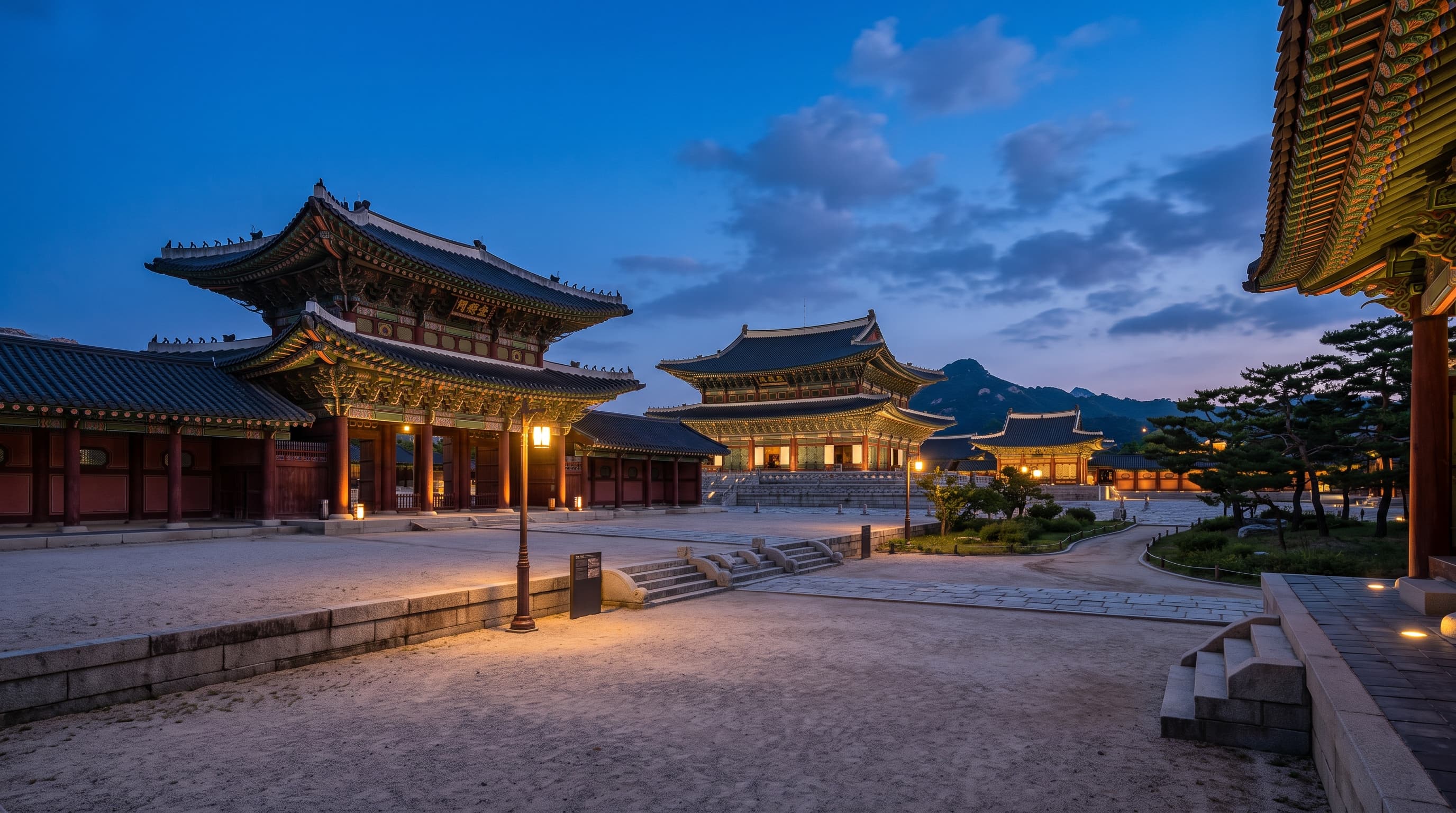
Foreign tourists can access Gyeongbokgung's seasonal autumn night viewing via 300 daily walk-up tickets (3,000 KRW, passport required) or by wearing compliant Hanbok for free entry. Changgyeonggung requires no reservation and offers walk-up evening admission (1,000 KRW) year-round.
Understanding Seoul's Palace Night Viewing Landscape
Every autumn, Seoul's royal Joseon palaces illuminate their courtyards, stone walkways, and historic architecture against the evening sky. For international visitors, securing access to these night viewings is often a highlight of the season. However, ticketing systems vary drastically between royal sites, creating significant confusion for travelers unfamiliar with South Korean administrative regulations1. While some palaces operate year-round extended evening hours with straightforward gate ticketing, others treat night viewings as tightly controlled, seasonal special events with strict quotas4.
The fundamental legal distinction comes from internal cultural heritage preservation mandates. Under Article 2 of the Regulations on Palace and Tomb Viewing managed by the Royal Palaces and Tombs Center under the Korea Heritage Service, palace openings are bifurcated into 'General Public Opening' (ilban gonggae) and 'Special Viewing' (teukbyeol gwanram)4. General openings operate within standard open hours across designated palace sectors, whereas special viewings cap entry numbers and access hours specifically to mitigate visitor footprint and preserve fragile historic timbers at night4. Gyeongbokgung Palace implements a seasonal Special Viewing model, while Changgyeonggung Palace operates on a General Public Opening framework open late into the evening almost every day13. Understanding this framework prevents common itinerary mistakes and long, unsuccessful waits outside locked gates.
Gyeongbokgung Palace: The Seasonal Quota System and Foreigner Allocations
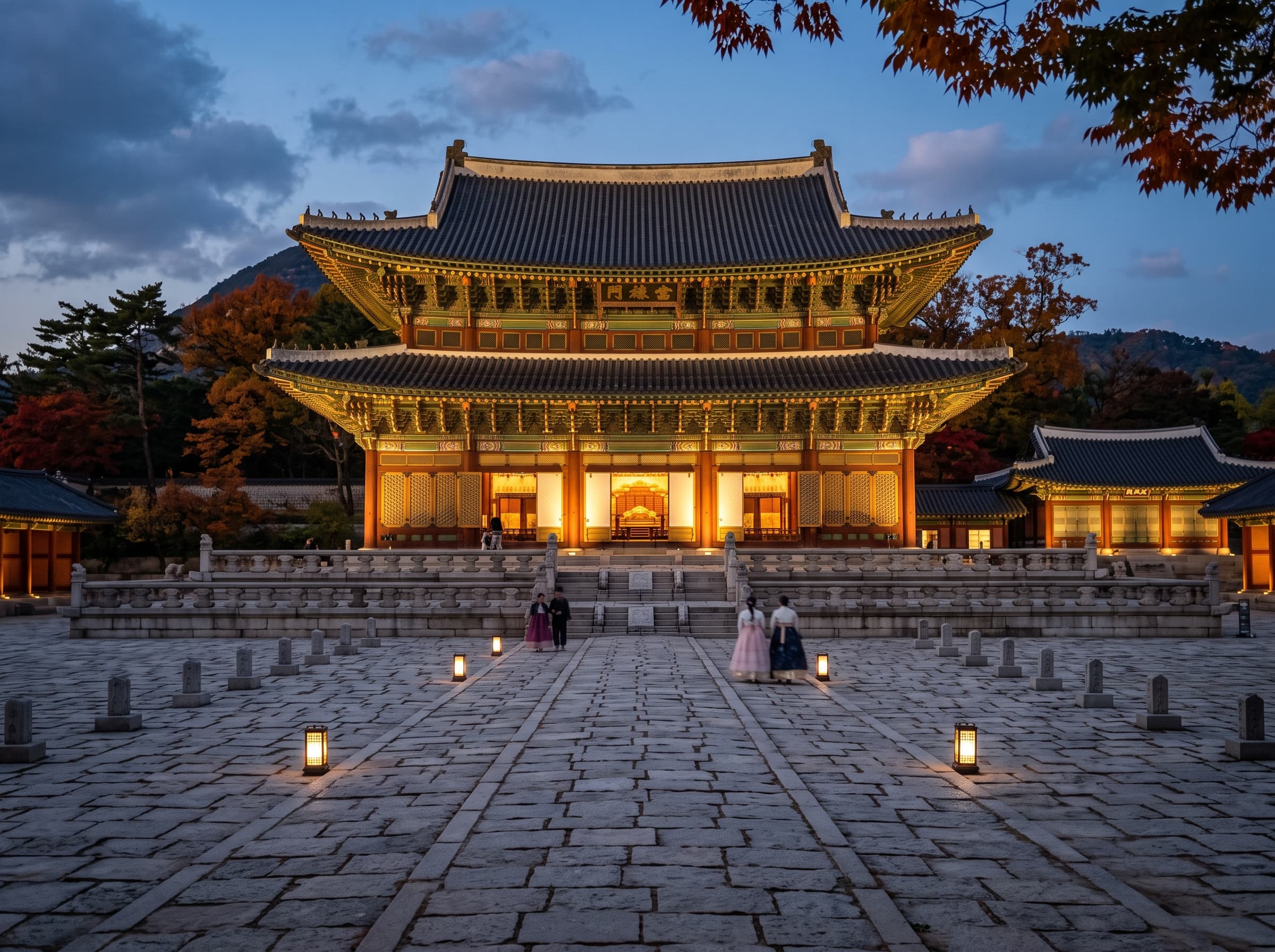
Gyeongbokgung Palace's autumn night viewing is an exclusive, highly sought-after cultural event held over a strictly designated window during the fall season1. For the 2026 autumn season, official administrative details published by the Korea Heritage Service Royal Palaces and Tombs Center established the operating period from September 2, 2026, through October 2, 2026, running from 19:00 to 21:30 with final admission strictly capped at 20:301. As of October 21, 2026, the 2026 autumn night viewing period has officially concluded; international travelers should use these official guidelines, quotas, and ticketing procedures to plan ahead for upcoming viewing seasons such as spring and autumn 2027. All operating hours, admission fees, and quota policies are verified based on official Korea Heritage Service announcements as of October 2026 and are subject to change in future seasons1. When operating, the night tour is closed on Mondays and Tuesdays1. The illuminated zone encompasses key landmark structures: Gwanghwamun Gate, Heungnyemun Gate, Geunjeongjeon Hall, Gyeonghoeru Pavilion, Sajeongjeon Hall, Gangnyeongjeon Hall, Gyotaejeon Hall, and the Amisan Garden sector12.
To protect the grounds, the total nightly capacity is strictly limited to 3,300 visitors per evening1. Of this total, 3,000 tickets are allocated to domestic advance online reservations through Interpark Ticket / NOL Ticket, leaving exactly 300 tickets reserved exclusively each evening for international visitors via on-site purchase12. The ticket price is 3,000 KRW per person1. Online platforms generally require Korean phone verification or domestic payment integration, making advance online booking nearly impossible for tourists without a Korean resident registration number or domestic digital ID. Consequently, most foreign travelers must rely on the dedicated on-site walk-up quota or specific statutory fee exemptions1.
How International Travelers Can Secure Gyeongbokgung Walk-Up Tickets
Securing one of the 300 daily on-site foreigner tickets requires strict adherence to administrative procedure. The ticket booth is located directly at Gwanghwamun Gate, and purchases are only processed on the day of the viewing on a first-come, first-served basis12. Each international visitor is permitted to purchase a maximum of 2 tickets12. Crucially, physical proof of foreign nationality—such as an original foreign passport or valid foreign registration document—must be presented to the ticket staff1. Digital photographs or scans of identity documents are routinely declined at staff discretion.
Because the daily foreign quota is limited to 300 tickets, lines routinely begin forming in front of the Gwanghwamun ticket office well before the 19:00 opening bell. During crisp autumn weekends and peak foliage periods, tickets often sell out rapidly within the first hour of ticket sales. Travel experts strongly advise queuing at least 45 to 60 minutes before gates open. If you miss the 300-ticket daily cutoff, ticket agents will not make exceptions, nor can you purchase tickets via unauthorized secondary platforms, which are explicitly non-transferable and subject to cancellation1.
The Hanbok Exemption: The Ultimate Bypass Route
For travelers who cannot arrive early enough for the 300 walk-up tickets, South Korean cultural regulations provide an elegant alternative: statutory admission exemption. Under official royal guidelines published by the Korea Heritage Service, visitors wearing traditional Hanbok are admitted free of charge, with no advance reservation or ticket booth queuing required15. This exemption applies equally to Korean nationals and foreign tourists, making it the most dependable method to bypass competitive ticketing entirely15. In addition, infants aged 6 and below (with ticket-holding guardians) and senior citizens aged 65 and above (upon passport presentation) also receive free entry12.
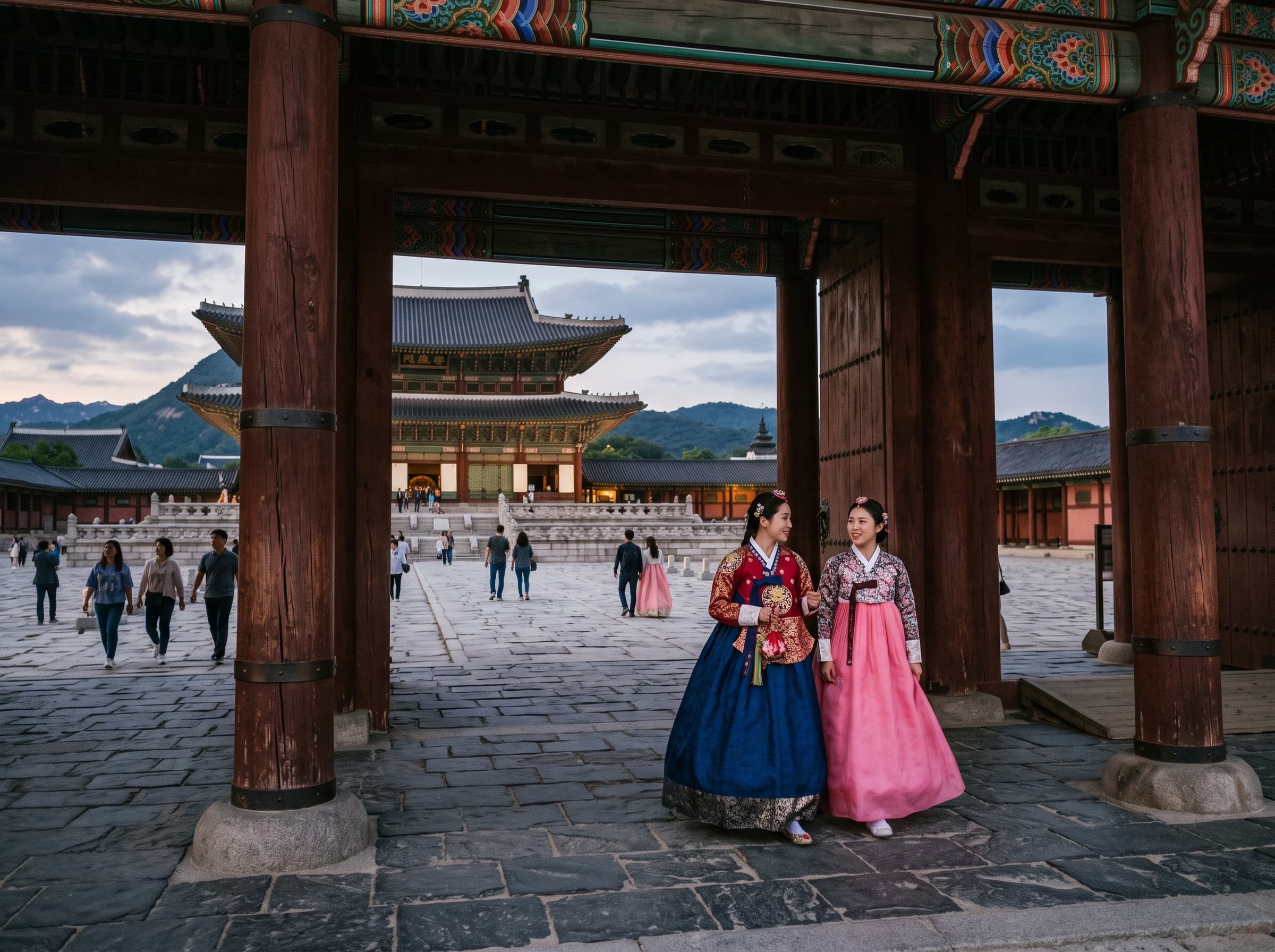
However, the Royal Palaces and Tombs Center enforces strict, non-negotiable dress standards that gate attendants check at Heungnyemun Gate15. To qualify for free entry, your outfit must meet these core specifications: both an upper garment (jeogori) and lower garment (chima skirt for women, baji trousers for men) must be worn together5. The jeogori must maintain a traditional folding collar band (yeomineun git), though it can fasten with snaps rather than formal fabric ties (goreum)5. Both traditional and modernized daily hanbok (saenghwal hanbok) are accepted5. Conversely, disqualifying attire includes wearing a coat (durumagi) alone without a jeogori underneath, pairing a jeogori with denim jeans or western trousers, or wearing a single-piece dress without a proper folding collar5. Numerous rental boutiques around Anguk, Gyeongbokgung, and Bukchon Hanok Village rent compliant attire by the hour, typically complete with hair styling and storage lockers.
Changgyeonggung Palace: Effortless Evening Access Year-Round
If you prefer a calm, contemplative evening stroll without the stress of quotas and ticket queues, Changgyeonggung Palace offers an outstanding alternative. Unlike Gyeongbokgung's short, tightly restricted seasonal windows, Changgyeonggung opens its doors for evening viewing on a permanent, year-round basis under standard operating hours3. The palace operates Tuesday through Sunday from 09:00 until 21:00, with final admission at 20:003. It is closed on Mondays, or the immediate following weekday if a Monday coincides with an official public holiday3.
Admission to Changgyeonggung is remarkably simple and affordable: general adult admission (ages 19 to 64) is priced at just 1,000 KRW, while youth and children enjoy lower rates or free admission3. No online pre-booking, foreign registration, or lottery exists for Changgyeonggung evening entry3. Visitors can simply walk up to the Honghwamun Gate ticket office, purchase a paper ticket, or directly tap a domestic Korean transit card (T-money) at the electronic turnstile. Hanbok wearers and seniors aged 65 and over also receive free admission35. The night route at Changgyeonggung takes visitors through Honghwamun, Myeongjeongjeon, Tongmyeongjeon, around the tranquil reflective pond of Chundangji, and up to the illuminated Western-style Grand Greenhouse (Daeonsil)3. All operating hours, admission fees, and quota policies are verified based on official Korea Heritage Service announcements as of October 2026 and are subject to change in future seasons13.
Comparative Summary: Gyeongbokgung vs. Changgyeonggung Night Viewings
| Comparison Metric | Gyeongbokgung Palace | Changgyeonggung Palace |
|---|---|---|
| Viewing Classification | Special Viewing (Seasonal quota; 2026 run was Sep 2 – Oct 2) | General Public Opening (Year-round) |
| Operating Hours | 19:00–21:30 (Last entry 20:30) | 09:00–21:00 (Last entry 20:00) |
| Weekly Closed Days | Mondays and Tuesdays | Mondays (Next day if holiday) |
| Standard Admission Fee | 3,000 KRW | 1,000 KRW |
| Foreigner Ticket Availability | 300 walk-up tickets per day (Max 2/person) | Unlimited walk-up tickets at gate |
| Passport Requirement | Mandatory for walk-up ticket purchase | Only required for age-based exemptions |
| Hanbok Exemption Route | Free entry, no ticket needed (gate inspection) | Free entry, no ticket needed (gate inspection) |
| Key Night Highlights | Gyeonghoeru Pavilion, Geunjeongjeon | Chundangji Pond, Grand Greenhouse |
When formulating your autumn travel itinerary in Seoul, weigh your travel style against the requirements in the matrix above. If witnessing the majestic reflection of Gyeonghoeru Pavilion across its water pond is non-negotiable, allocate an early evening to queue at Gwanghwamun with your passport during the active seasonal window, or rent a certified Hanbok ensemble from a shop near Gyeongbokgung Station (Subway Line 3)15. If you desire a serene stroll under lantern lights without strict time limits or ticketing stress, schedule a visit to Changgyeonggung Palace, easily accessed from Hyehwa Station or Anguk Station3. Both experiences offer rich glimpses into Korea's royal heritage.
Frequently asked questions
Q. Is the Gyeongbokgung autumn night viewing currently open?
A. No. The 2026 autumn night viewing at Gyeongbokgung Palace ran from September 2 to October 2, 2026, and is now closed as of late October 2026. Travelers visiting Seoul now can visit Changgyeonggung Palace, which remains open year-round for night viewing, or use this guide to prepare for the spring and autumn 2027 seasons.
Q. Can I buy Gyeongbokgung night viewing tickets online using an international credit card?
A. Advance online tickets for Gyeongbokgung Palace night viewings are managed via Korean domestic ticketing platforms (such as Interpark Ticket) which generally require Korean domestic verification and domestic payment options. International visitors without Korean identification are directed to purchase the 300 on-site walk-up tickets held daily at Gwanghwamun Gate or enter free wearing compliant Hanbok.
Q. What happens if Gyeongbokgung walk-up foreigner tickets are sold out when I arrive?
A. Once the daily cap of 300 foreigner walk-up tickets is reached, the gate closes ticket sales for regular visitors. However, during the operational season, you can rent a proper two-piece Hanbok from one of the nearby rental shops in the Seochon or Bukchon neighborhoods and enter immediately through Heungnyemun Gate for free without a ticket.
Q. Does Changgyeonggung Palace require an advance reservation for night viewing?
A. No. Changgyeonggung Palace operates on a regular year-round night schedule open until 21:00 (last entry at 20:00). You do not need any advance reservation and can purchase a ticket for 1,000 KRW at the Honghwamun Gate booth or tap an active T-money transit card directly at the gate.
Q. Are there age-based free admission discounts for foreigners at Seoul palaces?
A. Yes. Under royal palace viewing regulations, international children aged 6 and younger (accompanied by an adult) and international senior citizens aged 65 and older are eligible for free admission upon presenting a valid physical passport at the gate.
Sources
- 2026년 하반기 경복궁 야간관람 안내국가유산청 궁능유적본부
- (국영문 동시배포) 경복궁에서 즐기는 품격 있는 궁궐의 밤 상세 - 국가유산청국가유산청
- Changgyeonggung Palace (창경궁)- VISITKOREA한국관광공사 (Korea Tourism Organization)
- 궁·능 관람 등에 관한 규정국가법령정보센터
- 관람안내>한복무료관람 가이드라인>경복궁 - 국가유산청국가유산청 궁능유적본부