 Korea Experience Finder
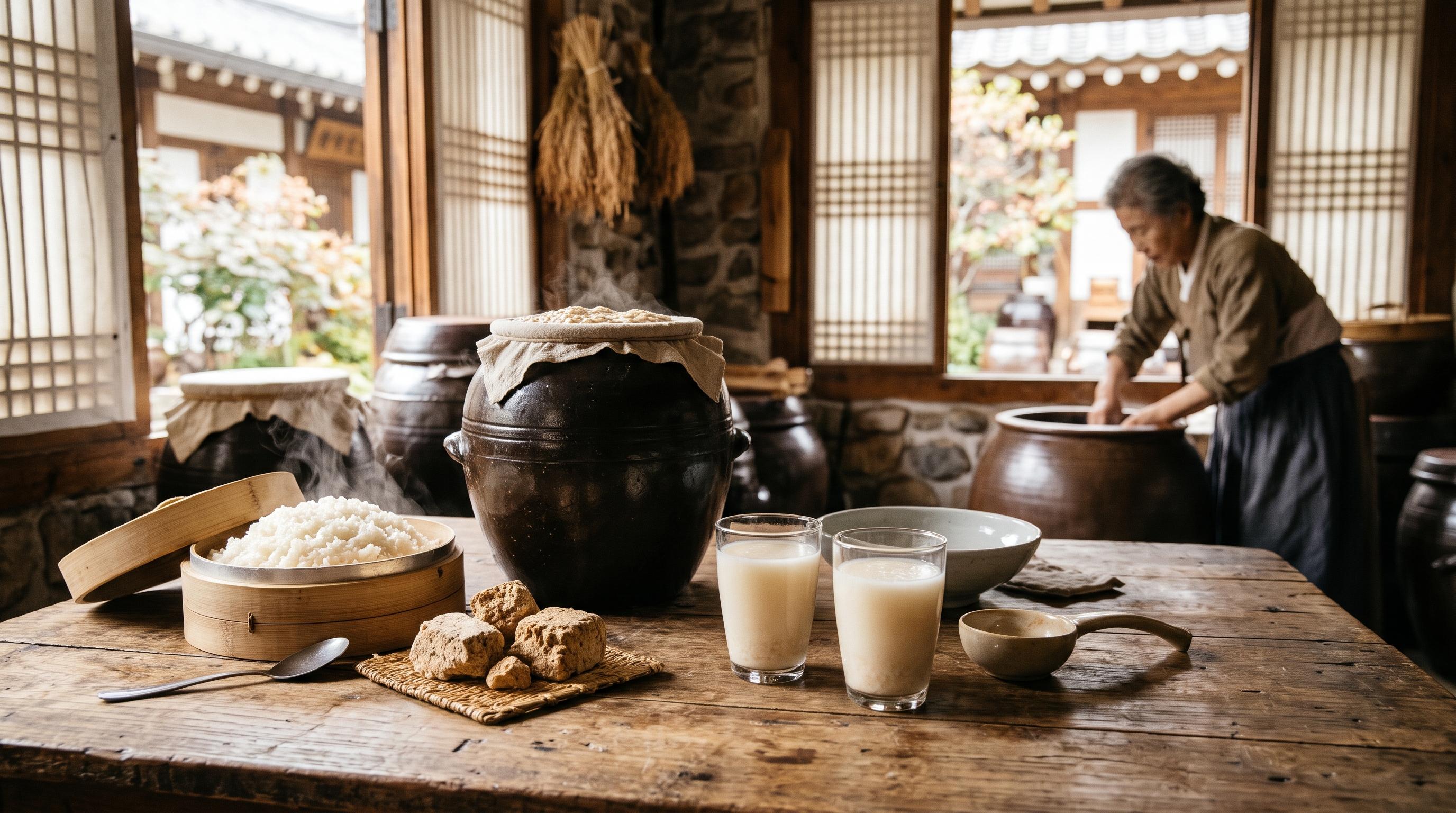
Foreigners can book verified English-language makgeolli brewing workshops at The Sool Company in Jongno, Baekusaeng Makgeolli in Mapo, and subsidized cultural sessions at The Sool Gallery.
Understanding Makgeolli Brewing and Autumn Availability in Seoul
Makgeolli is Korea's oldest traditional alcoholic beverage, characterized by its cloudy milky appearance, gentle effervescence, and complex sweet-tangy flavor balance. Unlike industrially clarified clear rice wines like yakju or cheongju, makgeolli is produced by roughly straining a fermented mash comprising steamed rice, clean water, and nuruk—a traditional fermentation starter cake harboring wild yeasts and filamentous fungi. The autumn harvest period in Seoul provides an ideal window for hands-on brewing workshops, as traditional academies transition to freshly milled seasonal grains while ambient temperatures stabilize fermentation kinetics1.
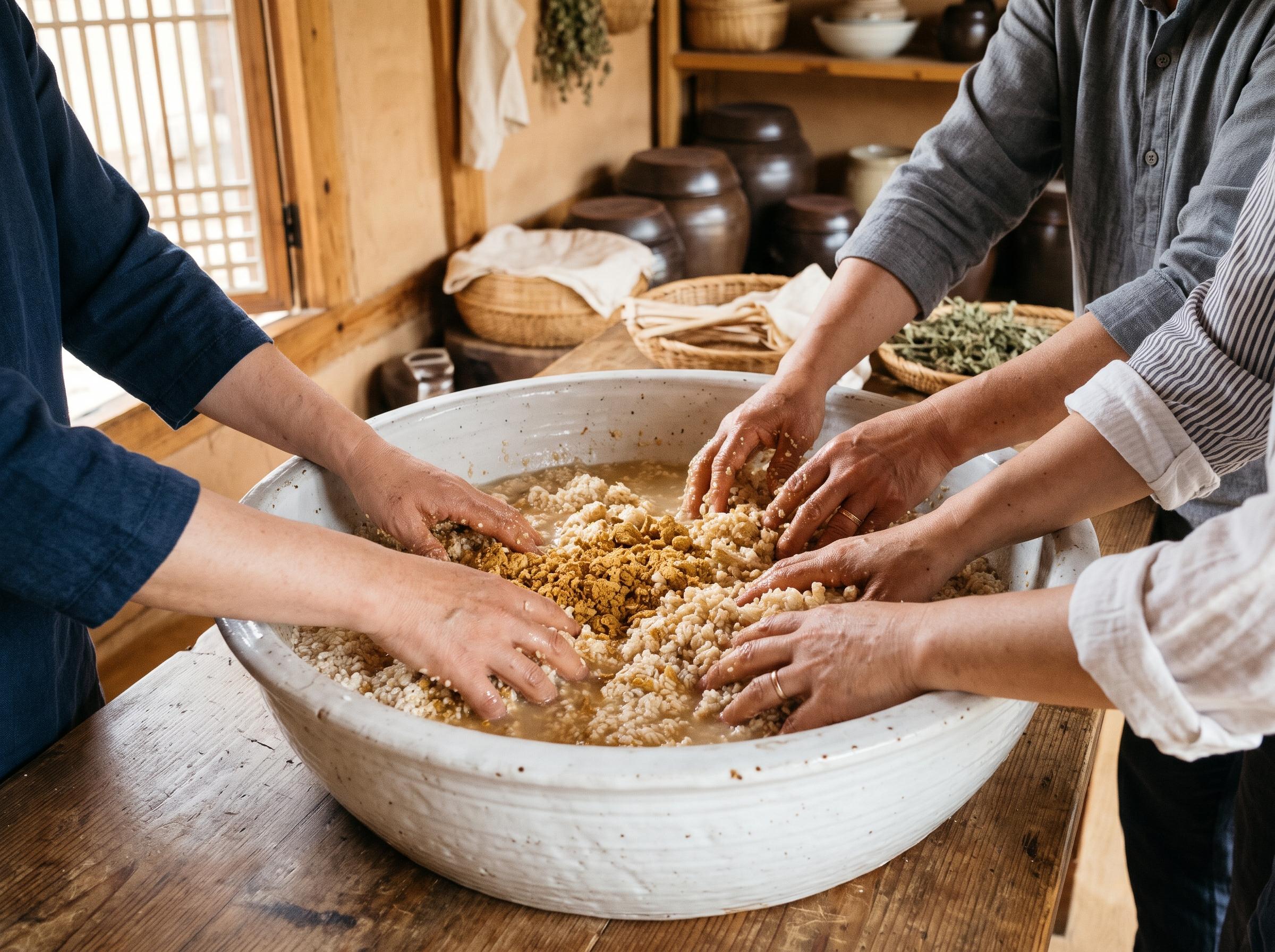
For international travelers navigating language barriers, attending an authentic fermentation class in Korea historically presented hurdles. Most local vocational institutes teach solely in technical Korean, catering to domestic microbrewery license applicants rather than casual short-stay visitors. Today, however, Seoul hosts dedicated urban microbreweries, bilingual sommelier academies, and municipal cultural programs designed to walk foreign participants through the precise tactile procedures of washing grain, steaming, temperature reduction, inoculating with wild culture, and controlled pressing—all delivered in fluent English12.
Core English-Friendly Brewing Workshops in Central Seoul
A leading private establishment offering fully English-instructed workshops is The Sool Company, situated on the second floor of 229 Changgyeonggung-ro in Jongno-gu near Hyehwa Station. Operating as an educational center and craft microbrewery, its foundational one-day makgeolli brewing workshop spans approximately two hours and thirty minutes, running from 13:00 to 15:30. Led by professional traditional alcohol specialists, the session accommodates a maximum of 10 guests per class at a rate starting from $75 per guest as verified in October 2026, though pricing remains subject to operator updates and exchange fluctuations. Participants experience a welcome tasting of hand-crafted makgeolli, walk through the tactile steps from rice preparation to pressing, and receive printed recipes along with either a take-home brewing kit or a finished bottle, backed by free cancellation up to 72 hours before the session1.
In western Seoul, Baekusaeng Makgeolli operates inside Ahyeon Traditional Market at 60 Gullebang-ro 9-gil in Mapo-gu. Founded and instructed by certified traditional Korean alcohol sommelier Joe Kim, this microbrewery delivers two-hour English workshops focusing on seasonal infusion and traditional techniques. Rates generally range from 75.00 USD up to 95.00 USD for seasonal traditional masterclasses, with general brewery booking starting around 85.94 USD via verified global reservation channels as of October 2026. Guests examine the differences between commercial mass-produced pasteurized brands and authentic craft brews, enjoying guided pairings alongside light bar bites before departing with an active fermentation container yielding approximately 1.3 liters2.
Public Institutional Programs and Subsidized Cultural Sessions
Travelers seeking state-supported cultural immersion can explore The Sool Gallery, located inside Hansik Space E-eum at 18 Bukchon-ro in Jongno-gu, just steps from Anguk Station. Operated under the auspices of the Ministry of Agriculture, Food and Rural Affairs alongside the Korea Agro-Fisheries & Food Trade Corporation (aT), this facility offers an English-language K-Liquor Brewing Experience program open exclusively to foreign tourists visiting Seoul through the Seoul Hallyu tourist initiative. Structured into a 30-minute gallery exhibition tour followed by a 90-minute practical brewing lab, this monthly experience operates with an intimate group capacity strictly capped at 16 participants, requiring prospective attendees to monitor official application links for specific monthly scheduling3.
For international visitors interested in tasting curated regional varieties without manual mash mixing, The Sool Gallery also provides a dedicated complimentary tasting program exclusively for foreign guests, requiring advance registration through the official Catchtable Global platform4. The gallery remains open for general visits Tuesday through Sunday from 10:00 to 19:00, with doors closed on Mondays. Because state-backed and subsidized cultural experiences run on monthly administrative cycles with strictly limited class sizes, travelers should check availability well ahead of their planned visit34.
| Venue & Organizer | Neighborhood | Duration & Class Size | Approximate Cost | Take-Home Output | Primary Booking Channel |
|---|---|---|---|---|---|
| The Sool Company | Jongno-gu (Hyehwa) | 2.5 hours (13:00–15:30) / Max 10 guests | From $75 / guest | Take-home brewing kit or finished bottle | Official website / Rezgo engine |
| Baekusaeng Makgeolli | Mapo-gu (Ahyeon Market) | 2.0 hours / Small group | Approx. 85.94 USD ($75–$95) | Active fermenter (~1.3 liters) | Verified global reservation channels |
| The Sool Gallery (Seoul Hallyu) | Jongno-gu (Bukchon) | 2.0 hours (30m tour + 90m lab) / Max 16 guests | Subsidized / Check official portal | Practical mash or tasting profile | Official Seoul Hallyu portal |
Fermentation Science: What Happens Inside Your Mash Container
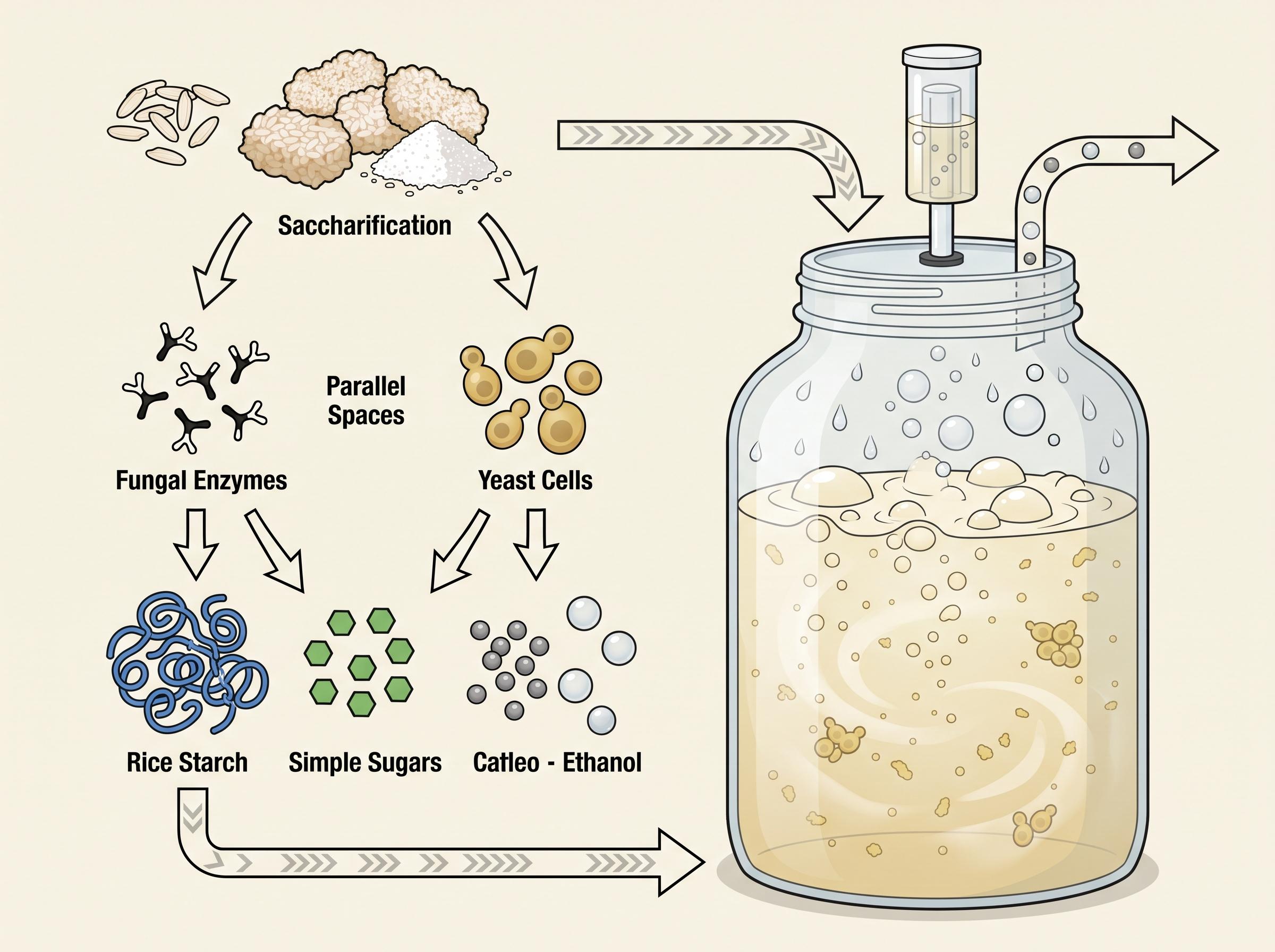
Authentic makgeolli brewing relies on a complex parallel dual-fermentation mechanism driven by natural microorganisms present in traditional nuruk. Starch from steamed short-grain rice must first undergo saccharification—a process where fungal amylase enzymes break down complex amylose and amylopectin molecules into fermentable simple sugars like glucose. Simultaneously, yeast strains, primarily wild Saccharomyces cerevisiae, metabolize these liberating sugars into ethanol and carbon dioxide gas, producing dynamic sensory shifts across the fermentation timeline5.
Academic profiling of makgeolli fermentation using wild yeast strains confirms that during the first one to eight days of primary room-temperature incubation, free sugars decrease rapidly while critical amino acids and organic acids multiply. For example, high-performance liquid chromatography studies using wild Saccharomyces cerevisiae Y98-5 have identified steep accumulations of essential amino acids like tyrosine (reaching 463.13 µg/mL) and leucine (reaching 362.77 µg/mL), contributing mouthfeel and umami depth5. Because live raw makgeolli maintains active colonies of yeasts and lactic acid bacteria, continuing carbon dioxide expansion remains an active biochemical reality throughout early aging5.
Transit Guidelines, Aviation Security, and Luggage Precautions
International attendees face specific physical constraints when managing their newly brewed alcohol batches. Under Republic of Korea aviation security guidelines and Ministry of Land, Infrastructure and Transport (MOLIT) notices enforced at Incheon International Airport and Gimpo International Airport, all liquids, aerosols, and gels in individual containers exceeding 100 mL are strictly prohibited in passenger carry-on cabins on international flights, requiring compliant items under 100 mL to fit completely inside a single 1-liter transparent resealable plastic bag6. Every unfinished fermentation jar or liquid vessel exceeding 100 mL must therefore travel strictly as checked baggage. Under aviation dangerous goods transport standards, alcoholic beverages of 24% ABV or lower—which includes standard makgeolli hovering between 6% and 12% ABV—are permitted in both cabin (subject to the 100 mL liquid rule) and checked luggage without volume limits beyond individual airline baggage weight allowances, whereas beverages between 24% and 70% ABV are restricted to a maximum of 5 liters per passenger in checked baggage6.
Despite the legal allowance for checked baggage below 24% ABV, checking active, unpasteurized makgeolli into aircraft cargo holds presents severe rupture risks. Because raw yeast cultures continuously produce carbon dioxide, bottles fitted with breathable pressure-release caps or standard plastic screw caps will leak or expand violently when exposed to cargo hold atmospheric pressure fluctuations56. For this reason, professional workshops recommend that foreign tourists consume their freshly brewed batches in Korea within their primary fermentation cycle, or select take-home options providing dry inoculated nuruk kits and shelf-stable pasteurized bottles instead16.
How to Select and Prepare for Your Seoul Workshop
Selecting the right workshop depends heavily on your schedule flexibility and learning objective. If your travel goal is a deep-dive technical education with comprehensive English theoretical manuals and optional take-home brewing kits, specialized entities like The Sool Company provide an industry-standard foundation with up to 10 guests per session. If you desire an intimate market-to-table atmosphere emphasizing modern seasonal fruit additions, Baekusaeng Makgeolli offers focused sommelier mentorship in Ahyeon Market. If public cultural heritage is your priority, monitoring the monthly application window for The Sool Gallery's subsidized Seoul Hallyu session offers unmatched value123.
Before attending, prepare comfortable footwear and clothing suitable for occasional splashes of water and mash starch. Because tasting components include multiple raw and high-proof distilled artisanal liquors, attendees should avoid driving and rely on Seoul's public subway network. When taking home an active liquid vessel to a local hotel room, store the jug upright at room temperature between 20°C and 25°C away from direct sunlight, and remember to gently vent the container cap twice daily to relieve accumulated fermentation pressure25.
Frequently asked questions
Q. Can I bring my freshly brewed raw makgeolli on an international flight home?
A. Containers over 100 mL cannot enter aircraft cabins under international liquid security rules. While checked baggage legally permits beverages below 24% ABV without specific alcohol volume limits, active unpasteurized makgeolli continuously releases carbon dioxide and will frequently leak or burst under aircraft cargo pressure changes. Instructors recommend enjoying raw brews in Korea or choosing dry ingredient kits for travel.
Q. How far in advance should I reserve an English makgeolli workshop?
A. Workshops maintain small class sizes—such as up to 10 guests at The Sool Company and 16 at The Sool Gallery—meaning available slots often fill up rapidly during the autumn peak season. Early reservation is recommended as soon as travel dates are confirmed, while state-supported Seoul Hallyu sessions require checking the dedicated registration link for monthly scheduling.
Q. Do I need prior homebrewing experience to participate in these workshops?
A. No prior experience is necessary. All listed classes cover basic grain steaming, fermentation biology, sanitization, and pressing step-by-step in clear English, accommodating complete beginners alongside culinary enthusiasts.
Sources
- Makgeolli Brewing Class in Seoul - The Sool CompanyThe Sool Company
- Learn to Brew Traditional Makgeolli at a Brewery, Seoul | My Guide SeoulMy Guide Seoul / GetYourGuide
- Traditional Alcohol Gallery / K-Liquor Making Class | The Official Travel Guide to SeoulSeoul Metropolitan Government
- The Sool Gallery (Free Taste) - Jae-dong, Jongno-gu, Seoul, Korea - Restaurant Reservation & Booking , Menu & Price, Review & Photo - CATCHTABLECATCHTABLE Global
- Metabolite Profiling during Fermentation of Makgeolli by the Wild Yeast Strain Saccharomyces cerevisiae Y98-5 - PMCMycobiology / PubMed Central
- 항공기 내 반입금지 위해물품 (국토교통부고시)국가법령정보센터 (대한민국 국토교통부)