 Korea Experience Finder
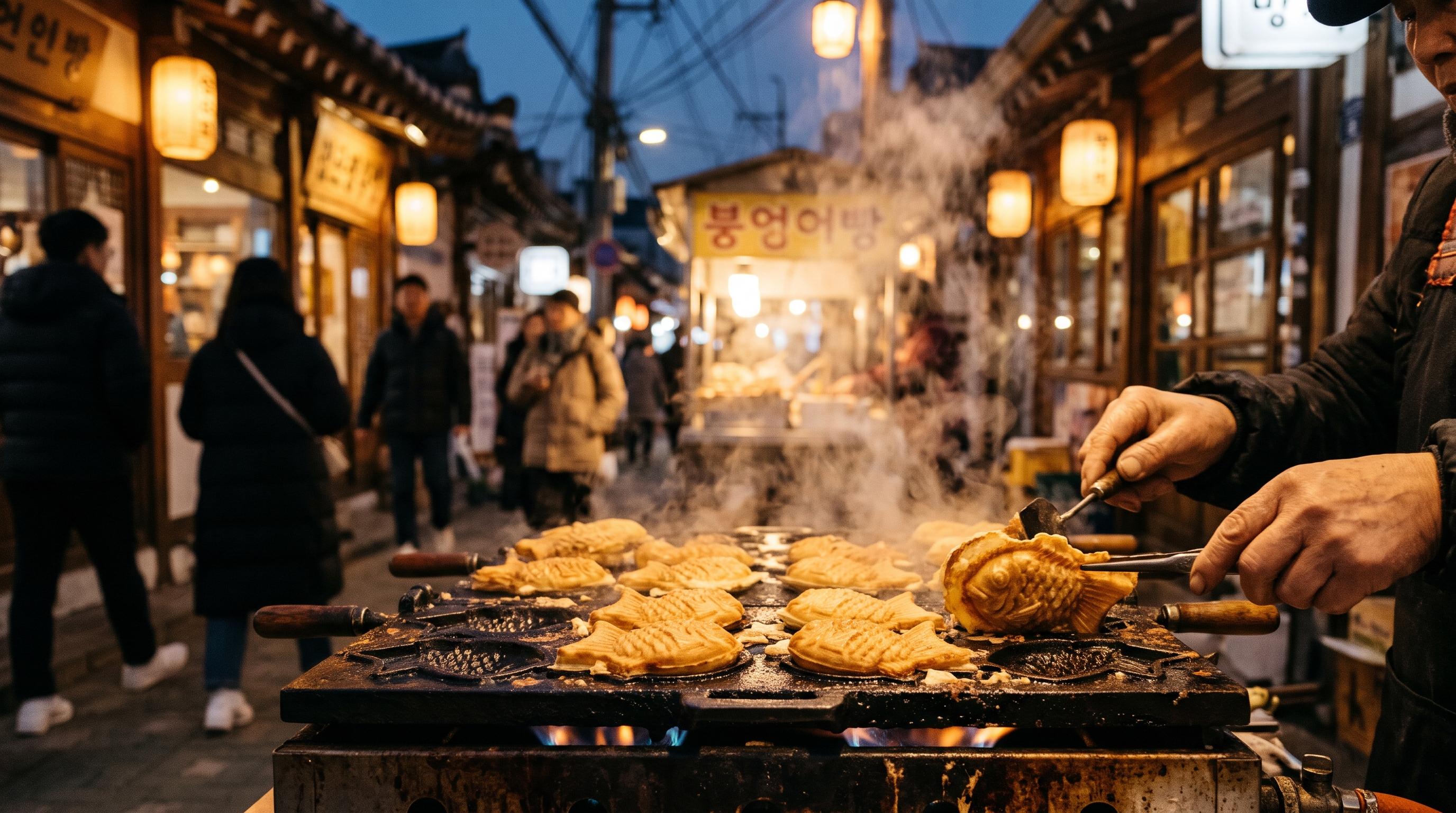
Foreign tourists cannot rely entirely on cashless payment at street carts because domestic bank transfers require local ID, though licensed zones like Myeongdong accept credit cards.
The Realities of Buying Seoul Street Snacks Without Physical Won
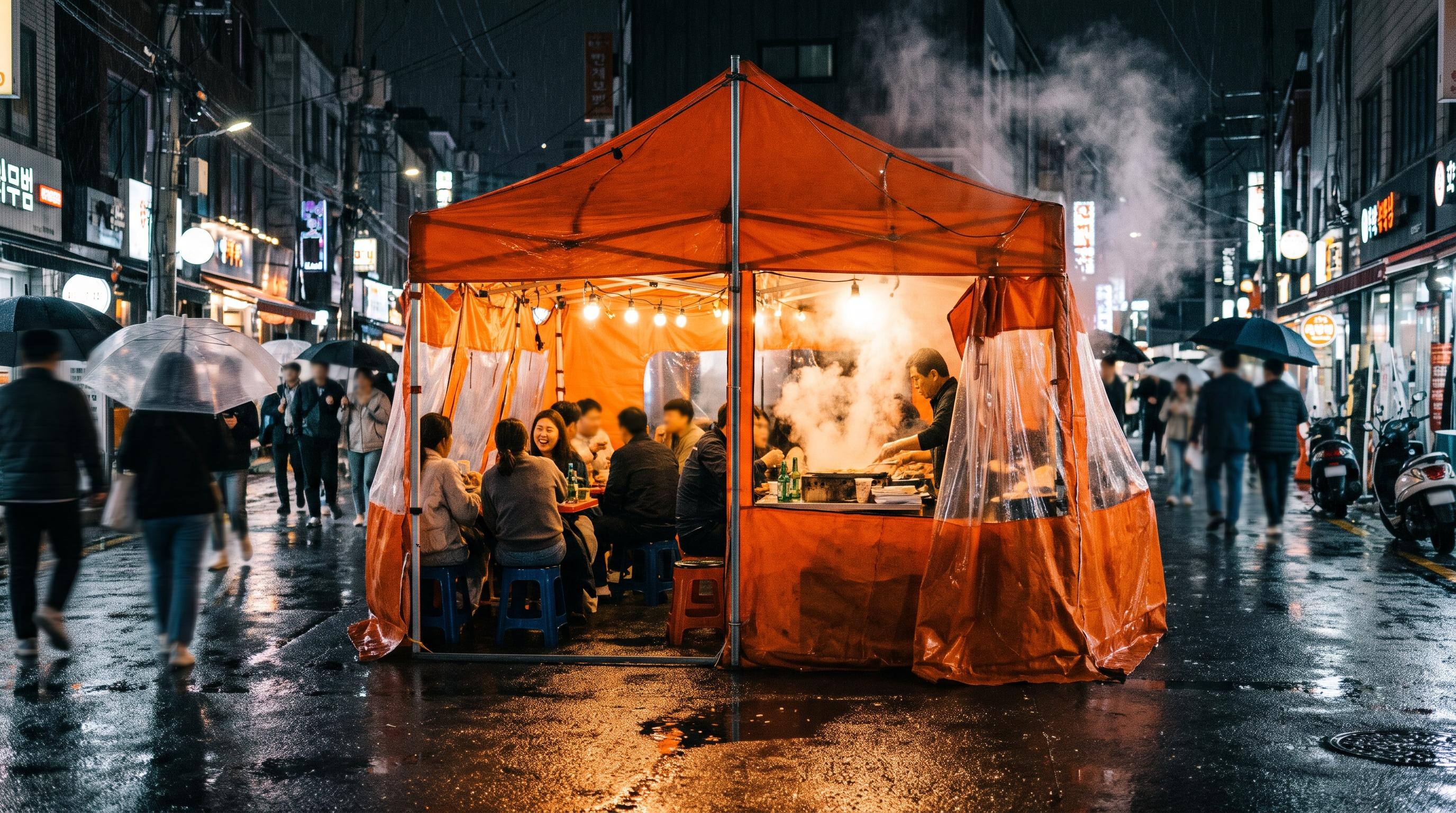
South Korea is renowned for being one of the world's most digital, card-friendly economies. However, that seamless tap-and-go experience encounters a distinct exception during winter when searching for street foods like bungeoppang (fish-shaped pastries filled with sweet red bean or custard) and hotteok (pan-fried yeast pancakes filled with brown sugar and nuts). International visitors arriving in Seoul frequently assume their overseas credit cards or Apple Pay will suffice everywhere, only to find small handcart vendors requesting KRW cash or displaying a domestic bank account number.
Understanding why this friction exists helps prevent confusion on a freezing night. Street food vendors in South Korea operate across vastly different regulatory and technological tiers. While registered commercial shops and specially zoned tourist stalls offer payment terminals, informal street cart vendors do not. Navigating this landscape requires distinguishing between designated tourist zones, neighborhood alleys, and the limits of international banking applications.
Why Bank Transfers and Cards Fail for Short-Term Tourists
Under Article 19, Paragraph 1 of the Specialized Credit Finance Business Act, credit card merchants cannot refuse credit card payments or treat cardholders unfavorably without justifiable reasons1. Furthermore, Paragraph 3 mandates that these merchants install and use card terminals registered with the Financial Services Commission1. However, this statutory duty applies exclusively to legally designated 'credit card merchants' that possess a valid business registration issued by the competent district tax office and a formal merchant contract with a credit finance firm1. Unregistered, mobile street cart operators have neither, meaning they are legally exempt from the obligation to accept card payments.
When local Korean customers encounter a stall without an integrated circuit terminal, they almost universally scan or type the vendor's bank account number displayed on a laminated board to execute a real-time account transfer. For short-term tourists, this fallback fails entirely. Korean peer-to-peer transfer apps such as Toss or KakaoPay require identity verification tied to an Alien Registration Card and a domestic telecommunications contract. International banking apps cannot route instant won transfers across domestic interbank networks, leaving short-term travelers unable to use the vendor's signposted account number.
Where Street Food Stalls Officially Accept Foreign Cards
There are specific municipal exceptions where credit cards work directly on the sidewalk. In central Seoul, the Jung-gu District Office initiated a policy in February 2024 to support street vendors in Myeongdong by issuing road occupancy permits to help operators obtain business registrations and install official payment terminals2. To stabilize the operating environment, Jung-gu implemented tailored special loan guarantees of up to 20 million KRW for registered street vendors equipped with card terminals, with Woori Bank providing terminals and fee waivers2.
As of July 2024 administrative counts reported for Myeongdong's street vendor zone, 184 street stalls had completed official business registration, with 118 stalls having installed card terminals2. In this designated tourist corridor, visitors can purchase bungeoppang and hotteok using physical international credit cards (Visa and Mastercard) or tourist prepaid cards like WOWPASS and NAMANE. However, outside these designated tourist districts, most traditional street carts remain informal setups without terminals.
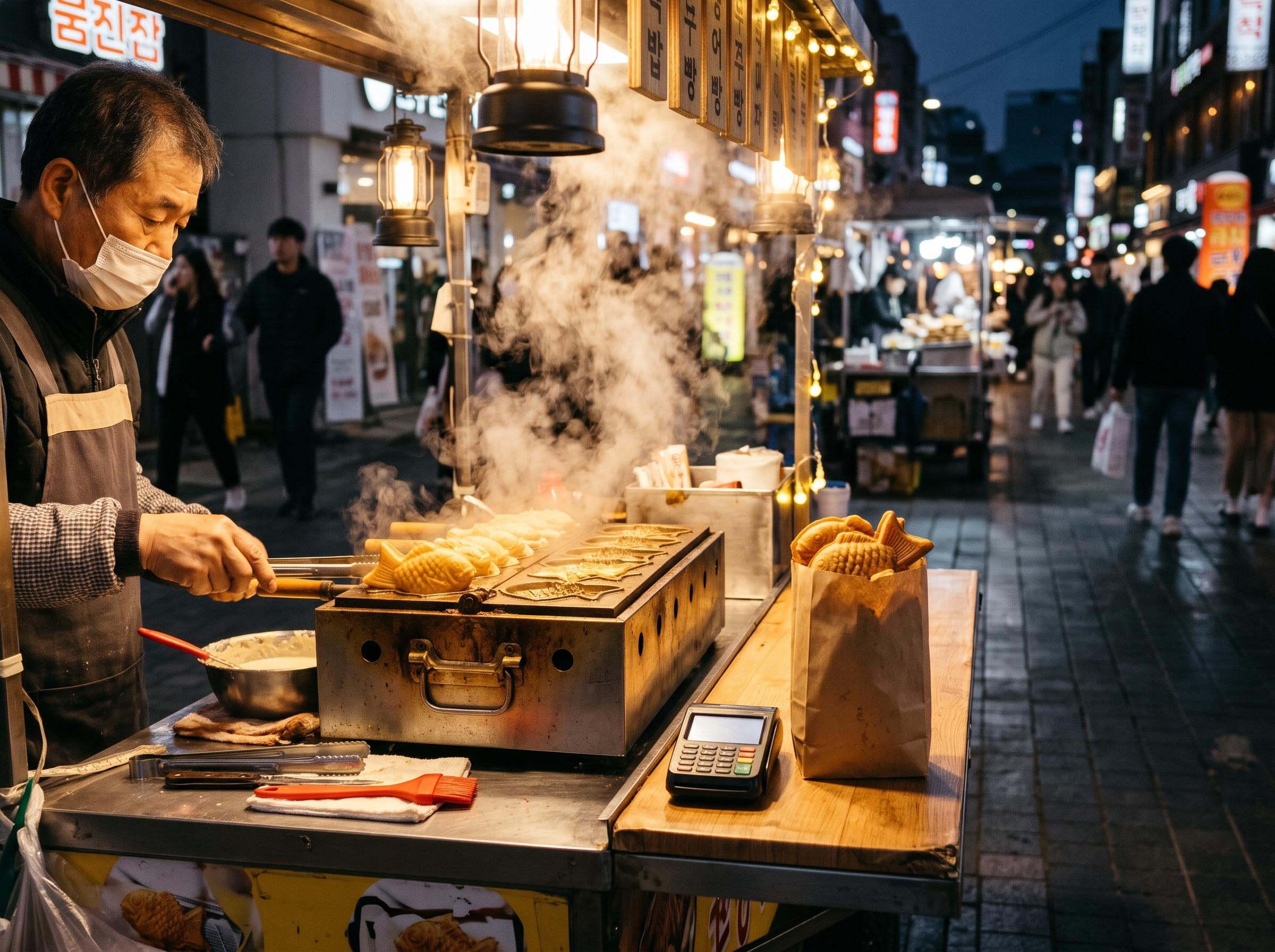
Tracking Winter Stalls via Korean Bungeoppang Map Apps
Because traditional winter food carts frequently shift operating hours based on raw ingredient supply, cold snaps, and municipal inspections, finding them on Google Maps is virtually impossible. Domestic platforms rely on crowdsourced mapping to track real-time locations. The community hyper-local platform Daangn maintains an annual seasonal feature known as the 'Winter Snack Map' or 'Bungeoppang Map.' According to official company data from late 2022 through January 2023, bungeoppang stalls accounted for 65.1% of all registered snack locations on the platform, followed by fish cake at 10.5% and hotteok at 9.9%3.
Another widely used mobile tool is the crowdsourced application '3dollar-in-my-pocket' (가슴속 3천원), which tracks street snacks within a user's immediate GPS radius4. The application maintains active crowdsourced records across over 1.2 million users and approximately 200,000 monthly active users4. Community contributors submit real-time opening status and whether a stall accepts card or cash. As of the 2026 winter season, typical street spot rates generally range around 2,000 KRW for 2 to 3 bungeoppang and 1,500 to 3,000 KRW per hotteok, though actual prices are set autonomously by each independent vendor and vary significantly based on wholesale ingredient costs and local foot traffic.
Comparing Street Food Locations: Payment Support and Accessibility
Depending on where you decide to hunt for winter street snacks in Seoul, your payment strategy must adapt. Independent carts outside suburban metro stations behave very differently from stalls positioned in historical commercial markets or tourist corridors.
| Location Type | Typical Card Acceptance | Domestic Bank Transfer | Crowdsourced App Tracking | Primary Risk Factor |
|---|---|---|---|---|
| Myeongdong Street Zone | High (over 100 stalls registered) | Supported via local QR | Low utility (fixed zone) | Higher unit prices |
| Traditional Tourist Markets (e.g., Gwangjang) | Moderate (depends on stall type) | Supported via local QR | Moderate utility | Crowds and card minimums |
| Subway Station Exit Carts (Alleyways) | Extremely Low (almost zero) | Widely requested by vendors | High utility (3dollar / Daangn) | Unannounced closures; cash only |
| Permanent Indoor Food Halls / Cafés | Universal (IC / Contactless / Apple Pay) | Rarely needed | Visible on standard map apps | Higher cost, less rustic atmosphere |
For travelers hunting for authentic neighborhood snacks across residential districts, relying on cashless payment remains unrealistic. On Daangn's winter snack map, dense residential neighborhoods like Sillim-dong in Gwanak-gu, Seoul recorded the highest total volume of community snack spot registrations nationwide3. However, high crowdsourced activity reflects vendor density rather than merchant terminal adoption. In local residential alleys, small carts lack point-of-sale terminals, making physical won essential.
Practical Protocol for Cashless Travelers
If you wish to explore authentic bungeoppang and hotteok carts without carrying a bulky wallet, adopt a hybrid approach. Keep an emergency reserve of physical currency explicitly set aside for street food. Convenience stores (such as CU and GS25) and subway station concourses house 'Global ATMs' compatible with foreign Visa, Mastercard, and Cirrus networks. Withdrawing 10,000 to 20,000 KRW in crisp 1,000 KRW and 5,000 KRW banknotes ensures you are never excluded at small independent stands.
Before ordering, inspect the stall counter for a physical card payment terminal, a WOWPASS logo, or payment scheme signs. If you only see a handwritten cardboard sign with a bank account number, conclude immediately that international digital payments and foreign cards cannot be processed. In those instances, polite use of exact physical won is the single operational payment path.
Frequently asked questions
Q. Can I use Apple Pay or Google Wallet at street food carts in Seoul?
A. Generally no. Apple Pay only works at vendors with NFC-enabled terminals registered with supporting card networks, which street carts almost never carry. A minority of registered stalls in tourist zones like Myeongdong possess standard IC card terminals, but mobile contactless support remains rare.
Q. Why can't tourists just scan the bank account QR code at the stall?
A. The bank account details displayed at street stalls require a real-time domestic wire transfer through a South Korean bank account or domestic apps like Toss and KakaoPay. Tourists lacking a Korean resident registration number or domestic bank account cannot complete these transfers.
Q. What is the typical price for bungeoppang and hotteok in Seoul?
A. As of the 2026 winter season, spot prices in neighborhood alleys typically range around 2,000 KRW for 2 to 3 bungeoppang, while hotteok generally sells between 1,500 and 3,000 KRW each. These rates are subject to change depending on local commercial rents and fluctuating flour and red bean ingredient costs.
Sources