 Korea Experience Finder
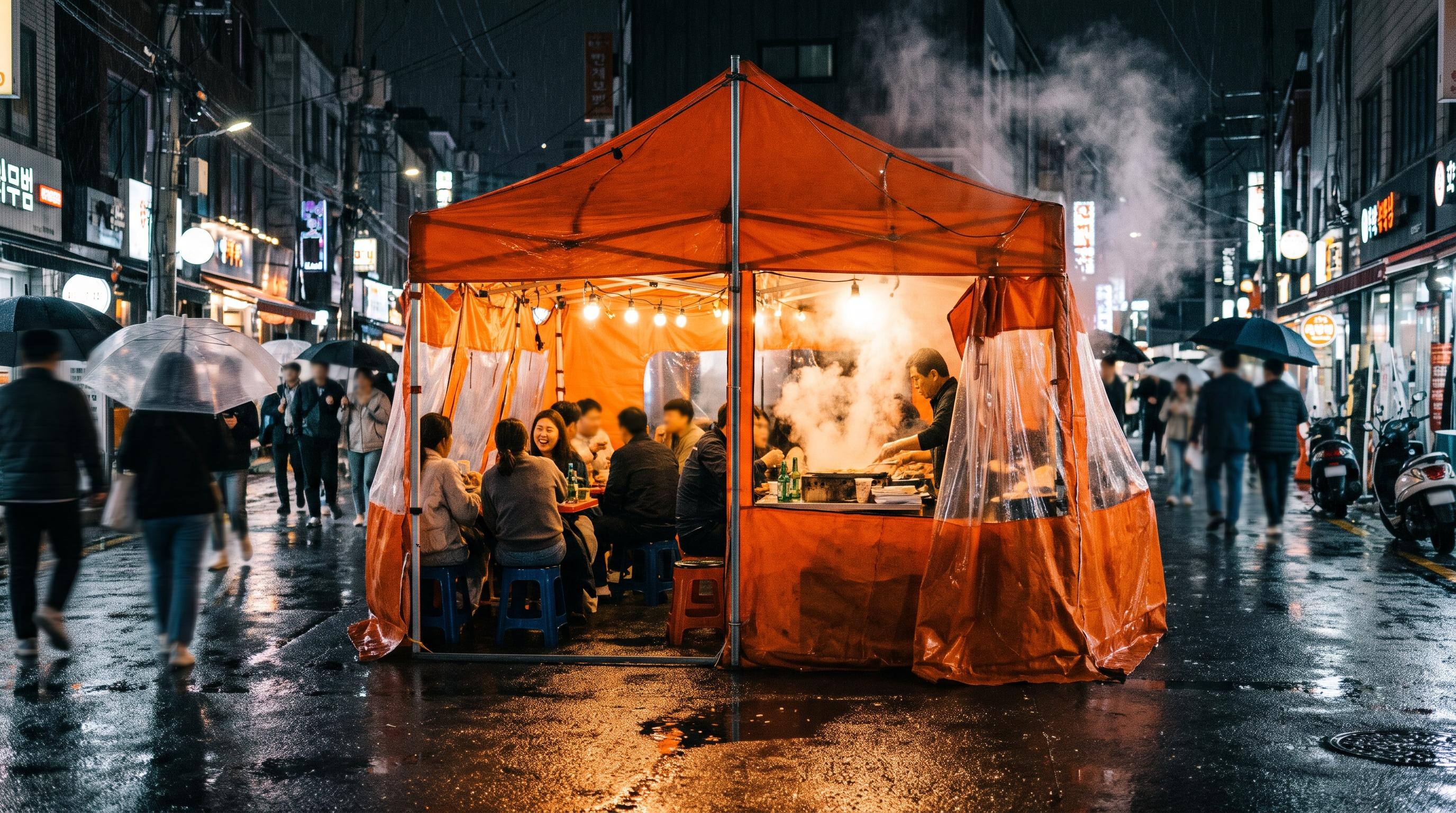
To order at a Korean pojangmacha tent bar, take an open stool, signal the owner with 'jeogiyo', order at least one sharing dish (anju) alongside drinks, and pay in cash.
Distinguishing Sit-Down Tent Bars from Standing Snack Stalls
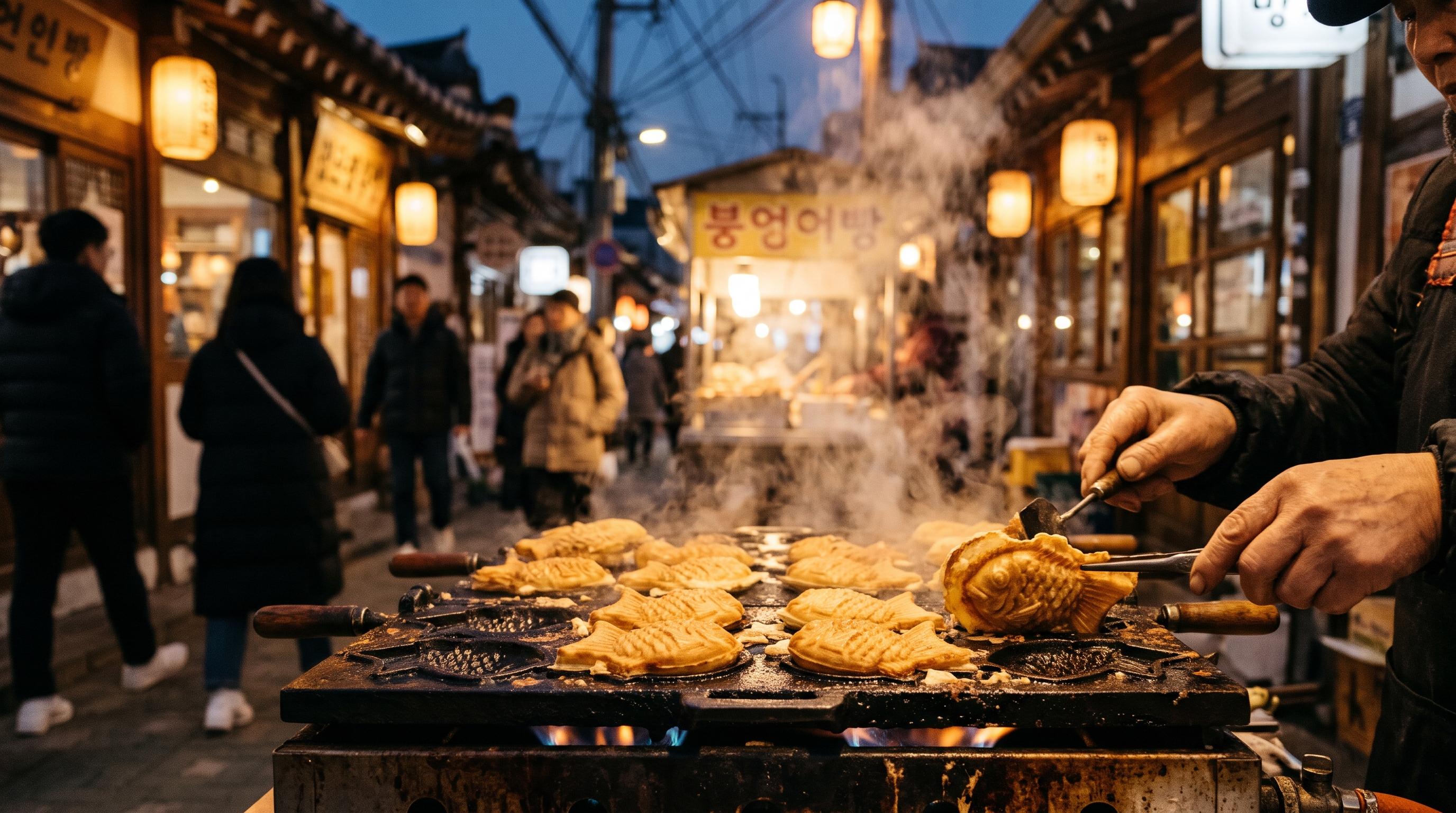
For travelers navigating Seoul's nighttime culinary scene, the word pojangmacha (literally 'covered wagon') can refer to two fundamentally different street establishments. The first category comprises daytime and early evening standing street carts that specialize in fast snacks such as tteokbokki (simmered spicy rice cakes), eomuk (skewered fish cakes in broth), and twigim (assorted deep-fried fritters). At these open-air stands, diners gather on foot along the perimeter, consume skewers directly from steaming vats, dip items into communal sauce bowls, and leave after ten or fifteen minutes without consuming alcohol.
In contrast, the evening sit-down pojangmacha operates under bright orange, red, or clear weather-shielding tarps furnished with folding plastic tables and stools. These nocturnal tent bars function primarily as open-air drinking establishments tailored around the Korean custom of anju—dishes cooked specifically to accompany alcoholic beverages3. Confusing these two models leads to common tourist missteps; taking up a seated table inside a tarped tent bar solely to request a single skewer of fish cake disrupts the establishment's business model and often leads the vendor to redirect you to an outside standing counter3.
Seating Protocol and Initiating Your Order
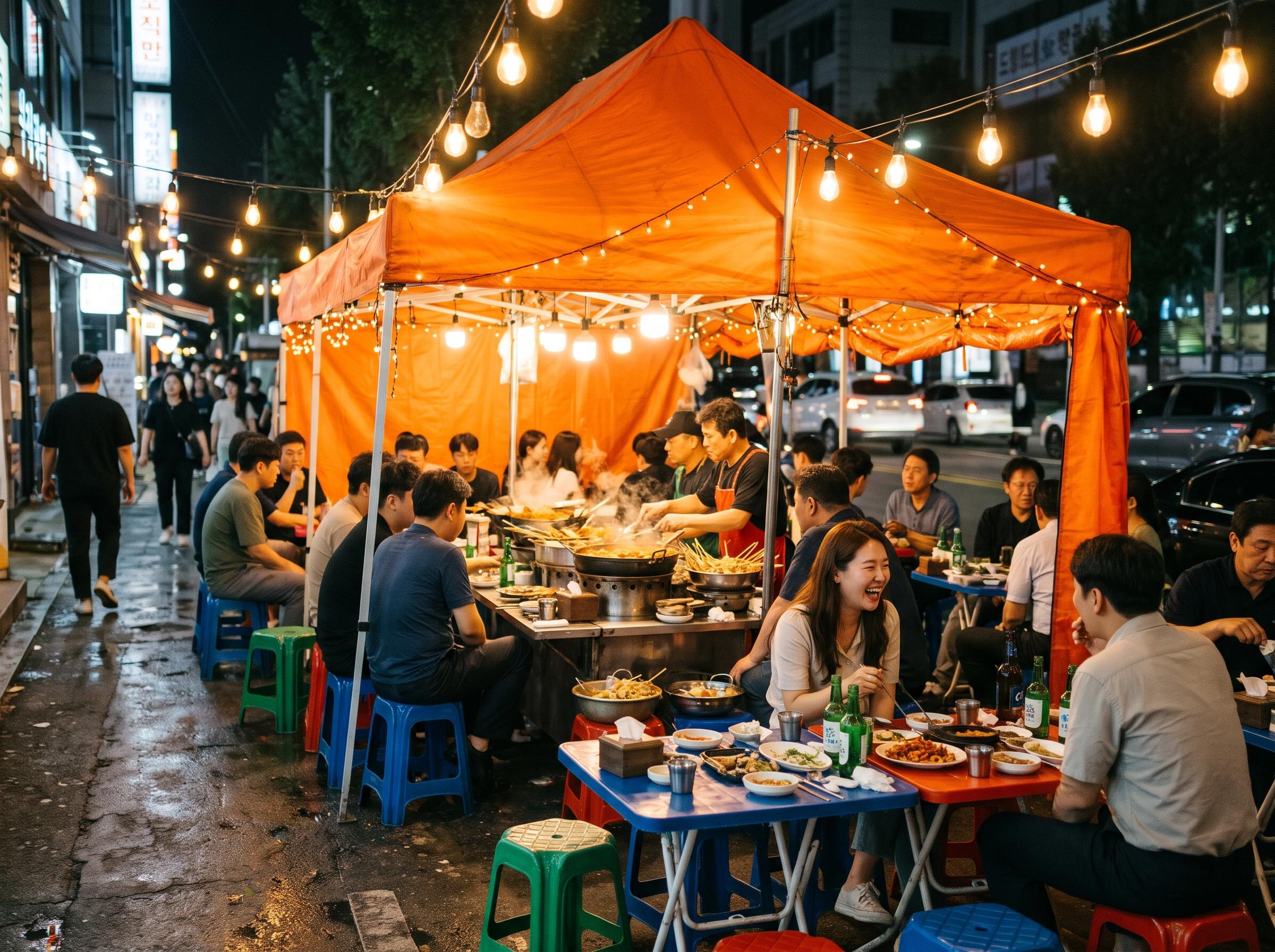
Traditional street tent bars operate without reservation desks, digital ticketing kiosks, or formal host podiums. Operating hours generally commence around 18:00 and run until 02:00 on weeknights, occasionally stretching past 04:00 on bustling weekends2. If you arrive during peak hours—typically between 19:30 and 22:30—you should approach the perimeter of the tent, establish eye contact with the cook or server (often an experienced vendor affectionately called 'imo' or 'ajumma'), and indicate the size of your party using finger gestures. If a stool is open, self-seating is standard practice, though vendors will quickly wave you to a specific folding table if they are balancing space constraints.
Once seated, do not wait passively for table service. Pojangmacha kitchens operate in close quarters with open gas burners and bubbling pans, meaning staff attention remains centered on the cooking line. To place an order or request assistance, raise your hand slightly and clearly say 'jeogiyo' (저기요, meaning 'excuse me')4. In modern tent venues, laminated menus printed in Korean with occasional rough English or Japanese translations are pinned to tent struts or resting on table corners4. Pointing directly to menu items or showing written Hangul script on a mobile screen is universally accepted and minimizes miscommunication during high-decibel service hours.
Menu Anatomy: Essential Anju and Beverage Rules
The operational cornerstone of any seated tent bar is the mandatory order of prepared food. Because profit margins on the street rely heavily on beverage turnover paired with sharing plates, a seated group is expected to order at least one cooked anju item upon sitting down, alongside a round of alcoholic or non-alcoholic drinks34. On exceptionally busy nights or for groups of three or more, vendors may request a minimum of two culinary dishes4. Plates are presented family-style in generous portions intended for communal grazing rather than individual entrées4.
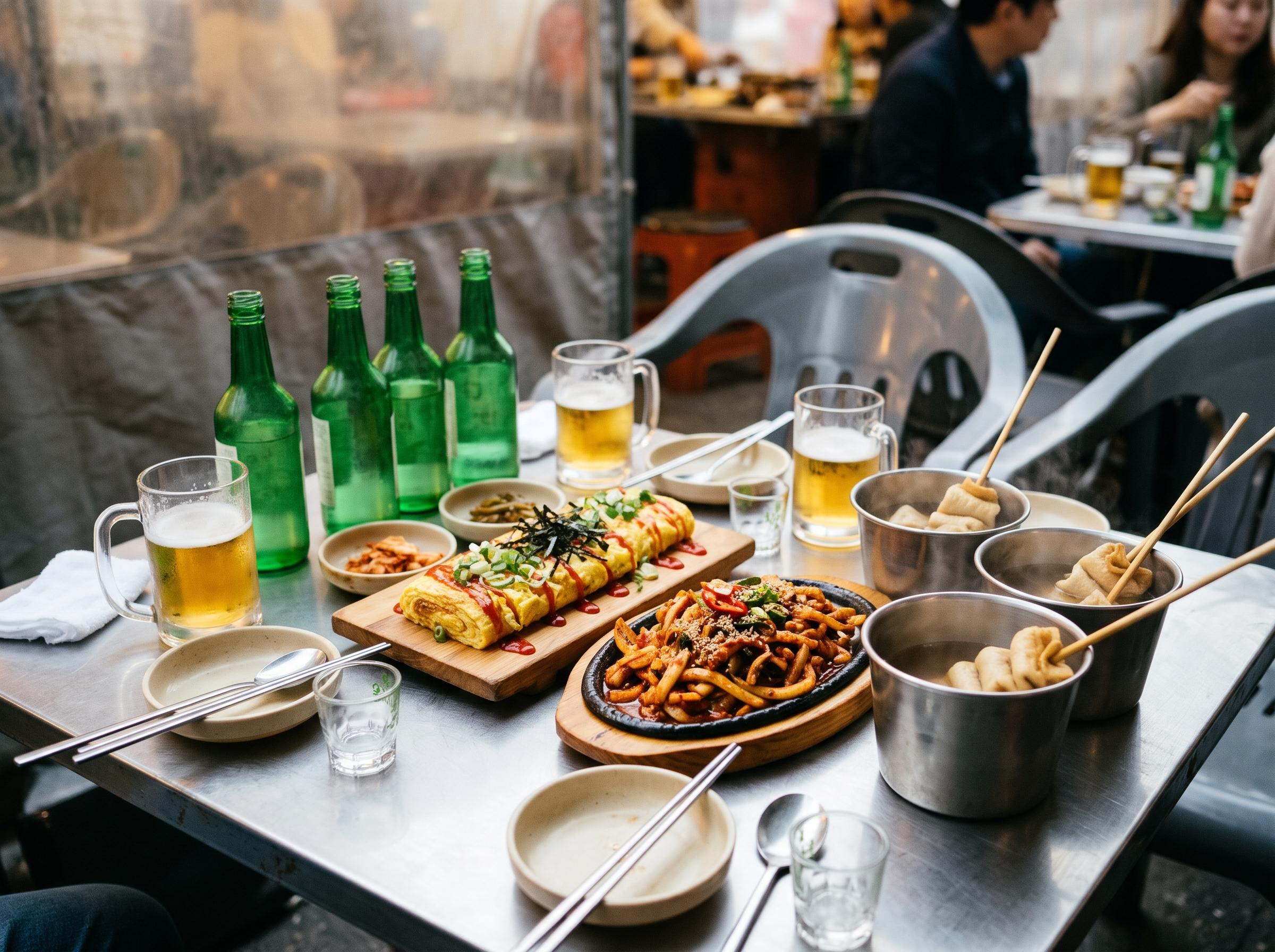
Typical tent bar menus feature quick, high-heat stir-fries and seafood specialties designed to cut through the proof of Korean spirits. Standard options include dak-ttongjip (stir-fried chicken gizzards with garlic and whole chili peppers), gyeran-mari (a thick rolled egg omelet layered with scallions), golbaengi muchim (spicy sea snails tossed with dried pollack and somyeon wheat noodles), and ojingeo bokkeum (squid stir-fried in a dark gochujang sauce)4. A complimentary small metal bowl or paper cup containing steaming eomuk broth is almost always placed on your table shortly after sitting down to sip while waiting for your stir-fried dishes to emerge from the burner.
When ordering drinks, soju (green-bottled distilled spirits) and Korean lager beer (maekju) dominate the tables. Visitors wishing to experience local dining culture often order both to assemble somaek—a blended cocktail measured by pouring a shot of soju into a half-glass of cold lager and stirring briskly to aerate the blend34. Bottles are served unopened at the table alongside stacks of small plastic shot glasses or tempered tumblers, accompanied by disposable wooden chopsticks retrieved from central dispensers on the counter.
Comparing Nighttime Dining Formats Across Seoul
Before selecting a dining location, international visitors should understand that Seoul features three distinct tiers of pojangmacha dining, each with distinct trade-offs in comfort, sanitation, pricing, and infrastructure. Traditional street tents line central thoroughfares such as Jongno 3-ga (exits 5 and 6) and select pockets of Euljiro2. Meanwhile, brick-and-mortar indoor bars—frequently branded as 'silnae pocha'—replicate the aesthetic indoors with vinyl walls, concrete floors, and retro metal fixtures while offering modernized conveniences like heated private restrooms and digital POS terminals4.
| Establishment Type | Average Per-Person Budget | Primary Payment Method | Restroom Facilities | Seating Dynamic |
|---|---|---|---|---|
| Street Snack Cart (Bunsik) | ₩4,000 – ₩10,000 | Cash / T-Money / Bank Transfer | Public subway station facilities | Standing only, brief visits |
| Traditional Tent Bar (Sit-Down) | ₩15,000 – ₩30,000 | Physical Cash / Domestic Bank Transfer | Subway stations or commercial corridors | Plastic stools, communal drinking |
| Indoor Pocha Pub (Silnae Pocha) | ₩20,000 – ₩35,000 | Credit Cards / Mobile Pay / Cash | Dedicated private on-premise restrooms | Standard indoor restaurant seating |
As outlined in the comparison above, choosing between an outdoor tarp tent and an indoor commercial pocha represents a balance between gritty sidewalk realism and logistical ease4. Outdoor stalls provide immersion into historic neighborhoods and unvarnished late-night street culture, but demand flexibility regarding cold drafts, shared elbow room, and off-premise bathroom visits4.
Payment Realities, Pricing Norms, and Legal Frameworks
Budgeting for a traditional tent bar requires planning ahead for physical cash. Unlike registered commercial storefronts across South Korea that widely accept foreign credit cards, temporary open-air street carts operate outside formal banking terminal networks. Because street carts generally operate as informal stalls without formal business registration and credit card merchant contracts, card processing hardware is entirely absent. As a result, credit cards cannot be accepted at these outdoor stalls4.
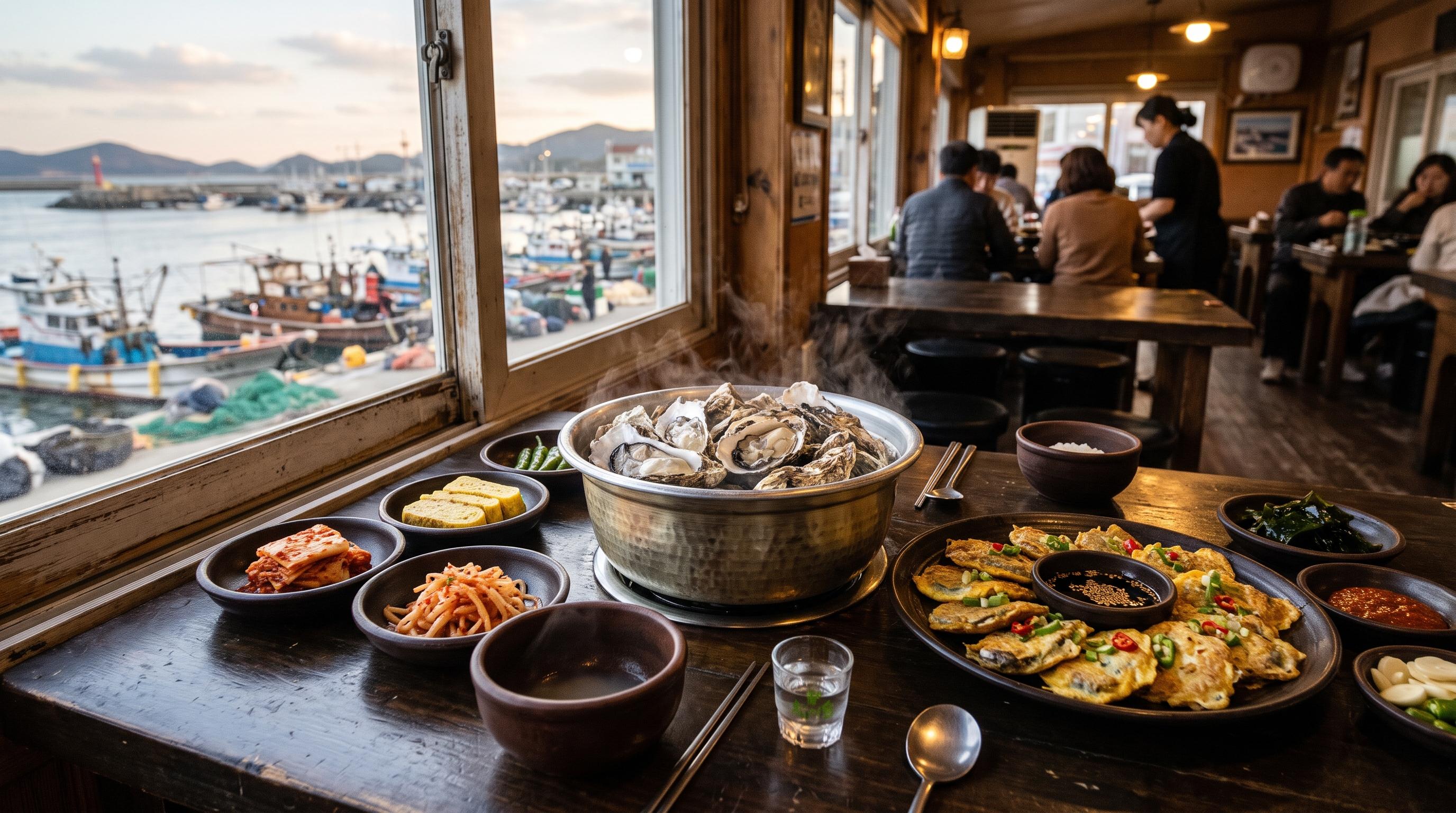
In practice, local Korean patrons settle their bills at street tents via domestic mobile bank transfers, sending funds to a bank routing number prominently written on a piece of cardboard taped above the stove. Because international visitors generally lack access to Korean domestic banking networks, carrying physical South Korean Won (KRW) banknotes is essential. As of November 2026, individual anju sharing dishes generally range between ₩15,000 and ₩30,000, while bottles of soju and domestic beer cost approximately ₩5,000 to ₩7,000 each4. Seasonal fresh seafood, such as raw oysters, may be marked as 'market price' (sigwa, 시가); you should confirm the current figure before ordering to prevent surprises upon settling the bill4.
When you are ready to conclude your meal and settle the tab, signal the owner by catching their attention and stating 'gyesan-hae juseyo' (계산해 주세요, meaning 'please calculate the bill')4. The vendor will step over to your table, tally the empty green bottles and completed plates, and state your total balance or display the final number on a handheld pocket calculator.
Practical Logistics: Restrooms, Safety, and Communication Hotlines
The defining logistical constraint of an open-air pojangmacha is the absence of private on-site plumbing. Stalls do not possess private bathrooms or indoor washrooms4. Diners must utilize nearby public transit facilities—such as underground subway station restrooms—or locate open commercial building corridors in the vicinity. Before settling in for an extended drinking session, observe the nearest subway exit or leave someone to hold your seat while you locate the closest operational facilities.
Language barriers can occasionally complicate specialized dietary restrictions, allergies, or payment inquiries. If a serious discrepancy or communication impasse occurs on-site, travelers can contact the 1330 Korea Travel Helpline, a multilingual service operated by the Korea Tourism Organization offering tourist interpretation and complaint resolution1. While standard voice calls to 1330 from regular mobile lines incur standard carrier voice call charges, travelers can place free online calls via Wi-Fi through the 1330 web portal or mobile chat apps to avoid telecommunication fees1.
Frequently asked questions
Q. Can I pay with an international credit card at a street pojangmacha?
A. No. Most traditional street-tent bars do not have card terminals and rely exclusively on cash or domestic Korean bank transfers. Always bring sufficient Korean Won banknotes before sitting down.
Q. Do I have to order alcohol if I sit at a pojangmacha table?
A. While consuming alcohol is not legally mandatory, tent bars depend commercially on beverage sales. Seated parties are expected to purchase drinks (alcoholic or soft drinks) along with at least one hot prepared food dish.
Q. Where do customers use the restroom when drinking at a street tent?
A. Street pojangmacha have no running water or on-premise restrooms. Diners must use nearby public subway station facilities or open commercial building restrooms.
Q. What is the polite phrase to ask for the bill at a tent bar?
A. Catch the vendor's attention and say 'gyesan-hae juseyo' (계산해 주세요), which means 'please calculate the bill'.
Sources
- 1330 Travel Helpline & Complaint CenterVISITKOREA
- Pojangmacha: Korean Street Food GuideNAMANE Blog
- Korean Pojangmacha: The Late-Night Street Food TentDaebak Magazine
- Pojangmacha in Seoul: Tent Bar Prices, Ordering, Where to GoBEAUTIPIN SEOUL