 Korea Experience Finder
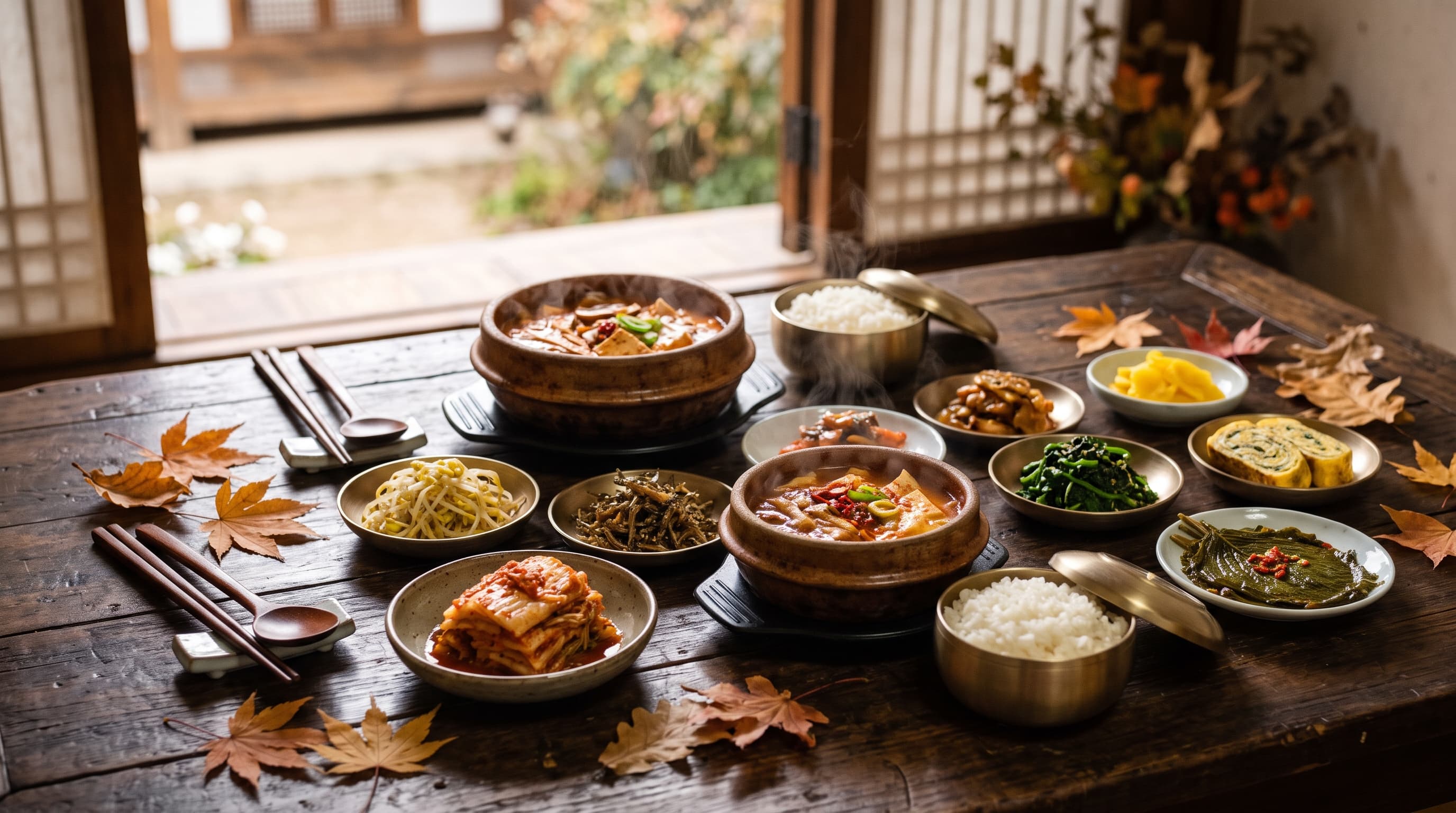
Travelers facing late autumn chills in Korea should prioritize chueotang (pond loach stew), seolleongtang (slow-simmered ox bone broth), and seasonal kkotgetang (autumn blue crab stew).
As October turns into November across the Korean peninsula, daytime highs drop sharply into the single digits Celsius, and the dry northern wind signals the immediate transition toward winter. For travelers exploring bustling open-air markets, royal palace grounds, or mountain trails during this late autumn window, standard street snacks rarely provide long-lasting warmth. Navigating Korean dining during this transitional season requires understanding tang (soup) and jjigae (stew) culture, specifically targeting broths built on seasonal harvests and long-simmered animal proteins that restore body temperature and supply vital nutrients.
Chueotang: The Quintessential Late Autumn Loach Broth
Chueotang (鰍魚湯) is historically and linguistically tied to the fall harvest. The Chinese character for loach ('chu' 鰍) combines the radical for fish (魚) with the character for autumn (秋), reflecting the biology of mud loaches that feed heavily and plump up with nutrients between July and November before burrowing into the mud for winter hibernation21. Historically, after the rice harvest around the autumn equinox (Chubun), Korean farming communities drained the paddies and dug irrigation ditches in an activity known as 'dogu chigi' to catch fattened loaches, boiling communal stews to host celebratory feasts known as 'sangchi madang' to honor elderly village members2.
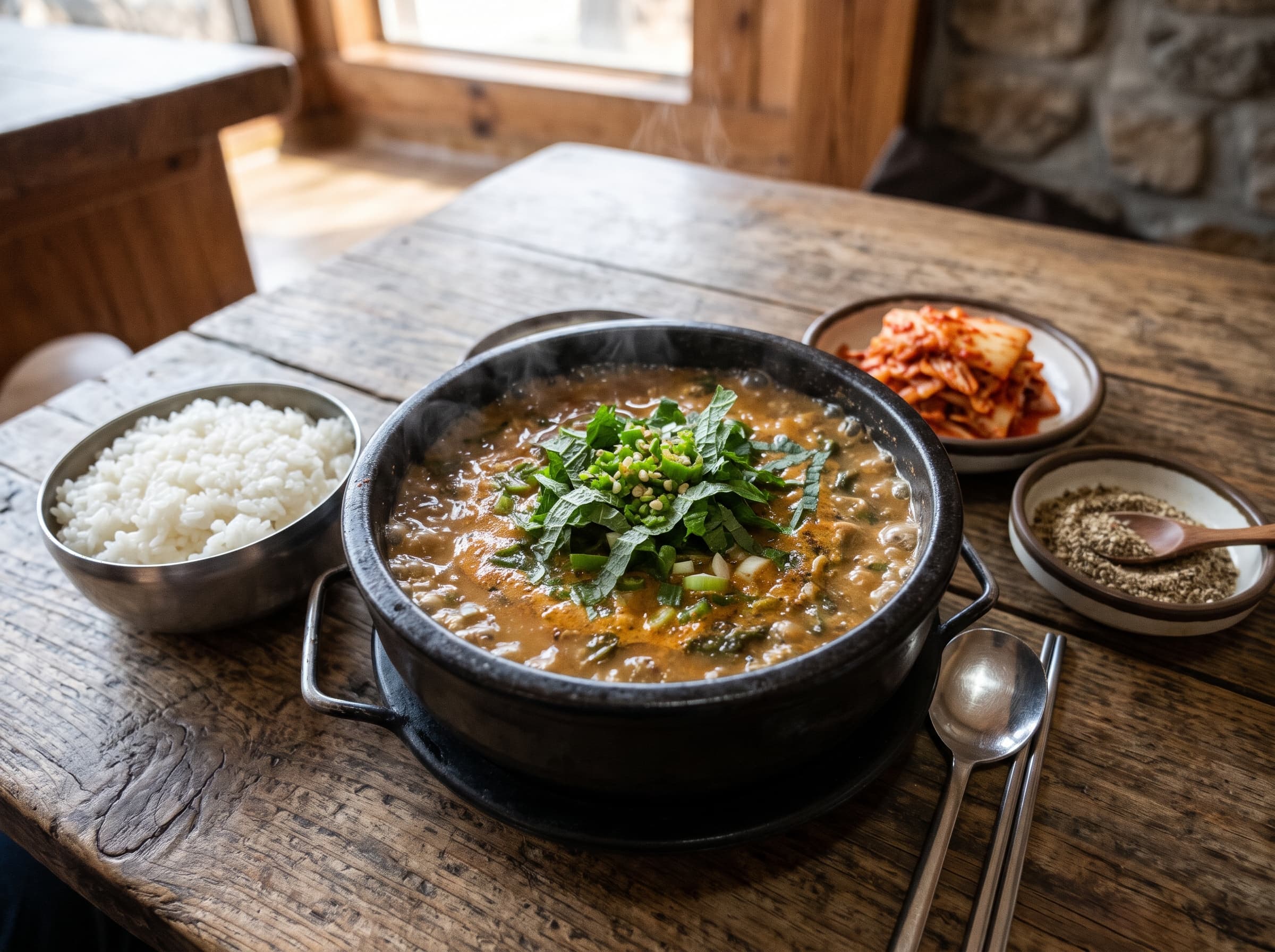
For travelers unfamiliar with freshwater fish dishes, ordering chueotang can cause apprehension, yet modern regional variations cater to differing palates. In the widespread Namwon (Jeolla) style, loaches are boiled until tender and then passed through a fine sieve or finely ground, blending into a thick, nutty broth seasoned with soybean paste (doenjang), dried radish greens (siraegi), and toasted perilla seed powder (deulkkaegaru), completely eliminating visible bone structures21. By contrast, traditional Seoul-style chueotang (historically termed chutang) simmers whole loaches in a rich beef bone or brisket broth accented with gochujang, fried tofu, and zucchini, whereas Gyeongsang-do styles produce a clearer broth seasoned with Napa cabbage, taro stems, and aromatic mountain herbs like sancho (prickly ash) and banga (Korean mint)22.
Seolleongtang: Centuries of Unseasoned Ox Bone Simmering
Unlike spicy, complex stews, seolleongtang (설렁탕) centers on pure culinary minimalism. Folkloric history links the dish to the Joseon Dynasty, where kings performed ancestral agricultural rites at the Seonnongdan altar outside the eastern gates of the capital and plowed symbolic fields (chingyeong). Following the ceremony, entire cattle were simmered in massive cauldrons with water to create 'Seonnongtang,' distributing nutrient-dense beef soup to the gathered populace4. Today, Seoul establishments preserve this heritage by simmering beef leg bones (sagol), brisket (yangji), and head meat over high heat for upwards of 10 hours until bone marrow and collagen emulsify into a stark milky-white liquid44.
A crucial procedural detail for foreign diners is that authentic seolleongtang arrives completely unsalted. The simmered broth contains zero added sodium from the kitchen, placing full seasoning control in the hands of the patron4. Tables are appointed with containers of coarse sea salt, finely chopped scallions, and black pepper; diners are expected to add small pinches of salt gradually, stirring between tastings to elevate the natural sweetness of the rendered marrow. Experienced locals frequently ladle tart radish kimchi brine (kkakdugi gukmul) directly into the white broth toward the end of the meal to create an acidic, zesty finish4.
Autumn Kkotgetang: The Seasonal Western Sea Catch
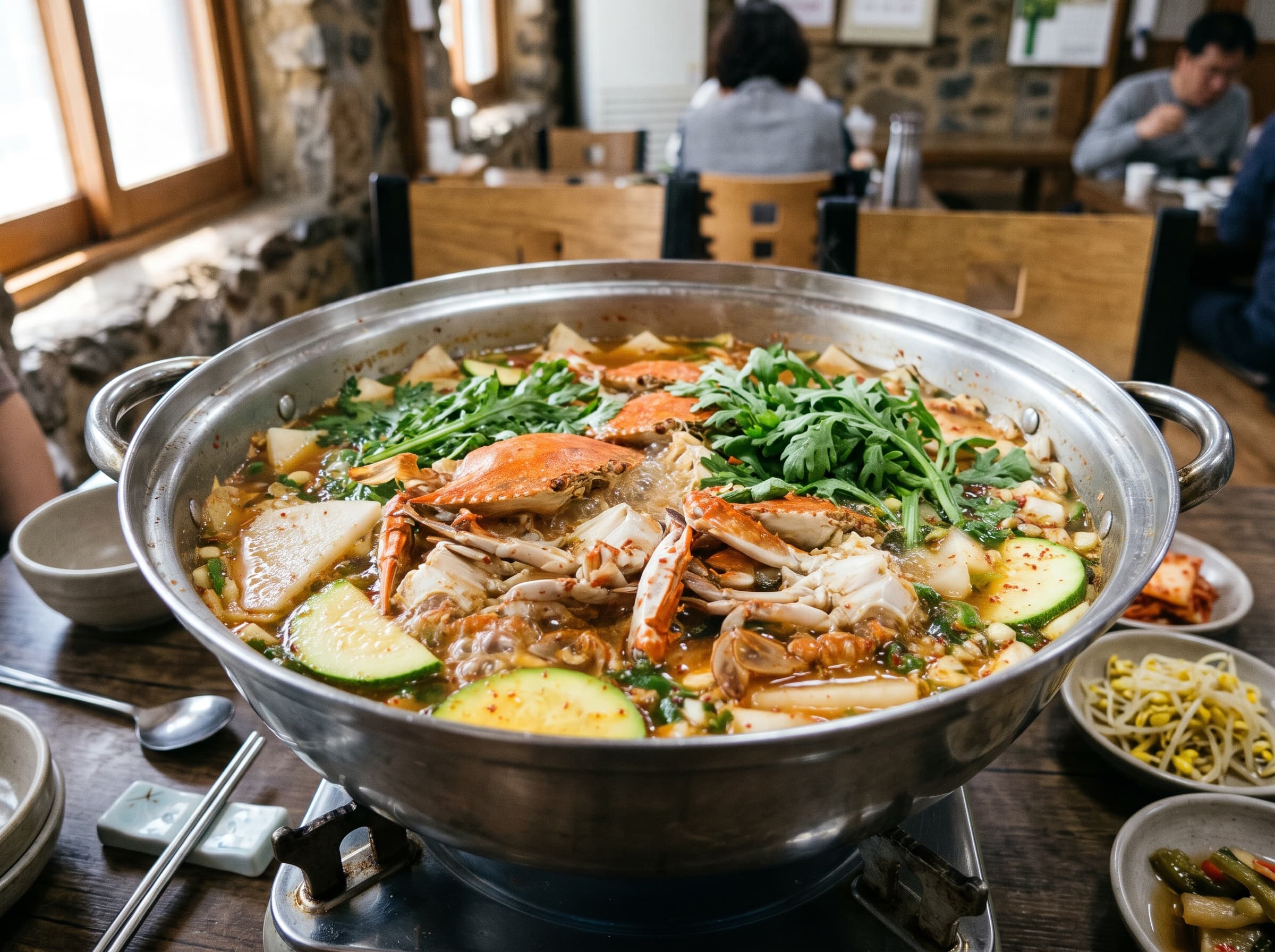
While seolleongtang is available year-round, late autumn presents a brief window for authentic seasonal kkotgetang (꽃게탕, blue crab stew). The name 'kkotge' historically derives from 'gotge' (곶게), alluding to the sharp, cape-like spikes on both sides of the crab carapace that resemble land protruding into the sea33. While spring yields female crabs laden with orange roe, late autumn (September through November) is the peak season for male crabs, which gorge on nutrients following the summer fishing ban, yielding exceptionally dense, sweet, and firm meat packed with protein and taurine33.
Under the Fisheries Resources Management Act Enforcement Decree, crab harvesting along the west coast is strictly prohibited every year from late June through late August to protect reproductive cycles. Consequently, the crabs arriving at Incheon and Seoul coastal markets throughout October and November represent freshly harvested catch with maximal meat yield36. Kkotgetang broth utilizes an anchovy and kelp stock accented with fermented doenjang to cut fishy notes, balanced by gochugaru (red pepper flakes), Korean radish, and crown daisy (ssukgat), yielding an intense briny sweetness as the crab shells release natural astaxanthin and amino acids under gentle boiling33.
Comparative Profile of Seasonal Warming Soups
| Dish Name | Primary Protein & Base | Flavor Profile & Spice Level | Key Condiments & Serving Vessels | Seasonal Window |
|---|---|---|---|---|
| Chueotang (Namwon Style) | Ground mud loach (Misgurnus) + doenjang & perilla stock | Nutty, earthy, savory; mild to moderate heat | Ttukbaegi bowl; add perilla seed powder, crushed garlic, sancho pepper | Optimal in late autumn (Sept–Nov) |
| Seolleongtang (Seoul Style) | Ox marrow leg bones + beef brisket & head meat | Mild, milky, pure umami; unspiced | Ceramic or earthenware bowl; self-seasoned with sea salt, scallions, pepper | Year-round comfort; ideal for freezing mornings |
| Kkotgetang (Seafood Hot Pot) | Fresh male blue crab (Portunus trituberculatus) + kelp-anchovy stock | Sweet, briny, fiery and refreshing; medium to high heat | Tabletop shared metal pot; served with radish slices and crown daisy | Autumn peak post-fishing moratorium (Sept–Nov) |
From a nutritional perspective, these warming stews offer distinct dietary benefits when temperatures tumble. According to the Ministry of Food and Drug Safety nutritional database, chueotang delivers approximately 135 mg of bioavailable calcium per 100 grams because the fish bones and heads are softened and ground entirely into the broth5. In contrast, a 1-serving bowl of seolleongtang provides pure animal protein and gelatin peptides with virtually zero inherent salt until seasoned at the table, offering gentle digestion for travelers with sensitive stomachs4. Meanwhile, blue crab provides abundant taurine and essential amino acids like glycine and lysine, supporting circulatory endurance during extended physical travel3.
Practical Dining Protocols and Common Pitfalls
Executing an authentic stew meal in South Korea requires attentiveness to tableware dynamics and condiments. Soups in specialty diners are served in ttukbaegi (unglazed or glazed coarse ceramic pots) heated directly over flames; the liquid will boil vigorously for several minutes after hitting the table, requiring diners to avoid immediate gulps that burn the palate. To enjoy chueotang like a seasoned resident, stir in a half-spoon of minced fresh garlic, two spoonfuls of perilla powder, and a delicate pinch of pungent sancho pepper. Sancho possesses a numbing citrus profile similar to Sichuan peppercorn; adding too much will overwhelm the earthy base of the broth5.
Travelers with shellfish allergies must practice strict vigilance, as both chueotang and seafood bases can occasionally share equipment or incorporate fermented shrimp paste (saeujeot) in side dishes. For those monitoring sodium intake, remember that although seolleongtang arrives plain, chueotang bases are simmered with fermented soybean and red pepper pastes, contributing substantial sodium; sipping the nutrient-dense solids while leaving half the residual broth is a standard healthy dining tactic1. As menus in traditional establishments are typically printed solely in Hangul, look for indicators such as '갈아서' (gal-aso: ground loach) versus '통' (tong: whole loach) when ordering chueotang to prevent unexpected culinary shocks.
Frequently asked questions
Q. Will I see whole fish inside my bowl when ordering chueotang?
A. In most metropolitan restaurants and Namwon-style diners, no. The mud loaches are boiled until very soft and ground finely before straining, making the texture identical to a thick vegetable and bean-paste stew. Only traditional Seoul 'tong-chutang' uses whole intact loaches.
Q. Why does seolleongtang taste completely bland when served?
A. Traditional seolleongtang kitchens do not add salt during the 10-hour bone-simmering process. Every diner seasons their individual bowl using the coarse rock salt, black pepper, and sliced green onions provided on the table.
Q. Can I find authentic autumn kkotgetang throughout the winter months?
A. While frozen crab stews are served year-round, fresh wild-caught male blue crabs peak specifically from September through November following the summer fishing ban, making late autumn the prime culinary window for maximal meat sweetness.
Sources
- 가을 대표 보양식 추어탕, 처음이라면 서울식부터 드세요 [FOOD+]세계일보 (Segye Ilbo)
- 미꾸라지 한 마리가 만든 가을 별미 추어탕의 유래한국뉴스 (24news.kr)
- 제철수산물- 가을 꽃게국립수산물품질관리원 수산물안전정보서비스
- 약 70년간 이어온 깔끔하고 담백한 서울식 설렁탕의 맛한식진흥원 (The Taste of Korea HANSIK)
- Korea's Summer Wellness Food — Chueotang, Korea's Traditional Loach SoupNearby K-Food
- 꽃게 금어기 해제… 가을 꽃게잡이 본격 시작수협신문 (Suhyup News)