 Korea Experience Finder
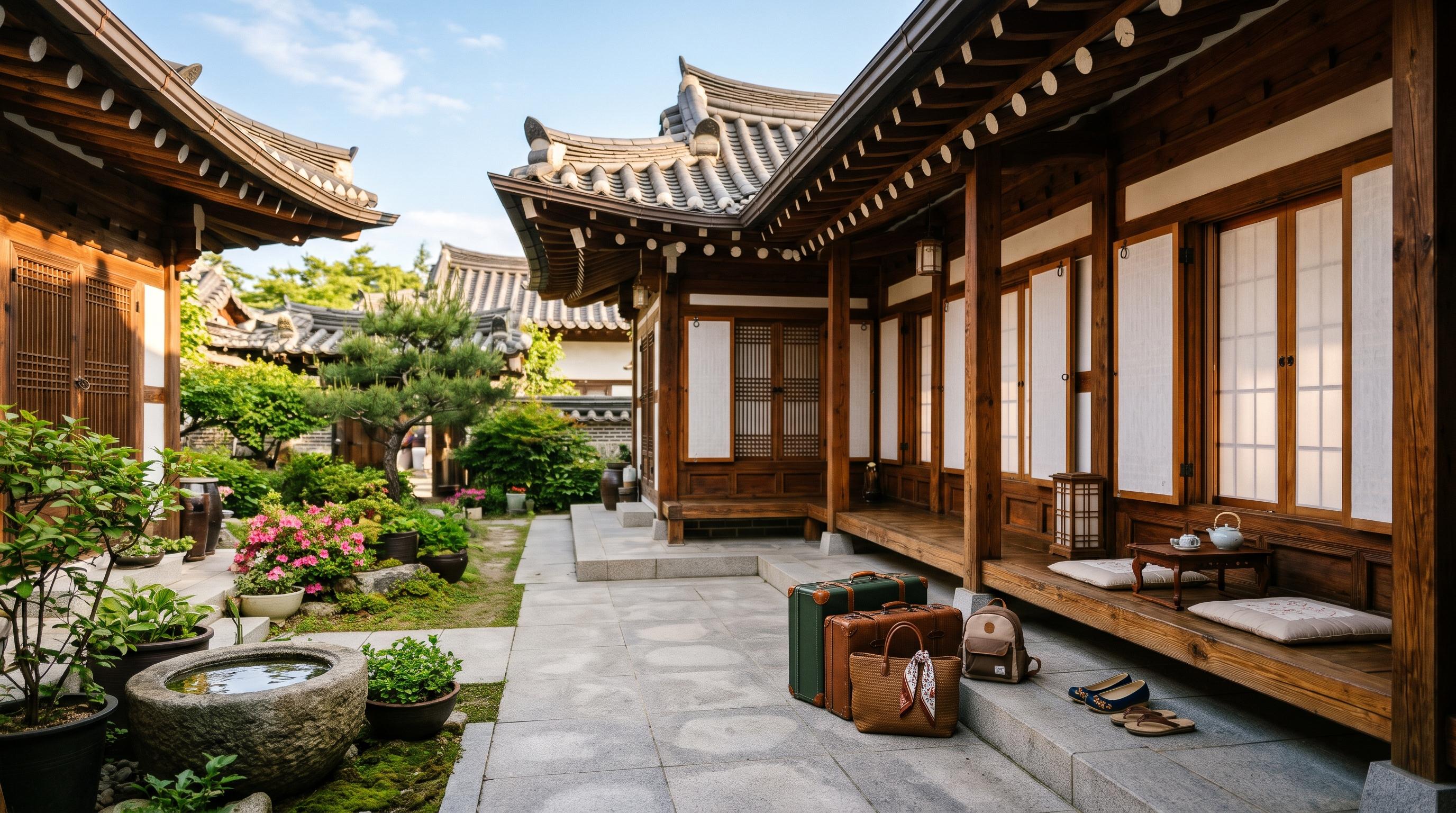
In South Korea, room occupancy caps are strictly enforced house rules where infants usually count as full occupants, and exceeding limits risks entry denial or extra fees.
- Enter all children and infants into booking search filters rather than querying for two adults alone.
- Check the property's explicit Maximum Occupancy (최대인원), confirming that total family headcount never exceeds this cap.
- Review child policies: confirm whether children under 12 stay free on existing bedding or require an extra paid bed3.
The Baseline Reality: Why Korean Accommodation Rules Catch Families Off Guard
Traveling to South Korea as a family often begins with standard room reservations on global booking platforms, but arriving at the front desk can lead to unexpected misunderstandings. In many Western countries, bringing a toddler into a hotel room with existing king-sized bedding is treated as a routine adjustment and accommodated without incident. In South Korea, however, lodging capacity operates on strict property house rules and established operational standards. Whether booking an upscale business hotel in downtown Seoul or a countryside pension on Jeju Island, every human occupant—regardless of age—is scrutinized under the property's stated guest parameters3.
When foreign visitors arrive with more guests than originally declared on an online reservation voucher, Korean operators do not treat the situation as an informal adjustment. Accommodation businesses enforce strict management terms regarding room headcounts, guest comfort, and on-site facility limits2. Consequently, families who assume an infant or young child can stay in a double room without prior declaration frequently encounter strict entry refusal, obligatory extra-room bookings, or non-negotiable per-person surcharges23. Understanding the operational distinction between Standard Occupancy (기준인원) and Maximum Occupancy (최대인원) is the first essential step in avoiding on-site disputes during your stay in Korea.
House Rules, Operating Frameworks, and Rural Lodging Structures
The firm adherence to guest limits displayed at Korean front desks stems primarily from binding business house rules and commercial lodging contracts rather than on-the-spot inflexibility. While statutory frameworks like Article 17 and Annex 7 of the Enforcement Decree of the Act on Fire Prevention and Installation and Management of Fire Fighting Systems specify engineering formulas to calculate building occupant loads for fire safety equipment, individual room caps are set directly by the property operator's terms of service. Operators establish rigid limits to prevent overcrowding, maintain safety protocols, and ensure compliance with their facility insurance agreements.
Furthermore, many countryside pensions, traditional private stays, and boutique rural villas operate as Rural Homestay Businesses (농어촌민박업) under Article 2, Item 16, Sub-item (d) and Article 86 of the Rearrangement of Agricultural and Fishing Villages Act1. Under the Enforcement Rule of the same Act, these businesses are small-scale residential lodgings restricted to an individual detached house gross floor area of under 230 square meters1. Because these homestays operate within compact residential structures and community guidelines, hosts establish strict maximum guest headcounts in their terms of use, making front-desk capacity negotiation virtually impossible upon arrival1.
Standard Occupancy vs. Maximum Occupancy: Decoding the Fee Structure
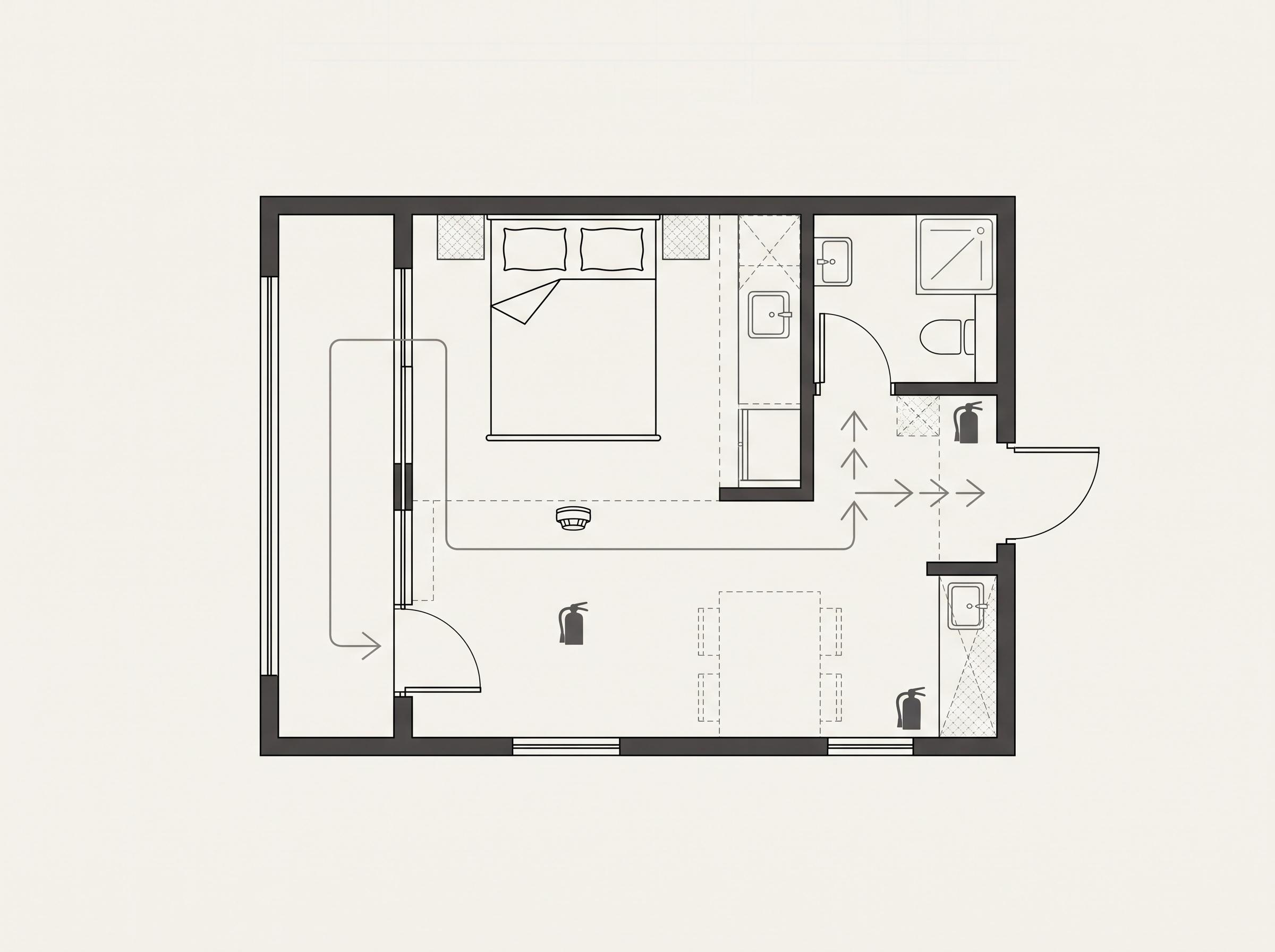
Korean accommodation listings consistently differentiate between two figures: 기준인원 (Standard Occupancy) and 최대인원 (Maximum Occupancy). The standard occupancy reflects the baseline number of guests covered by the advertised nightly price. The maximum occupancy represents the absolute ceiling of guests permitted inside the room under property house rules. For example, when a room states 'Standard 2 / Maximum 4', up to two additional people may be added above the base rate, but each additional person triggers an on-site extra guest surcharge (추가요금)2.
In economy accommodations, hostels, and regional stays, extra person fees vary across properties; for instance, published house rules at Pyeongtaek Muse Hostel specify an on-site extra guest fee of 20,000 KRW per adult and 10,000 KRW per child, while extra bedding is billed separately at 10,000 KRW per set2. Travelers must recognize that these amounts represent individual property policies verified as of November 2026, and specific charges differ across lodgings. Bedding is frequently an unbundled, separate charge in Korean pensions and hostels rather than an automatic inclusion. Meanwhile, in full-service hotels like Hotel Koreana, adding a third guest in eligible double rooms (such as Deluxe Queen B or Premium King) requires an extra bed charged at 44,000 KRW per night including tax and service charges3. If a room is listed as 'Standard 2 / Maximum 2', bringing a third guest of any age is barred by house rules, and paying an extra fee is not permitted23.
The Headcount Trap: How Infants and Children Are Handled in Korea
A widespread source of friction for international parents is confusing financial billing exemptions with physical room capacity limits. In major urban hotels, young children often stay free when using existing bedding; at Hotel Koreana, for instance, one child under 12 years old may stay free when sharing an existing bed with parents, while guests aged 13 and above are classified as adults under its terms as of November 20263. However, even when an infant or young child incurs no extra room fee or qualifies for a discounted child fee, they virtually always count toward the total head limit of the room's maximum occupancy23.
This policy distinction frequently causes check-in failures for foreign tourists. A family consisting of two adults, one child, and a baby totals four occupants. If this family books a room configured with a maximum occupancy of three people—assuming the infant does not occupy a separate bed—the property is entitled under its published house rules to deny entry to the unregistered extra guest2. As Korean law does not mandate accommodations to waive occupancy limits for infants, guest headcounts remain strictly governed by the establishment's individual reservation terms4.
Cross-Property Comparison: Rules, Child Ages, and Extra Costs
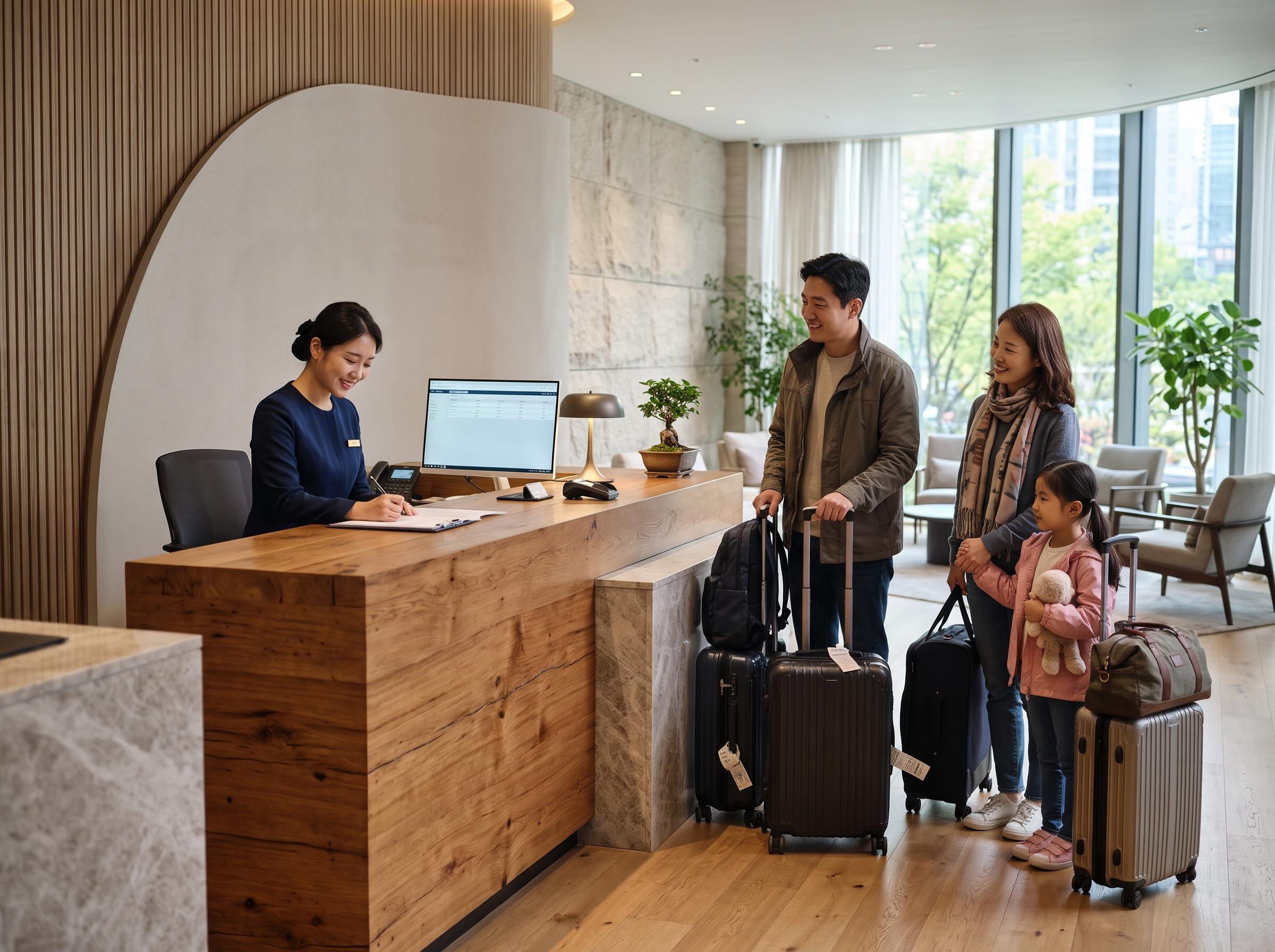
To help international travelers budget and plan accurately, the operational policies across Korean lodging categories are compared below. Pricing, age thresholds, and extra charges reflect specific enterprise terms verified as examples as of November 2026; travelers must verify exact rates directly with their chosen lodging, as individual property rules vary widely123.
| Accommodation Type | Child Fee Policy | Adult Age Threshold | Extra Bed / Person Surcharge | Max Headcount Flexibility |
|---|---|---|---|---|
| Urban Full-Service Hotel (e.g., Hotel Koreana) | 1 child under 12 free on existing bed; amenities excluded | Age 13 and older | KRW 44,000 per night for extra bed in eligible rooms | Strictly enforced; triple rooms recommended for 3+ guests |
| Rural Homestay / Pension (under 230 sqm) | Terms set by house rules; children often billed separately | Defined by individual house rules (commonly age 7 to 13) | Per-person fees apply; bedding often charged separately | Inflexible; host limits strictly capped by residential rules |
| Urban Hostel / Economy Stay (e.g., Pyeongtaek Muse) | Children pay reduced rate (e.g., KRW 10,000 on-site) | Adult fee applied to adults (KRW 20,000 on-site) | Bedding set KRW 10,000 extra; extra guest fee separate | Strictly enforced; 3+ guests in 2-person room face eviction |
Across these categories, extra person surcharges cover the cost of hosting additional guests, while extra bedding or rollaway beds are frequently billed under separate fee schedules23. In all cases, the maximum headcount remains a hard ceiling established by individual property house rules2. Because individual stays set their own age thresholds and pricing, checking the specific terms of your booked property prior to travel is indispensable.
Cancellations, Denied Check-Ins, and Dispute Resolution Standards
What happens when an international family arrives at a Korean lodging with unlisted extra occupants? Contractual cancellations, check-in refusals, and refund disputes are governed primarily by each business's individual terms of service, the Act on the Regulation of Terms and Conditions, and administrative dispute guidelines4. While Articles 151 and 152 of the Commercial Act establish a lodging operator's legal bailee liability regarding the safekeeping and loss of a guest's luggage and deposited goods, they do not entitle guests to exceed agreed occupancy limits. Official dispute benchmarks, such as the Consumer Dispute Resolution Standards for accommodations (소비자분쟁해결기준 별표 2 제8호) referenced by the Fair Trade Commission, establish mediation guidelines when contracts are terminated4.
If a guest arrives exceeding maximum occupancy and the host cannot accommodate the group, check-in will be denied under house rules2. In consumer dispute practice, failure by the guest to book a room matching the actual traveling party is treated as a cancellation attributable to consumer fault4. Under the Consumer Dispute Resolution Standards, same-day cancellations due to consumer fault during peak season incur deduction rates of 80% on weekdays and 90% on weekends, with 100% forfeitures occurring under individual non-refundable merchant terms4. Furthermore, properties like Pyeongtaek Muse Hostel explicitly specify in their house rules that unauthorized extra guests are subject to immediate departure without cancellation or refund2.
Step-by-Step Booking Checklist for Foreign Families
- Enter all children and infants into booking search filters rather than querying for two adults alone.
- Check the property's explicit Maximum Occupancy (최대인원), confirming that total family headcount never exceeds this cap.
- Review child policies: confirm whether children under 12 stay free on existing bedding or require an extra paid bed3.
- Verify whether extra bedding (요와 이불) is included in the extra person fee or charged as a separate on-site fee2.
- Directly message rural pensions or boutique stays before arrival to confirm baby crib options and register additional guests in advance.
By communicating party sizes accurately during the initial reservation and respecting stated room limits, international families can secure a smooth, enjoyable stay throughout South Korea.
Frequently asked questions
Q. Do babies and toddlers count toward the maximum occupancy limit in Korean accommodations?
A. Yes. Even if an infant stays free of charge or shares an existing bed with parents, properties almost universally count every infant toward the room's maximum occupancy limit under their house rules.
Q. Can I simply pay an extra person fee at check-in if my family exceeds the maximum room limit?
A. No. Extra guest surcharges apply only when the group size falls between the standard and maximum occupancy. If your party exceeds the maximum limit, properties strictly enforce their room caps and can deny check-in.
Q. Are extra bedding and extra guest fees charged separately in Korea?
A. Frequently, yes. In many Korean hostels and pensions, the additional guest surcharge and extra bedding sets are billed as two separate fees, so you should check individual house rules prior to arrival.
Sources
- 민원인 - 농어촌민박사업의 요건 및 규모 기준의 의미(「농어촌정비법 시행규칙」 별표 3 제1호 등 관련) > 법령해석례 | 국가법령정보센터법제처 국가법령정보센터
- Pyeongtaek Muse Hostel - 2026 Updated Info & Exclusive Rates | NOL WorldNOL World
- Hotel Koreana Co., LtdHotel Koreana Co., Ltd.
- 펜션 사업자 준수사항 < 펜션 사업자법제처 찾기쉬운 생활법령정보