 Korea Experience Finder
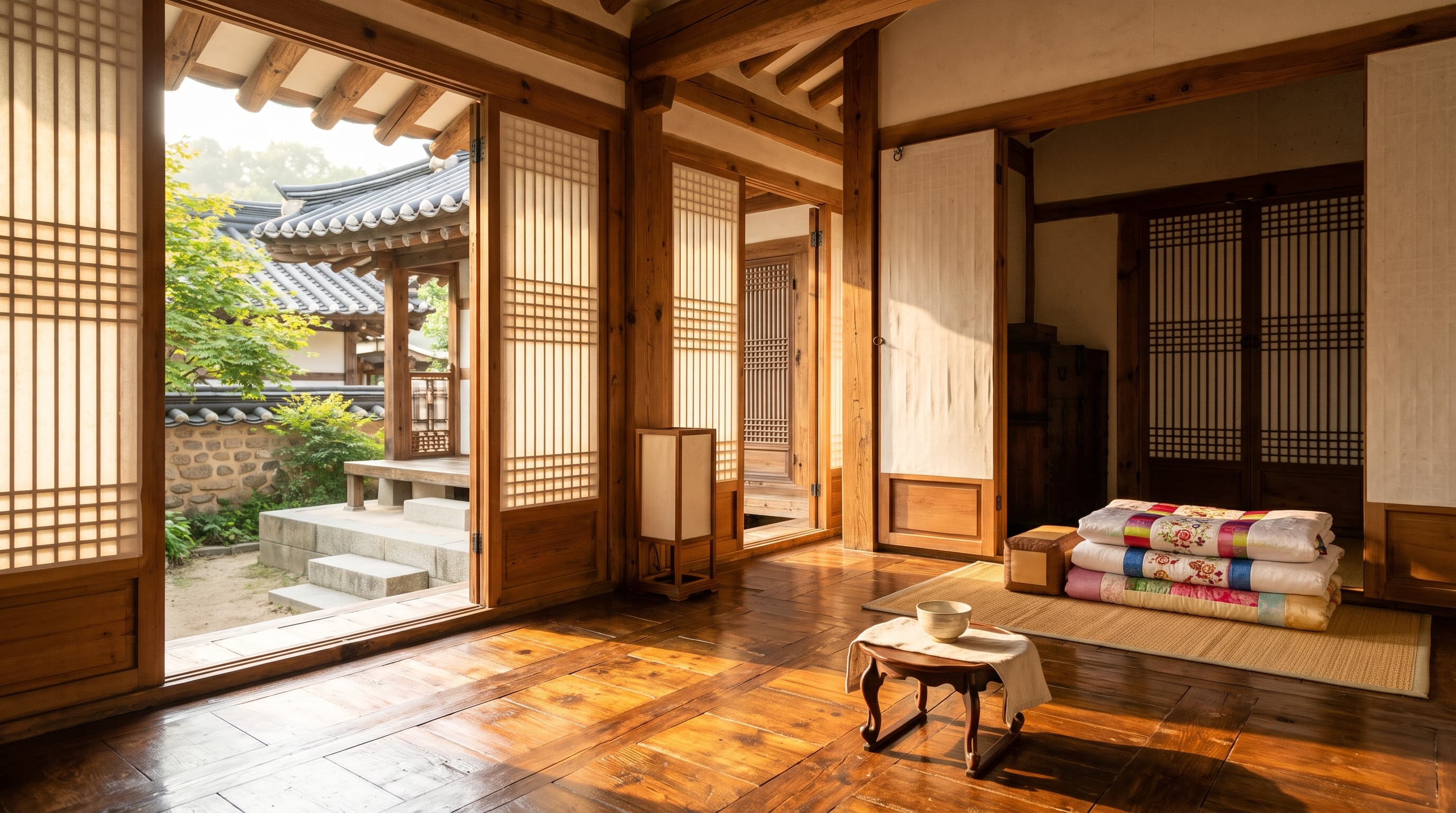
Korean accommodations warm rooms through hydronic radiant floor heating (ondol), typically set to 20°C in room air mode or around 55°C in heating water mode.
As late autumn arrives across the Korean peninsula in November 2026, nighttime outdoor temperatures frequently plunge into single digits while afternoons remain mild. Travelers stepping into Korean lodgings—from boutique hotels in Seoul to countryside hanok guesthouses—often encounter an unfamiliar heating mechanism. Unlike North American or European hospitality setups that rely heavily on forced-air convective furnaces or wall-mounted cast-iron radiators, Korea utilizes radiant underfloor heating known historically as ondol (온돌). Understanding how this hydrological infrastructure functions, what the wall controllers dictate, and how hotel management cycles seasonal climate controls will ensure a restful night without accidental overheating or freezing drafts.
The fundamental difference in lodging comfort across Korea stems from the direct thermal coupling between the human body and the architectural substrate. While modern Western-branded luxury chains maintain localized centralized air handling units, the vast majority of residential-style lodgings, officetels, and guesthouses utilize hydronic underfloor pipes fed by gas or electric boilers. Because floor surfaces store and radiate sensible heat over hours rather than minutes, applying the wrong settings before falling asleep can turn a sleeping mat into an uncomfortably hot slab by midnight. Navigating these systems requires separating air temperature settings from water conduit metrics and identifying whether your accommodation permits individual room autonomy.
The Thermal Mechanics of Ondol: Radiant Heat vs Forced Air
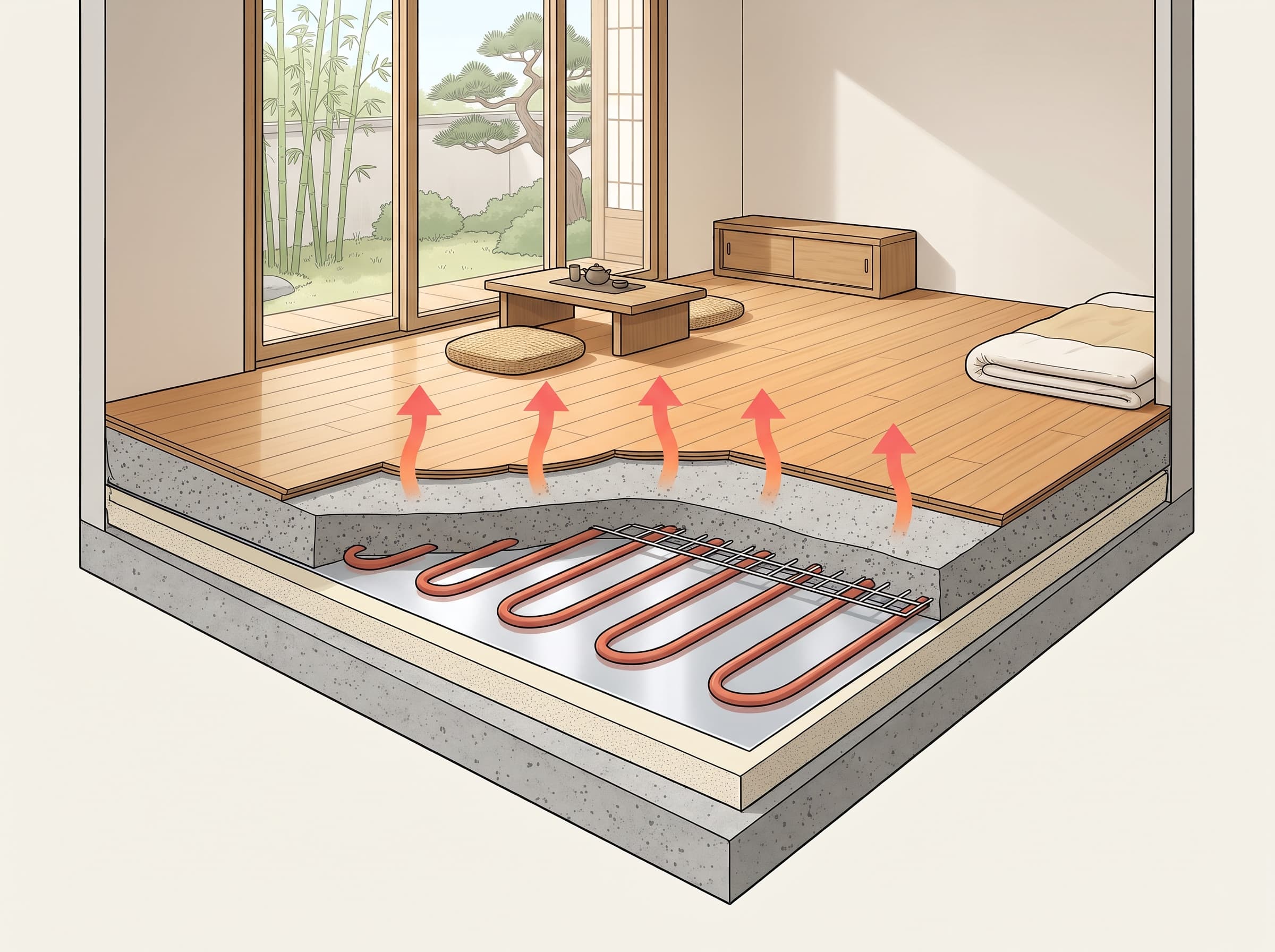
Historically, traditional Korean ondol originally relied on wood combustion inside an agungi (firebox) directing heat and smoke through subterranean masonry channels (gorae) beneath flat stone slabs (gudeul) before exiting via smoke flues (yeondo) and chimneys. The stone slabs store thermal energy through conduction and gradually release radiant warmth and upward convective airflow across the entire room. In contemporary Korean buildings and modernized lodgings, this historical principle operates through hydronic serpentine tubing embedded within a subfloor cement screed below wood laminate, vinyl, or stone tile. A wall-mounted boiler burns natural gas or liquefied petroleum gas to pump heated water through these manifold loops, transferring kinetic warmth directly upward into the room by conduction and radiation.
The physiological effect of radiant floor warmth differs significantly from fan-coil heating. In clinical thermal experiments evaluating underfloor water temperatures conducted on 16 healthy college students, researchers observed that tissue blood flow rates in the foot increased steadily until foot skin temperature reached 34°C1. Furthermore, the study established that maintaining a floor surface temperature between 27°C and 33°C achieves optimal subjective thermal comfort while allowing the ambient room air temperature to remain at an energy-conscious 20°C1. This means travelers do not need the dry, stuffy overhead airflow typical of Western hotel blowers to feel comfortably warm while lounging or sleeping near the floor1.
Decoding Wall Thermostats: Room Mode vs Heating Water Mode
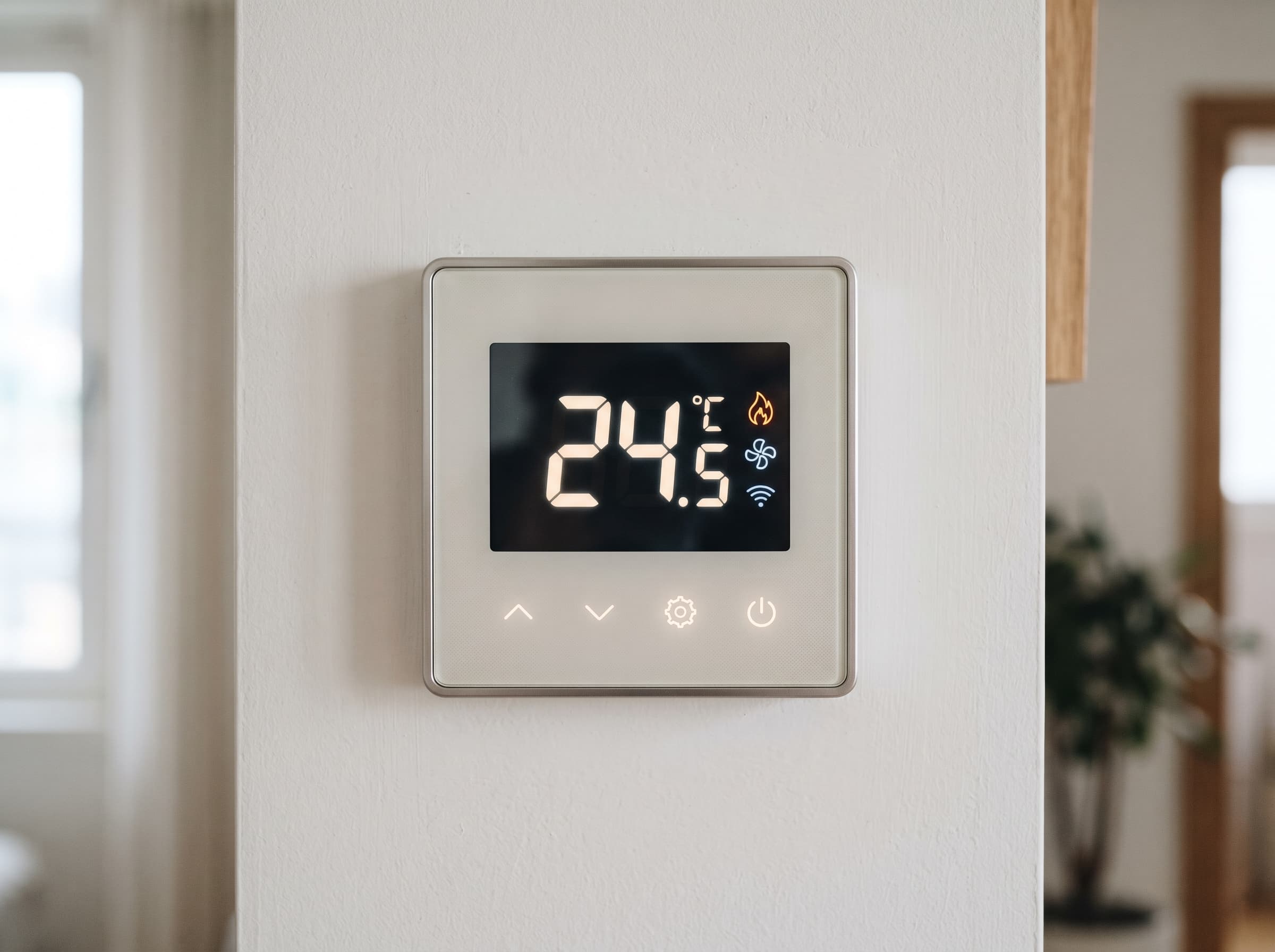
When staying in an officetel, serviced apartment, or traditional guesthouse, travelers encounter a digital wall unit manufactured by brands such as Rinnai, Navien, or Kiturami. The most critical operational choice is distinguishing between 'Room Air Temperature' (실내온도) and 'Heating Water Temperature' (난방수온도 or 온돌). The Room Air mode measures ambient air temperature via a small thermistor embedded inside the wall controller casing itself. If this controller is installed near a drafty entrance, a sunny window, or a closed closet door, the sensor misreads room conditions, causing the floor boiler to fire continuously or shut down prematurely.
As a standard guideline, the recommended indoor room temperature during cool weather is 20°C, and lowering the baseline setting by just 1°C saves approximately 7 percent in energy consumption. However, if your room feels drafty or the wall unit lacks a reliable air sensor, switching to 'Ondol / Heating Water Mode' offers superior consistency. In this setting, the controller regulates the direct temperature of the circulating pipe water rather than the room air; standard practice specifies setting this circulating water temperature to around 55°C to achieve an appropriate, comfortable living warmth.
Accommodation Types: Centralized Hotels vs Autonomous Guesthouses
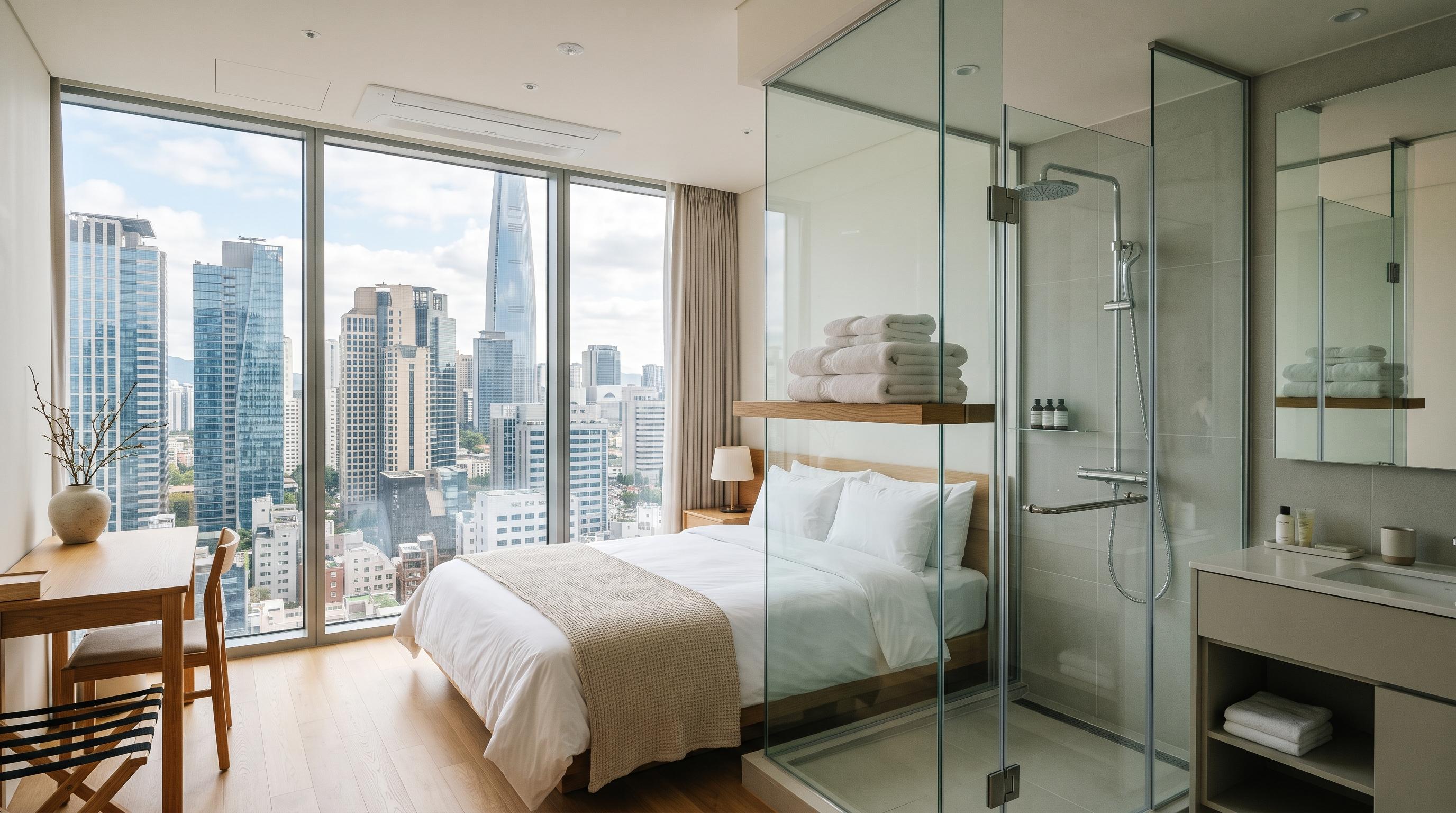
How heating operates during autumn nights depends strictly on the lodging classification. Mid-scale and luxury high-rise hotels in metropolitan areas like Seoul and Busan usually run centralized four-pipe or two-pipe HVAC fan-coil units. In autumn (October through late November), many commercial buildings remain in seasonal transition mode. Because building management switches the main chiller plant to boiler service on a predetermined date rather than day-to-day weather fluctuations, your in-room digital dial may only blow unheated air or room-temperature fan ventilation even if you dial the dial up to 26°C. If your hotel room feels chilly, front desks can provide supplemental electric space heaters upon request.
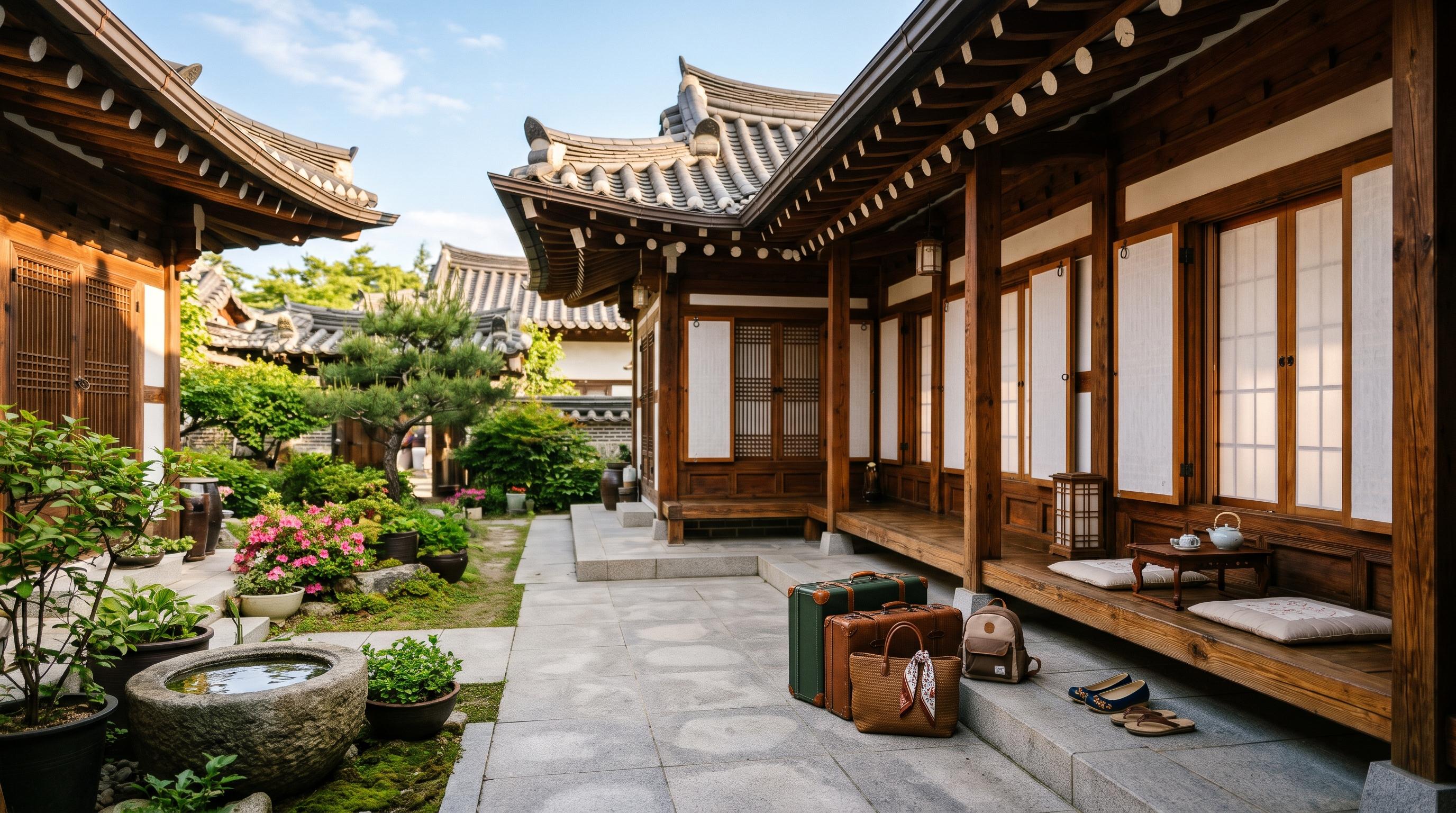
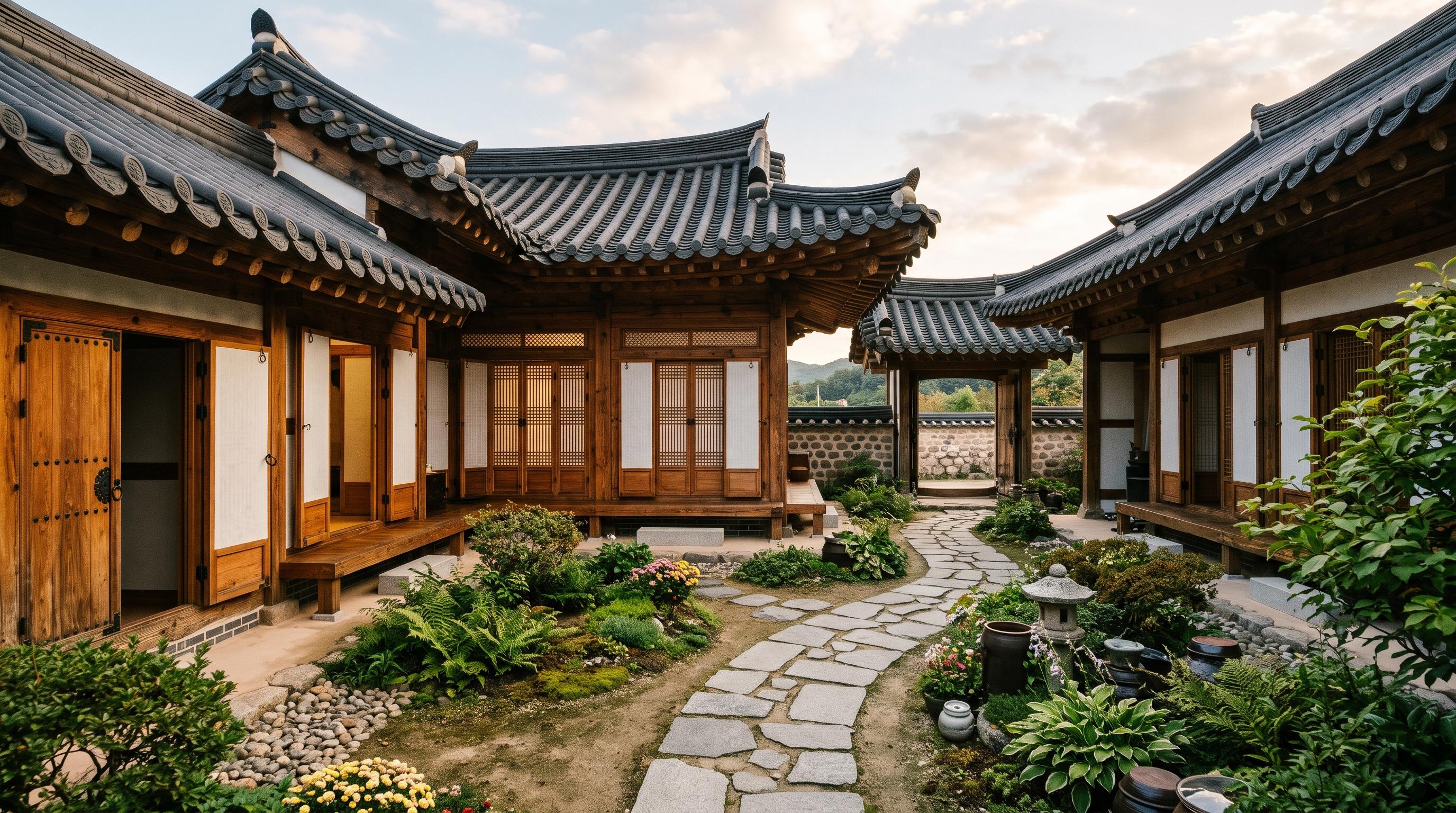
In contrast, private residential lodgings, officetels, and urban hanok guesthouses generally grant autonomous control over independent hydronic gas boilers via in-room wall pads. Authentic heritage-style accommodations offer entirely different heating experiences: at Gongju Hanok Village, rather than guests using digital wall pads, the traditional gudeul heating experience uses exterior stacked pine and oak firewood burned in fireboxes to heat the underfloor stone slabs2. Meanwhile, budget urban motels often keep boiler distribution manifolds centralized in a basement utility room, where the front desk clerk controls the hot water distribution valves for the entire floor on an alternating timed cycle.
| Accommodation Type | Primary Heating Mechanism | Guest Control Autonomy | Typical Autumn Adjustment Point | Key Guest Consideration |
|---|---|---|---|---|
| Western High-Rise Hotel | Convective Central HVAC / Overhead Fan-Coil | Limited to ceiling fan speed and in-duct thermostat | Often locked to centralized building-wide schedule | May blow neutral air if seasonal boiler transition is incomplete |
| Urban Officetel & Residence | Individual Gas Boiler with Hydronic Ondol Pipes | Full control via wall-mounted digital thermostat | Room Air 20°C or Water Mode around 55°C | Requires switching between Room Air and Ondol Water modes |
| Traditional Hanok Guesthouse (e.g. Gongju Hanok Village) | Direct Firewood Agungi Gudeul or Hydronic Boiler | Staff-operated firewood stoking or individual wall pad | Managed by host or water mode around 55°C | Staff stoke oak wood at traditional properties; thick bedding cushions floor warmth |
| Boutique Motel / Yeogwan | Centralized Basement Boiler with Floor Manifolds | Partial (valve switch or front-desk relay switch) | Intermittent timer cycles set by building operator | Floors may alternate between noticeably hot and cooling periods |
Step-by-Step Procedure: Setting Your Wall Controller at Night
When entering an apartment-style room on a chilly November night, locate the wall thermostat, typically situated near the entryway, living room partition, or beside the bathroom door. Press the 'Power' (전원) button to verify the digital LCD illuminates. Look at the mode indicator: 'Room Heating' (실내) displays temperatures between 10°C and 40°C, whereas 'Ondol/Water Heating' (온돌 or 난방수) displays ranges between 40°C and 80°C. For rooms up to 33 square meters (approx. 10 pyeong), it is generally recommended to initially set the boiler to a higher operational level to raise floor thermal mass quickly, then dialing it back down once comfortable warmth permeates the floor.
Ensure you do not accidentally leave the controller set to 'Hot Water Only' (온수전용), which warms domestic tap water for showers but cuts all circulation to the floor pipes, leaving rooms freezing overnight. When sleeping directly on the floor using a traditional Korean mattress (yo, 요) or using supplemental electric mats, caution is vital. Consumer safety advisories emphasize that prolonged, direct skin contact with surfaces heated even slightly above body temperature (40°C to 50°C) during deep sleep can cause unrecognized second- or third-degree low-temperature burns, especially when thick blankets trap thermal energy3. Always place an extra quilted pad beneath your sleeping mat to buffer intense floor contact.
Common Operational Mistakes, Ventilation, and Air Dryness
One of the most frequent missteps international visitors commit is completely turning off the boiler power switch when departing for daytime sightseeing. Heating a cold concrete slab from ambient outdoor temperatures back to comfortable warmth requires continuous fuel consumption and up to two to three hours of latency. Rather than turning the entire boiler off, practical heating guidance indicates that for unused spaces or daytime departures, engaging the Going Out (외출) mode or shutting off specific room heating valves helps prevent excessive heat loss while avoiding the severe latency of restarting a freezing system.
A second major issue is respiratory dryness. The Korea Disease Control and Prevention Agency notes that maintaining indoor room temperature between 18°C and 20°C alongside a relative humidity of 40% to 50% during winter and cold periods prevents drying of mucosal linings and respiratory tract irritation4. In addition, operating a humidifier while running the boiler increases indoor moisture, which accelerates air circulation and leverages water's high specific heat capacity to retain warmth longer, improving overall heating efficiency. For ventilation, open windows for brief 5- to 10-minute intervals rather than leaving windows cracked continuously, which drains stored floor warmth.
Troubleshooting Heating Issues and When to Contact the Host
If two hours pass and your floor remains cold despite the wall controller indicating an active flame symbol (연소), check the domestic hot water tap at the bathroom sink. If hot water runs normally from the tap, the boiler itself is functioning, and the issue likely lies within the subfloor manifold valves (난방 분배기), typically hidden inside a kitchen sink cabinet or utility closet. In some multi-room suites, individual room valves may have been turned parallel or perpendicular to the pipe during previous guest checkouts. Unless given explicit instructions by the property host, guests should avoid adjusting manifold balancing valves manually, as uneven water pressure can trigger error codes.
If the thermostat screen flashes a two-digit alphanumeric code (such as '02', '03', or '11'), the boiler has experienced an ignition failure, low water level, or sensor interruption. In these instances, power cycling the unit once by pressing the primary power button off and on is reasonable; however, persistent flashing codes indicate an equipment malfunction requiring building maintenance intervention. In traditional hanok stays or Airbnb residences, contact the property host immediately via messaging apps with a clear photo of the controller display rather than tampering with gas intake lines or electrical breakers.
Frequently asked questions
Q. What is the recommended room temperature setting for Korean floor heating in autumn?
A. Health authorities recommend an indoor room air temperature between 18°C and 20°C during cold periods. When operating your wall thermostat in ondol heating water mode, setting it to around 55°C provides steady comfort without overheating.
Q. Why is my hotel air conditioner blowing lukewarm or cool air when I turn on heating?
A. Many large commercial hotels in Korea use centralized seasonal HVAC systems that transition from cooling to heating on fixed dates in late autumn. If the central boiler has not been engaged, the in-room blower will only circulate ambient air. Contact the front desk for an auxiliary heater.
Q. Should I turn off the boiler when leaving the accommodation during the day?
A. No. Completely turning off the boiler power allows concrete subfloors to cool completely, requiring significant energy and several hours to reheat. Instead, switch the controller to 'Going Out' (외출) mode or turn down unused room valves.
Q. How can I prevent the room air from drying out when ondol heating is on?
A. Run an in-room humidifier or hang damp towels to maintain indoor relative humidity between 40% and 50%, as recommended by public health guidelines. Brief 5- to 10-minute window ventilation also refreshes stale indoor air without chilling the floor.
Sources
- Effect of floor surface temperature on blood flow and skin temperature in the footIndoor Air (PMID: 19120501)
- 공주 한옥마을 산책충청남도
- [소비자안전주의보] 겨울철 난방용품, 과열 및 제품 손상으로 인한 화재 주의해야한국소비자원
- 겨울철 한파대비 건강수칙질병관리청 국가건강정보포털