 Korea Experience Finder

Peak autumn hotel cancellations in Korea follow individual property terms over statutory guidelines, with non-refundable rates legally enforceable and strict deadlines tied to KST.
- Confirm whether the property classifies your specific dates in October or November as peak season within its customized policy terms.
- Verify the exact cancellation cut-off hour in Korea Standard Time (UTC+9) rather than your home country's local time zone.
- Determine whether the chosen fare is designated as non-refundable, as statutory seven-day withdrawal rights do not override explicit non-refundable agreements.
Autumn Peak Season Designations: Legal Definitions Versus Hotel Discretion
Korea's autumn foliage season brings surging travel demand to mountain national parks such as Seoraksan, Odaesan, and Naejangsan, as well as heritage centers in Seoul and Gyeongju. International travelers often assume that peak season conditions are governed by uniform nationwide calendar windows. However, under South Korean administrative rules, the statutory default peak periods designated by official guidelines strictly encompass summer from July 15 to August 24 and winter from December 20 to February 203. Autumn foliage periods are not codified as statutory default dates in national notices3.
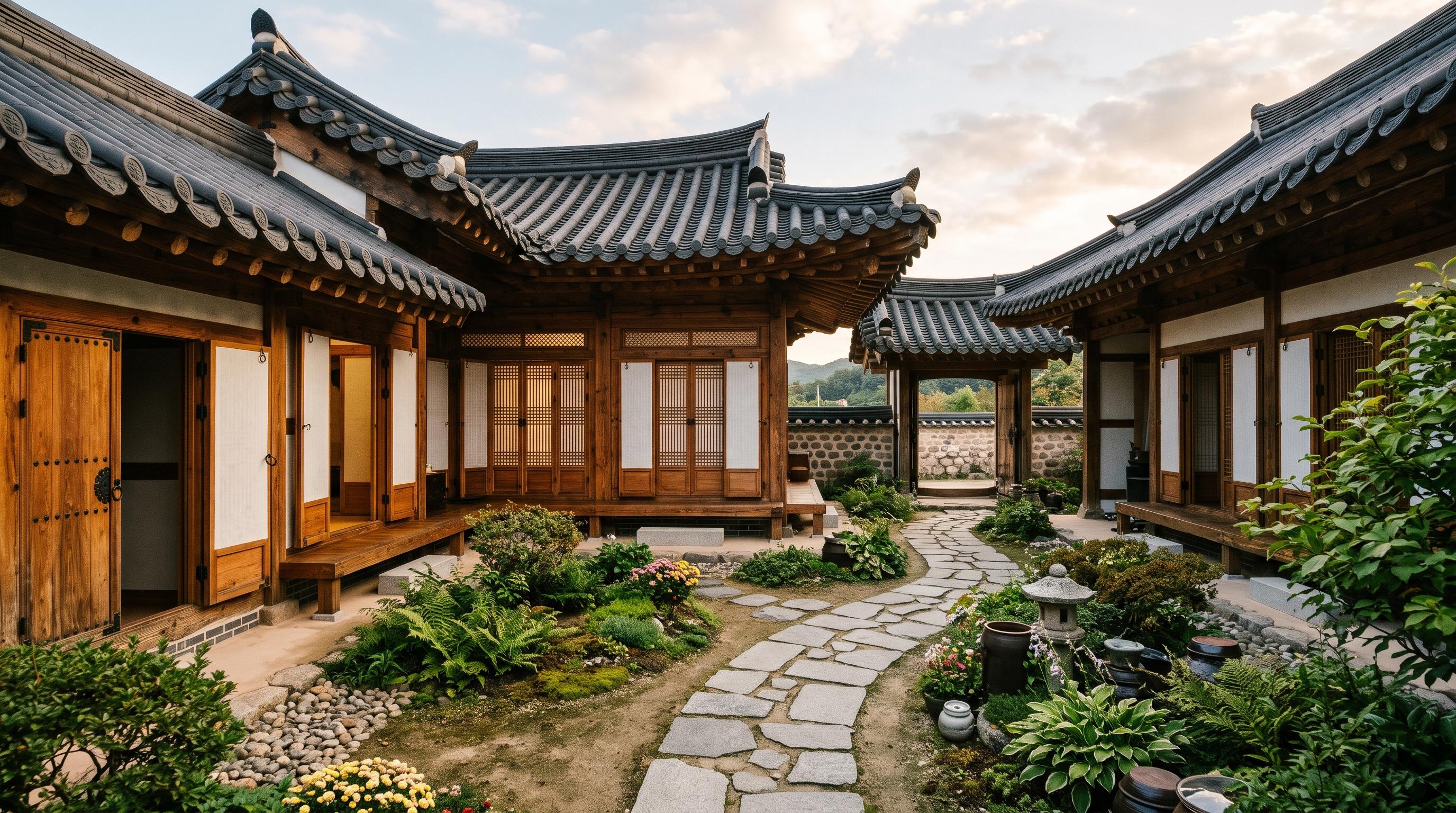
Because the autumn foliage window lacks a statutory calendar bracket, lodging providers hold full discretion to declare high-demand weeks in October and November as property-specific peak seasons within their custom commercial terms3. A traditional hanok stay in Jeonju or a boutique hotel near Bukhansan can designate late October as peak season based solely on its published booking conditions. For overseas visitors as of October 2026, verifying whether a property classifies autumn dates as regular season or peak season is the essential first step before interpreting penalty tiers.
Statutory Dispute Standards Versus Private Contracts: Which Rules Take Precedence?
The legal relationship between travelers and lodging establishments in South Korea is framed by the Framework Act on Consumers and the Consumer Dispute Resolution Standards administered by the Fair Trade Commission. Under Article 16 of the Framework Act on Consumers, the state establishes dispute settlement standards to guide equitable resolutions between businesses and consumers1. However, Article 16, Paragraph 3 clearly establishes that these criteria function only as non-binding recommendations or benchmarks for mutual agreement when no separate terms have been agreed upon between the contracting parties1.
When a foreign traveler confirms a booking on an international online travel agency (OTA) or a domestic Korean accommodation portal, checking the consent box forms an express agreement to the merchant's individual cancellation policy. Because private contract terms supersede the standard dispute recommendations of the Fair Trade Commission, an agreed non-refundable clause or an expedited cancellation cut-off remains legally effective over statutory dispute suggestions1. Travelers who rely on standard regulatory tables to demand full refunds often discover that their explicit agreement to merchant terms renders standard compensation formulas inapplicable.
Official Korean Dispute Resolution Standards: Weekday and Weekend Penalty Tiers
When lodging terms refer explicitly to the Fair Trade Commission's Consumer Dispute Resolution Standards, or when a dispute arises with an independent guesthouse lacking detailed written penalties, official standard tiers apply. The Fair Trade Commission specifically differentiates between weekdays and weekends during designated peak seasons3. Under these standards, weekends are defined as Friday and Saturday nights along with the nights preceding public holidays, while weekdays encompass stays from Sunday through Thursday3.
For peak season weekday stays, the standard specifies a full refund without penalty if the guest cancels within 24 hours of contract conclusion or up to 10 days before the scheduled check-in date3. Cancellations submitted 7 days prior incur a 10% penalty of the total room charge, 5 days prior incur a 30% penalty, 3 days prior incur a 50% penalty, and cancellations made 1 day prior or on the arrival date incur an 80% penalty3. Weekend penalties during peak periods are significantly steeper3. Cancellations made 7 days prior retain a 20% surcharge, 5 days prior 40%, 3 days prior 60%, and cancellations made 1 day prior or on check-in day trigger a 90% cancellation penalty3.
| Cancellation Timing Before Check-In | Peak Season Weekday Penalty | Peak Season Weekend Penalty | Statutory Basis / Condition |
|---|---|---|---|
| Within 24 hours of booking or 10+ days prior | 0% (Full contract refund) | 0% (Full contract refund) | FTC Lodging Criteria (Valid default tier) |
| 7 days before check-in | 10% deduction from total fee | 20% deduction from total fee | FTC Lodging Criteria (Valid default tier) |
| 5 days before check-in | 30% deduction from total fee | 40% deduction from total fee | FTC Lodging Criteria (Valid default tier) |
| 3 days before check-in | 50% deduction from total fee | 60% deduction from total fee | FTC Lodging Criteria (Valid default tier) |
| 1 day before check-in or arrival date (No-show) | 80% deduction from total fee | 90% deduction from total fee | FTC Lodging Criteria (Valid default tier) |
Non-Refundable Room Deals and Electronic Commerce Regulations
Many international visitors purchasing autumn vacation packages choose discounted non-refundable rates offered by domestic and global booking engines. Travelers frequently argue that statutory cooling-off periods should allow them to revoke their purchase within seven days. Under Article 17, Paragraph 1 of the Act on Consumer Protection in Electronic Commerce, consumers generally have a right to withdraw subscriptions within seven days of receiving contract terms2. However, the same statute also outlines exceptions under Paragraph 2, such as where resale value diminishes significantly over time, provided clear advance notice is given under Paragraph 62.
In September 2023, the Korean Supreme Court reviewed corrective orders issued by the Fair Trade Commission against global accommodation platforms regarding non-refundable clauses under the Terms and Conditions Regulation Act4. The Supreme Court ruled that the platforms' non-refundable conditions could not be deemed invalid unfair contract terms, citing substantial consumer pricing discounts, the direct contractual relationship between lodging operators and guests, and existing relief mechanisms for force majeure4. Crucially, that ruling addressed unfairness under the Terms and Conditions Regulation Act rather than statutory withdrawal rights under the E-Commerce Act. Whether the 7-day cooling-off rule under Article 17 of the E-Commerce Act applies to accommodation bookings remains an area of ongoing legal dispute and interpretation, meaning travelers cannot safely rely on statutory withdrawal to void non-refundable room terms24.
Navigating Online Travel Agencies, Time Zones, and Mediation Boundaries
A frequent source of dispute for foreign tourists visiting Korea involves time zone misinterpretations. Cancellation cut-off deadlines displayed on reservation vouchers are strictly calculated according to Korea Standard Time (UTC+9) unless expressly stated otherwise. A traveler residing in North America or Europe who submits a cancellation request on the morning of their local departure date may already have crossed the midnight boundary in Seoul, triggering late cancellation fees or full no-show forfeiture. Failure to notify the hotel of arrival delays by the scheduled check-in hour can result in the booking being classified as a same-day no-show.
Furthermore, channel choice determines where recourse lies. When reservations are made through an international intermediary registered abroad, resolving disputes through the Korea Consumer Agency (KCA) or local conciliation boards can be complicated by jurisdictional limits. While the KCA provides dispute mediation mechanisms and consumer counseling for domestic market operations, its rulings remain voluntary recommendations that lack executive enforcement power over cross-border platforms. Direct written confirmations with the property front desk remain the most dependable protection against unexpected billing.
Practical Autumn Booking Checklist for International Visitors
To protect travel budgets during peak Korean autumn periods, visitors should adopt clear verification routines prior to entering credit card details. Properties along major foliage routes frequently enforce custom cancellation schedules requiring notice up to two weeks in advance, rather than standard five-day windows. Travelers must read property-specific policies rather than general platform marketing text.
- Confirm whether the property classifies your specific dates in October or November as peak season within its customized policy terms.
- Verify the exact cancellation cut-off hour in Korea Standard Time (UTC+9) rather than your home country's local time zone.
- Determine whether the chosen fare is designated as non-refundable, as statutory seven-day withdrawal rights do not override explicit non-refundable agreements.
- Check whether weekend penalty rates apply, noting that Friday, Saturday, and nights prior to Korean public holidays are classified as weekend rates.
- Maintain documented communication with the hotel front desk via email or official chat if arrival time will be delayed beyond standard check-in hours.
By understanding the hierarchy between private contract terms and administrative dispute criteria, overseas visitors can plan autumn itineraries across South Korea with financial confidence and legal clarity.
Frequently asked questions
Q. Can I get a full refund if I cancel an autumn hotel stay within 24 hours of booking?
A. Under the Consumer Dispute Resolution Standards, cancellations made within 24 hours of booking qualify for a full refund if the hotel adheres to official guidelines. However, if you explicitly booked a non-refundable promotional rate, that private contract term legally supersedes the standard recommendation.
Q. Are autumn foliage dates automatically classified as peak season by Korean law?
A. No. Korean statutory default peak seasons cover only summer (July 15 to August 24) and winter (December 20 to February 20). Autumn peak dates are established at the discretion of individual hotels through their published booking terms.
Q. What happens if my flight is delayed and I arrive late at my Korean hotel?
A. Under standard lodging rules, failing to notify the property by the scheduled check-in time can result in the reservation being treated as a same-day no-show, leading to room release and penalties up to 80% to 90% of the total charge.
Q. Does Korea's statutory 7-day e-commerce cooling-off period apply to non-refundable hotel rooms?
A. The Korean Supreme Court ruled in 2023 that non-refundable booking clauses used by accommodation platforms are not invalid under the Terms and Conditions Regulation Act. However, whether the 7-day statutory withdrawal right under Article 17 of the E-Commerce Act applies to hotel bookings remains an active legal dispute, meaning travelers cannot rely on it to guarantee a refund.
Sources
- 소비자기본법 제16조 (소비자분쟁의 해결)법제처 국가법령정보센터
- 전자상거래 등에서의 소비자보호에 관한 법률 제17조 (청약철회등)법제처 국가법령정보센터
- 계약 해제에 따른 환급 (숙박시설 관련 분쟁)찾기쉬운 생활법령정보
- 대법원 선고 2020두41399, 2021두35124 시정명령취소 사건에 관한 보도자료대한민국 대법원