 Korea Experience Finder
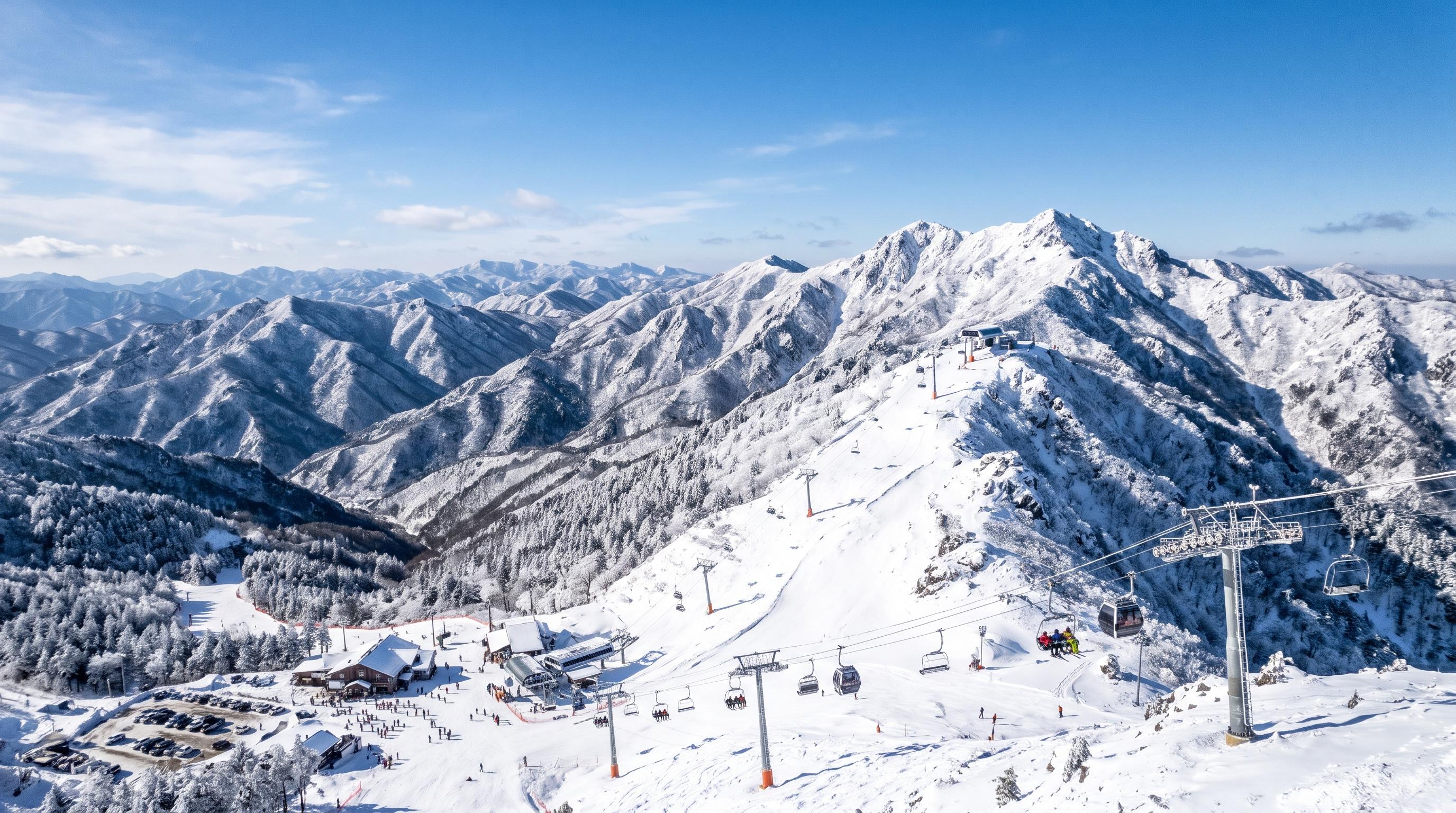
Foreign skiers can book Gangwon ski shuttles via English portals with foreign credit cards, use promotional on-site rentals, or ride the KTX to Jinbu Station in late November.
- Pack or purchase thermal gloves, neck warmers, and UV-rated tinted goggles in advance, as base lodges do not rent soft personal accessories due to sanitary protocols.
- Verify your passport name matches your online shuttle reservation voucher exactly to avoid boarding delays at early morning pickup locations.
- Download offline maps or Korean navigation applications (such as KakaoMap or Naver Map), as international mapping tools do not calculate accurate walking paths inside rural resort grounds.
Gangwon Early Season Openings: Conditions, Timeline, and Slope Availability
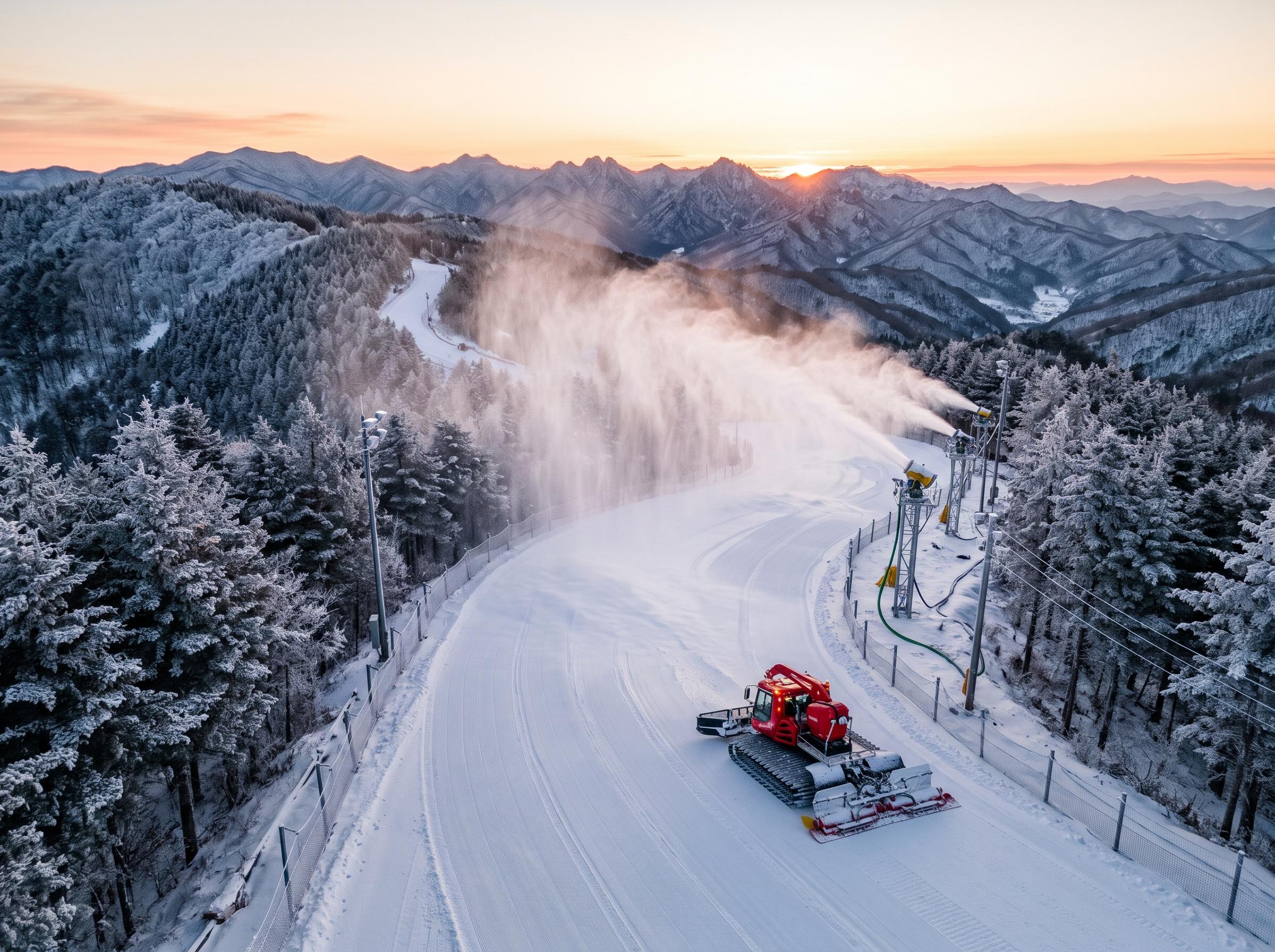
The ski season in South Korea officially commences in late November across the high-altitude spine of Gangwon Province, where cold Siberian air masses collide with moisture over the Taebaek Mountains. Resorts in Pyeongchang, Jeongseon, and Hoengseong rely heavily on sub-zero overnight temperatures to activate extensive automated snow-cannon networks alongside early natural flurries. For the 2026 winter season, rapid cold fronts allowed major resorts to accelerate their projected timetables: Mona Yongpyong and Phoenix Snow Park opened their primary runs on November 22, 2026, while High1 Resort followed closely with its opening on November 24, 20261.
Foreign skiers traveling during opening week must calibrate their expectations regarding operational infrastructure. Opening week does not mean total resort access; instead, operators typically open one or two flagship slopes, such as Yongpyong's beginner-friendly Pink Slope or Phoenix Park's Dodo and Hawk runs1. Because mountain operations are limited, resorts offer substantial opening promotions to draw early enthusiasts. As documented during the November 22–27, 2026 promotional launch, Phoenix Park discounted all-day lift tickets to 30,000 KRW with seven-hour equipment rentals reduced to 15,000 KRW, while High1 Resort introduced promotional day lift passes at 2,000 KRW1. Mona Yongpyong also launched opening day lift tickets and equipment rentals at 10,000 KRW each1. While economical, visiting during late November requires understanding that slope capacity is constrained, meaning queue management and punctual transit planning are critical.
Booking Direct Shuttles from Seoul Without Domestic Verification
For non-resident travelers, the greatest obstacle to accessing Gangwon ski slopes is South Korea's domestic online ticketing ecosystem, which frequently mandates resident identity numbers or identity verification via Korean telecommunications carriers (PASS). Direct resort seasonal express buses, historically known under branding such as the Purple Ski Bus operated in partnership with KD Daewon Express, have resolved this hurdle by establishing dedicated reservation portals2. Foreign visitors can reserve seats through English-language interfaces such as the official RideUs Yongpyong portal or partnered travel booking desks without requiring a Korean mobile number2.
These direct ski lines eliminate the stress of handling multiple commuter transfers with bulky winter apparel. Daily departures originate from strategic transit hubs across central Seoul, including Hongik University Station, Sinchon, Myeongdong, Dongdaemun Doota Mall, and Sports Complex Station23. However, travelers arriving directly from abroad should note an important seasonal constraint: direct resort shuttles connecting Incheon International Airport (with designated boarding at Terminal 1, 1st Floor Platform 9C) operate during the core winter season and do not run during the late November opening period, typically commencing later in December (running through February 12)23. International arrivals during opening week should take the AREX airport railroad into central Seoul to catch early morning resort coaches or board high-speed rail. Dedicated customer support centers operated by travel transport partners maintain telephone assistance (+82-2-335-5889) to assist international guests encountering ticketing confirmation issues2.
Seoul Pickup Hubs, Route Mechanics, and Return Dynamics
Understanding the operational logistics of the morning shuttle network prevents missed departures. Rather than running independent coaches from every pickup spot directly to the mountains, regional coach systems use a consolidation strategy. Morning feeder buses collect passengers from western and central locations—such as Hongik University Station and Myeongdong—between 05:30 and 06:30, converging at the Sports Complex Station (Line 2 and Line 9, Exits 6 and 7) in Jamsil3. At Sports Complex Station, passengers are organized by destination resort and transferred to long-distance motorcoaches for the express leg eastward via the Yeongdong Expressway3.
Transit time typically spans 2.5 to 3.5 hours depending on highway congestion and weather conditions3. Importantly, commercial OTA shuttle services like Trazy explicitly schedule their daily seasonal runs starting from November 273. Foreign skiers visiting during the ultra-early opening window between November 22 and November 26 must confirm direct bus availability on the official RideUs portal or prioritize high-speed KTX rail connections via Jinbu Station. For return journeys back to Seoul, official schedules list departures from the resort at 1:00 PM (13:00) and 5:00 PM (17:00), subject to local traffic and weather conditions3. Depending on bus occupancy, passengers may need to transfer at Sports Complex Station before continuing to designated downtown drop-off points, so following on-site dispatcher guidance is essential3. Cancellation terms are strictly enforced: full refunds are granted if cancellations are submitted before 12:00 PM (noon) KST on the day prior to departure on platforms like Trazy, while cancellations after this deadline and same-day no-shows are completely non-refundable3. Children under 24 months travel free of charge if sharing a seat with a parent without occupying an independent seat3.
| Transport Mode | Boarding Locations | Average Travel Time | Booking Flexibility | Luggage & Gear Suitability |
|---|---|---|---|---|
| Direct Ski Shuttle (RideUs / Trazy) | Hongdae, Sinchon, Myeongdong, Dongdaemun, Sports Complex Station | 2.5 to 3.5 hours | Fixed schedules (Trazy regular service starts Nov 27; check RideUs or KTX for Nov 22-26); non-refundable past 12:00 PM eve of departure (Trazy) | Direct undercarriage cargo hold for ski bags and large suitcases |
| KTX Gangneung Line + Taxi / Lodging Shuttle | Seoul Station, Cheongnyangni Station | 1h 20m - 1h 40m (rail) + 20m (local taxi) | Frequent daily trains via Korail; flexible rebooking up to train departure time | Restricted train overhead racks; requires lifting bags across rail platforms |
| Intercity Express Bus | Dong Seoul Bus Terminal (Gangbyeon Station) or Seoul Nambu | 2.5 to 3.0 hours to Hoenggye / Jinbu | Walk-up ticket kiosks; frequent departures throughout the day | Generous cargo bays, but requires hailing a local taxi from rural bus terminal |
Securing Gear Rentals: On-Site Rental Houses vs. External Valley Shops
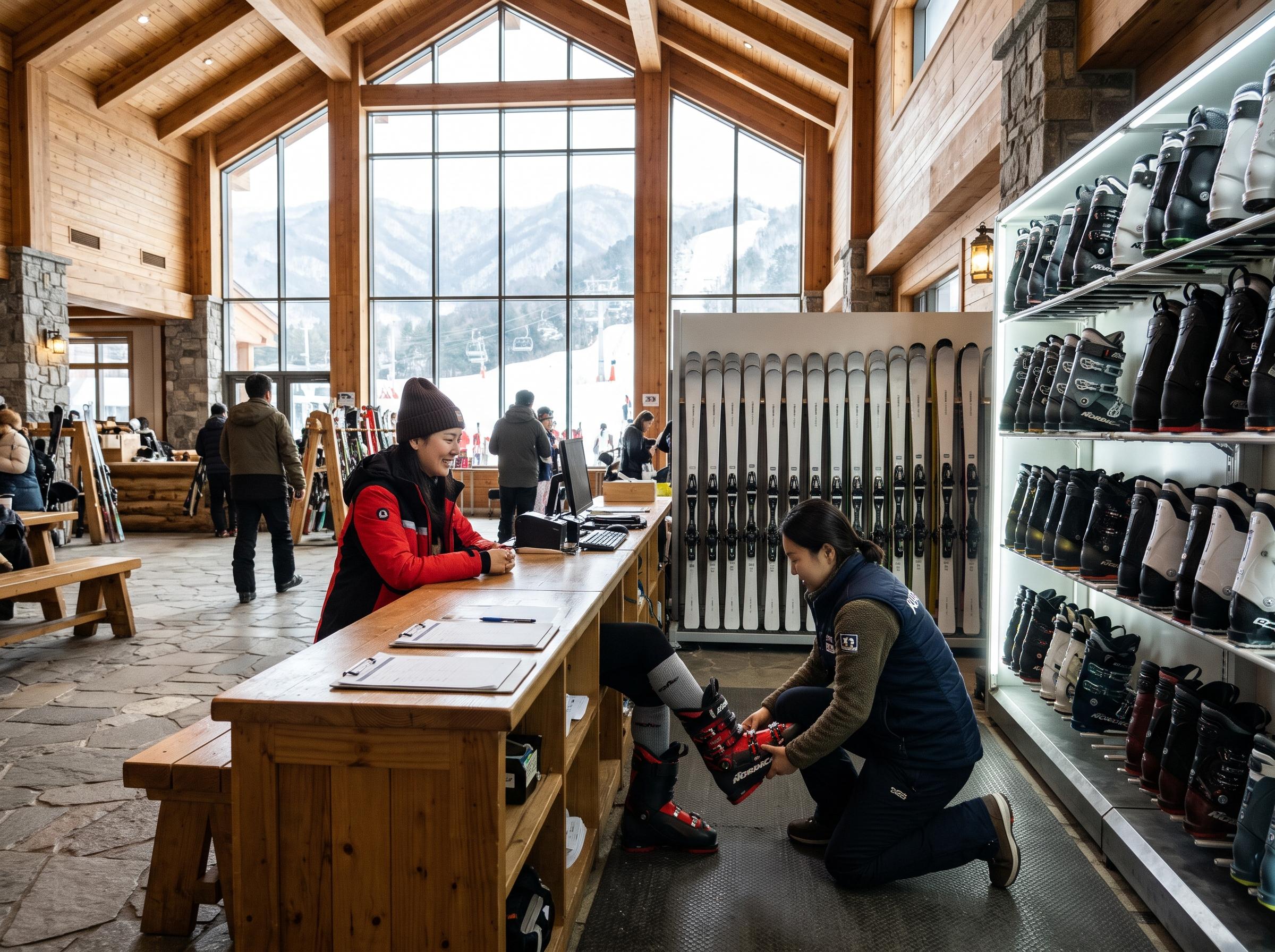
Once logistics are arranged, equipment rental requires strategic decision-making between convenience and technical customization. Every major resort operates an integrated rental center located adjacent to the ticket windows and base lodge. During the late November opening period prior to the publication of standard full-season rental rates, resorts rely on promotional kickoff pricing; for example, Mona Yongpyong offered opening day equipment rentals for 10,000 KRW, while Phoenix Park discounted seven-hour equipment packages to 15,000 KRW1. These on-site facilities allow immediate equipment exchanges if boot sizes cause discomfort, and guest equipment can be placed in daytime cubbies or coin lockers while taking meal breaks.
Independent rental shops cluster along the access roads of Daegwallyeong-myeon and Bongpyeong-myeon outside the resort gates. These external purveyors frequently stock premium branded outer shells, modern protective pads, and higher-tier carving skis that outperform standard resort rental fleets. However, booking with external shops presents a logistical hurdle for non-driving foreigners: you must confirm whether the shop provides curbside drop-off and pickup service at the resort parking lot. Without prior coordination, hauling external rental skis across shuttle drop zones diminishes the theoretical cost savings.
Rail Backups and Contingency Strategies for Peak Demand
During late November opening weekends, direct shuttle seats from downtown Seoul sell out quickly due to pent-up skier demand. When direct shuttle reservations are unavailable, the high-speed KTX Gangneung Line functions as the most reliable alternative route. Trains depart frequently from Seoul Station and Cheongnyangni Station, reaching Jinbu (Odaesan) Station in approximately 1 hour and 20 minutes to 1 hour and 40 minutes. Jinbu acts as the primary railway gateway to Pyeongchang's alpine district.
From Jinbu Station, onward transit requires careful advance planning. Important note: resort courtesy shuttles require proof of on-site lodging reservation or resort membership; day-trippers cannot board these complimentary shuttles and must take a local taxi or local transit to reach the base lodge. As of November 2026, local metered taxi fares between Jinbu Station and the Pyeongchang ski resorts generally range around 20,000 to 25,000 KRW for a 20-minute ride, though exact fares and travel times may vary depending on local road conditions, winter weather, and current municipal taxi tariffs. KTX tickets can be booked up to one month in advance through the official Korail English portal (letskorail.com) using foreign credit cards without domestic identity verification requirements. This hybrid rail-and-taxi contingency insulates travelers from weekend highway gridlock on the Yeongdong Expressway, ensuring reliable arrival times regardless of road congestion.
Checklist: Clothing Regulations, Essential Accessories, and On-Slope Safety
A frequent oversight among first-time visitors to Korean ski fields is assuming standard equipment rentals include apparel and safety gear. Official on-site rental counters provide only hard goods—skis, boots, and poles, or snowboards and boots. Ski jackets, waterproof pants, helmets, and goggles are strictly classified as separate rentals or personal purchases. At most Gangwon venues, certified helmets are strongly recommended across regular beginner slopes and strictly enforced for terrain parks to minimize collision injuries on machine-groomed snow surfaces.
- Pack or purchase thermal gloves, neck warmers, and UV-rated tinted goggles in advance, as base lodges do not rent soft personal accessories due to sanitary protocols.
- Verify your passport name matches your online shuttle reservation voucher exactly to avoid boarding delays at early morning pickup locations.
- Download offline maps or Korean navigation applications (such as KakaoMap or Naver Map), as international mapping tools do not calculate accurate walking paths inside rural resort grounds.
- Store transport booking receipts and emergency taxi contact phone numbers in digital and physical forms in case smartphone battery performance degrades under freezing mountain conditions.
Frequently asked questions
Q. Can I take a direct ski shuttle from Incheon Airport during late November openings?
A. No. Direct airport ski shuttles to resorts like Mona Yongpyong operate only during the peak winter season starting in December (typically through mid-February). Travelers arriving in late November should take the AREX train into Seoul to join downtown morning ski shuttles or ride the KTX to Jinbu Station.
Q. What are the departure times and transfer rules for return shuttles to Seoul?
A. Official resort return shuttles to Seoul depart from the resort at 1:00 PM (13:00) and 5:00 PM (17:00), subject to weather and traffic conditions. Depending on passenger volume, return buses may stop at Sports Complex Station in Seoul where passengers transfer to secondary coaches heading toward specific drop-off locations like Sinchon or Myeongdong. Always follow on-site dispatcher guidance.
Q. What should skiers do if visiting during the very first opening week between November 22 and 26?
A. Commercial platforms like Trazy list shuttle schedules starting on November 27. If traveling during the initial opening days (November 22–26), visitors should check seat availability directly via the official RideUs portal or take the high-speed KTX from Seoul to Jinbu Station followed by a 20-minute local taxi ride.
Q. What is the cancellation policy for ski shuttles booked on travel platforms?
A. On platforms like Trazy, cancellations received before 12:00 PM (noon) KST on the day prior to departure are eligible for a 100% refund. Cancellations made past this cut-off time or same-day no-shows are strictly non-refundable.
Q. How much does ski gear rental cost during the late November opening period?
A. During late November opening promotions before standard winter rate cards take effect, resorts provide deep discounts: Mona Yongpyong offered opening day equipment rentals for 10,000 KRW, while Phoenix Park discounted 7-hour rentals to 15,000 KRW.
Sources