 Korea Experience Finder
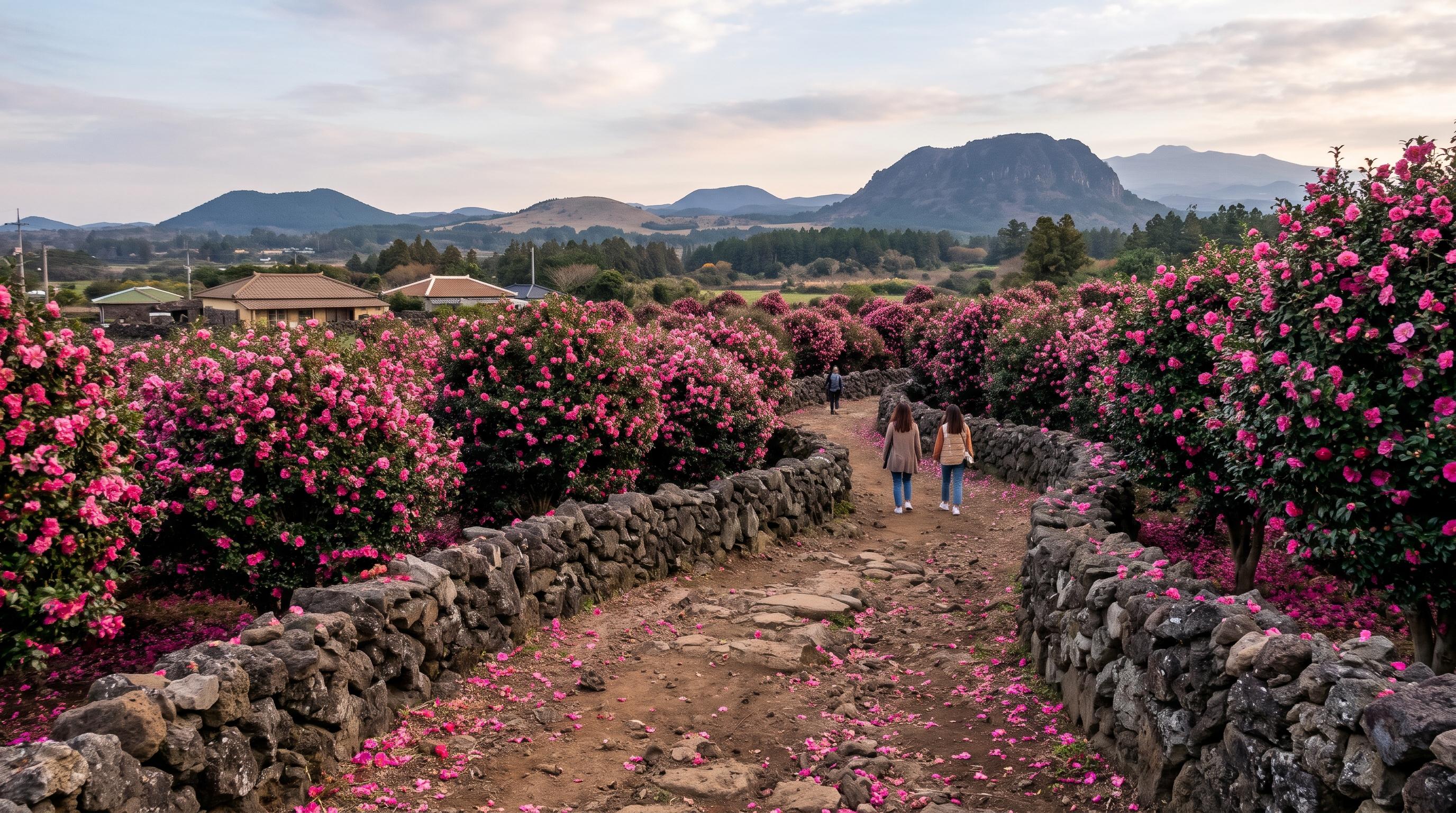
In late November, travelers can see the earliest blooms at Camellia Hill in Andeok and Camelia Forest in Namwon, where early Camellia sasanqua varieties begin flowering.
The Mechanics of Early Bloom: Why Late November Marks the Start
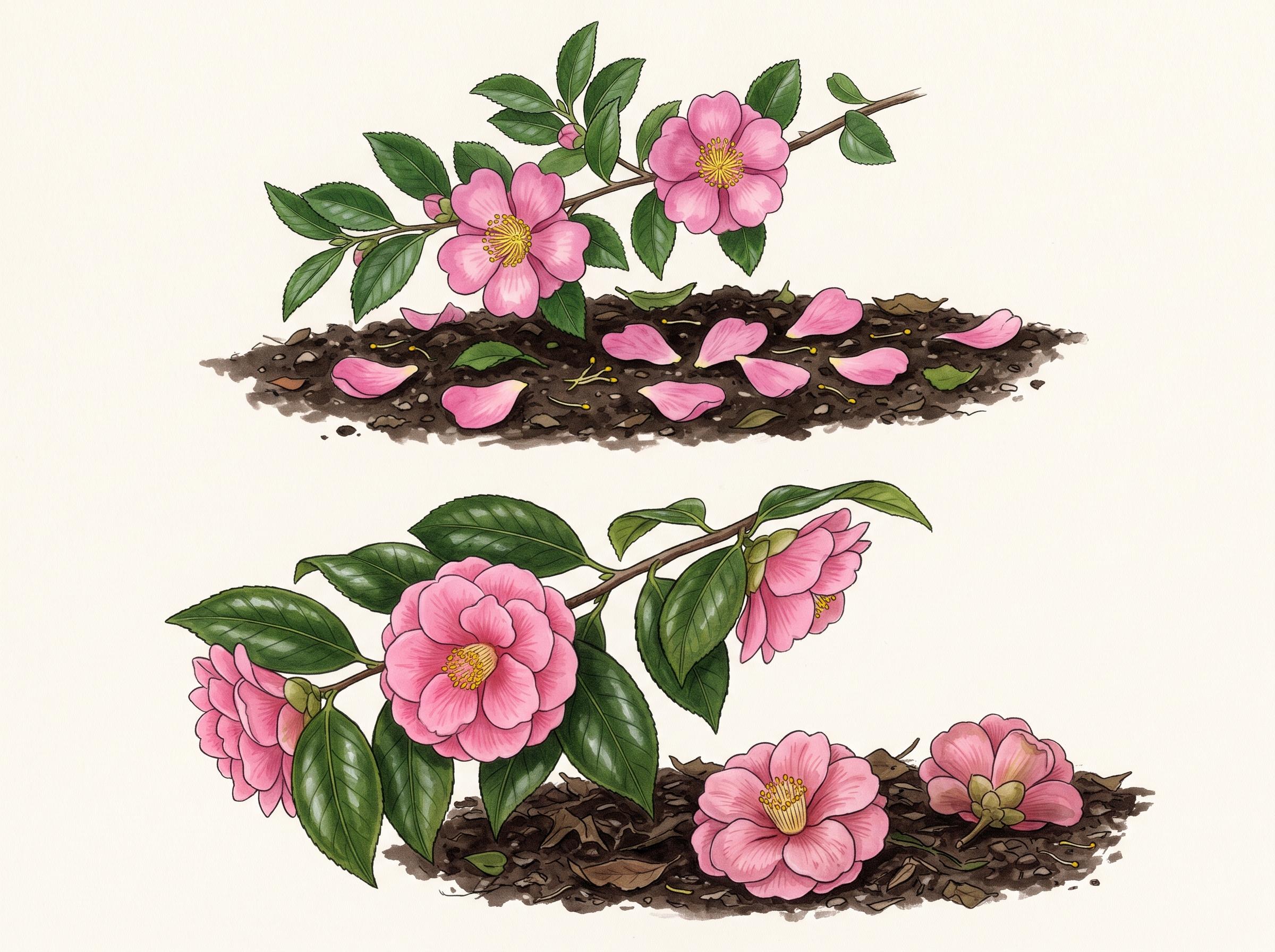
For travelers visiting Jeju Island toward the end of autumn, camellia blossoms provide an early glimpse of winter floral color long before mainland South Korea sees any seasonal blooming. Understanding the timing of Jeju camellias requires distinguishing between different botanical varieties that populate the island's southern slopes. The camellia species that consistently opens first in late November is Camellia sasanqua, commonly referred to in Korean as aegi-dongbaek or baby camellia1. Unlike native Korean camellias that typically hold their buds until the deep chill of January and February, these early-blooming varieties respond to late autumn temperature drops by opening vibrant pink and white petals that eventually flutter to the ground individually rather than dropping as whole flower heads2.
Consequently, travelers arriving between mid and late November must calibrate their expectations: the dense, crimson carpet of native Camellia japonica is not yet widespread, but cultivated sasanqua groves are just opening their first major flush12. Most of these early-season clusters thrive along the milder southern coastline and sheltered foothills of Seogwipo-si, where the Hallasan mountain shield creates a warm microclimate3. Visitors targeting this initial blooming phase should prioritize southern botanical gardens and managed groves that cultivate early-flowering sasanqua cultivars over wild coastal forests.
Camellia Hill: West Seogwipo's Diverse Arboretum Network
Situated in Sangchang-ri, Andeok-myeon within western Seogwipo, Camellia Hill represents the largest camellia-focused arboretum on Jeju Island, spanning approximately 172,000 square meters1. The botanical garden houses roughly 6,000 camellia trees representing more than 500 species gathered from around the world1. Because of this extensive varietal diversity, Camellia Hill provides the most reliable November viewing experience on the western side of the island3. While many sections remain green, designated autumn-blooming sasanqua trails, the Traditional Olle-gil stone pathways, and the initial outdoor corridors display dense clusters of pale pink, magenta, and white blossoms by late November23.
According to operating guidelines confirmed for the winter period as of November 2026, Camellia Hill operates from 08:30 to 18:00 between November and February, with ticketing and last admission strictly ending at 17:001. General admission fees for individuals are set at 12,000 KRW for adults (ages 19–64), 10,000 KRW for teenagers and seniors aged 65 and above, and 9,000 KRW for children aged 3 to 12, while infants aged 3 and younger enter free1. Walking the full trail circuit typically requires 40 to 80 minutes, though visitors pausing at popular photo installations and greenhouse exhibits should reserve at least 90 minutes2.
Camelia Forest (Dongbaek Forest): Concentrated Sasanqua Groves in Namwon
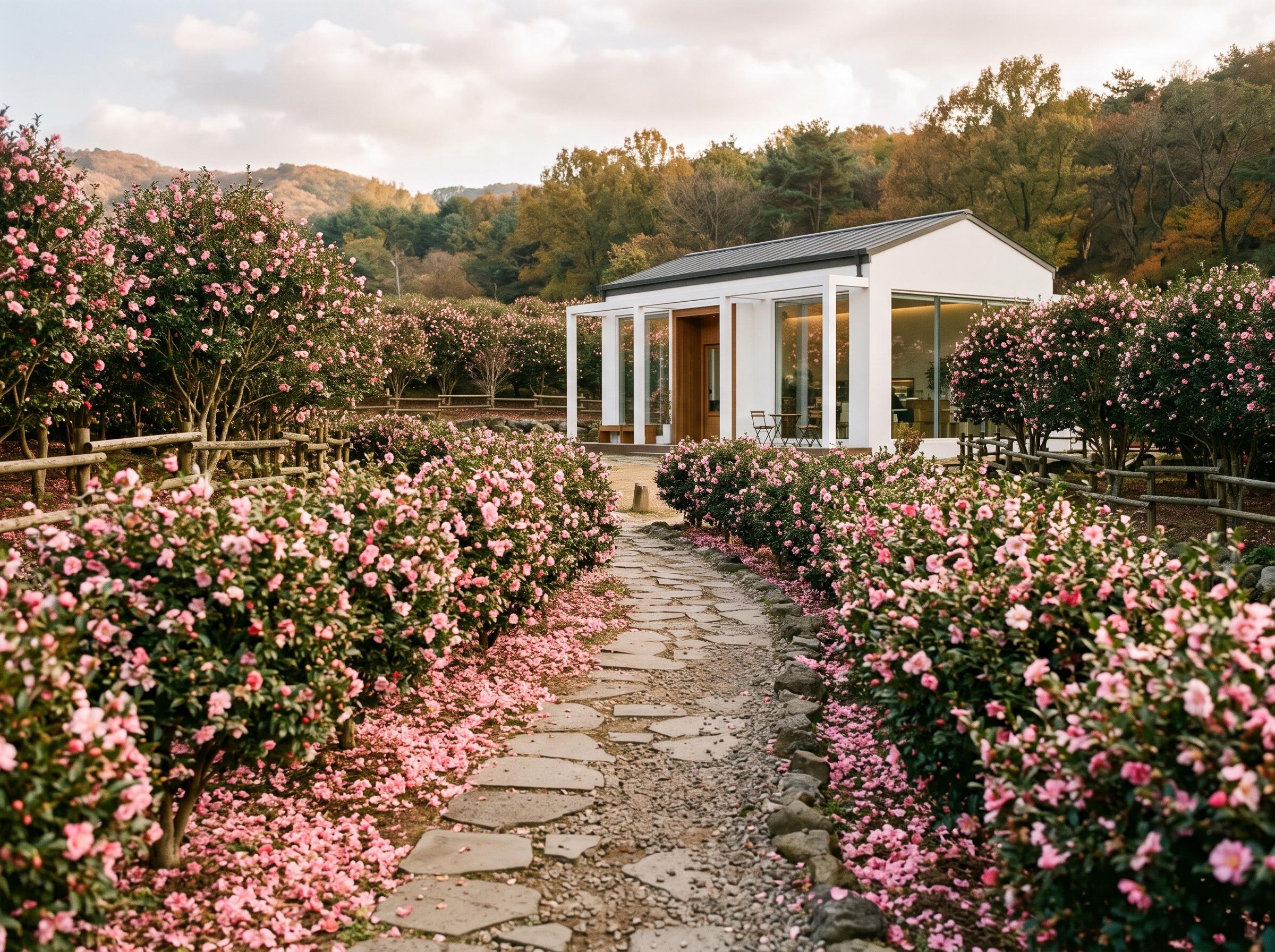
Located at 53-38 Saenggiak-ro in Namwon-eup, eastern Seogwipo, Camelia Forest—widely known among domestic travelers as Jeju Dongbaek Forest—offers an entirely different atmosphere centered on mature baby camellia trees4. Unlike broad multi-plant arboretums, this private grove is primarily cultivated with Camellia sasanqua specimens that are more than 40 years old, planted densely around a central whitewashed cafe building4. The grove officially opens for its dedicated winter season from November through February, operating daily from 09:00 to 18:00, with ticketing closing at 17:00 and cafe orders concluding at 17:304.
Because the trees here are tightly grouped and pruned to accessible viewing heights, the bright pink sasanqua canopy begins showing distinct coloration starting in mid-November, expanding into a lush pink envelope by the month's final week45. Admission during the operational winter season is 7,000 KRW for adults and 5,000 KRW for students and seniors4. The indoor cafe features large picture-frame windows facing directly onto the flowering trees, alongside an open rooftop observatory that provides elevated views of the vibrant canopy against the Seogwipo countryside45.
Jeju Camellia Arboretum and Regional Alternatives
A short drive from Camelia Forest lies the Jeju Camellia Arboretum in Wimi-ri, Namwon-eup5. This grove is famous across Korea for its massive, round-canopied camellia trees that have been shaped into tidy spherical mounds over four decades of cultivation35. While the trees at Wimi-ri typically reach their absolute peak density between mid-December and January, early visitors in the last days of November will observe the outer shells of these enormous round trees beginning to pepper with scarlet and pink petals35.
Operating hours at the Jeju Camellia Arboretum during winter generally run from 09:00 to 17:00 or 17:30 depending on daily daylight, with admission fees established at 8,000 KRW for adults and 5,000 KRW for children5. For travelers seeking combined family activities, Hueree Natural Life Park in Namwon also kicks off its winter camellia festivities in late November, incorporating greenhouse plantings and outdoor trails alongside citrus harvest activities, operating daily from 09:00 to 18:00 with adult admission of 13,000 KRW5.
Site Comparison: Selecting the Optimal Late November Destination
Choosing the best camellia destination in late November depends heavily on your overall transit itinerary, travel party composition, and photographic expectations. Western Jeju accommodations near Jungmun or Hallim pair naturally with Camellia Hill due to convenient road links, whereas eastern stays around Seongsan or Pyoseon make Namwon-eup destinations far more practical. The density of late November blooms also varies: specialized sasanqua groves like Camelia Forest provide a more concentrated pink backdrop early on, whereas expansive parks offer diversified botanical interest across larger walking circuits14.
| Destination | Location | Primary Camellia Type | Winter Hours | Adult Admission | Best November Focus |
|---|---|---|---|---|---|
| Camellia Hill | Andeok-myeon, Seogwipo (West) | 500+ mixed species (Sasanqua, Japonica, European) | 08:30–18:00 (Last entry 17:00) | 12,000 KRW | Autumn garden trails, glasshouses, and early sasanqua paths |
| Camelia Forest (Dongbaek Forest) | Namwon-eup, Seogwipo (East) | 40+ year-old Camellia sasanqua (Baby camellia) | 09:00–18:00 (Last entry 17:00) | 7,000 KRW | Concentrated pink canopy, cafe window framing, and rooftop views |
| Jeju Camellia Arboretum | Wimi-ri, Namwon-eup (East) | Pruned spherical Camellia sasanqua groves | 09:00–17:00 / 17:30 | 8,000 KRW | Architectural round tree shapes and early perimeter flowers |
| Hueree Natural Life Park | Sinnye-ri, Namwon-eup (East) | Cultivated camellia trails and seasonal greenhouse | 09:00–18:00 (Last entry 16:30) | 13,000 KRW | Camellia festival walkways combined with citrus picking |
Travelers should note that pricing, operational dates, and gate closure hours are subject to immediate adjustment based on weather events and seasonal sunlight changes15. Because daylight fades rapidly over Jeju during late November, natural lighting for photography deteriorates significantly after 16:00, making morning or midday visits the most productive strategy for viewing early blossoms.
Strategic Planning: Weather Variability and Itinerary Tips
Early winter blooming is fundamentally an organic phenomenon dictated by seasonal temperature patterns rather than a fixed calendar date. While southern Seogwipo routinely sees initial sasanqua blooms opening between November 15 and November 25, an unusually warm autumn can delay flower set by several days, whereas an early polar cold snap can accelerate petal fall4. Because of this natural margin of variation, visitors should never rely solely on historical photographs from previous years. The most prudent approach is to review recent photo geotags on local social media channels and consult the official social media notices or websites of individual arboretums within 24 to 48 hours before traveling4.
Transportation logistics also require advance coordination. Camellia Hill and the groves of Namwon-eup are positioned along intercity bus routes, but public buses arrive at extended intervals, particularly in rural inland sections14. Navigating between multiple camellia groves is substantially smoother via rental car or private taxi charter. Additionally, late November trails often alternate between volcanic paving stones, damp soil, and fallen foliage, meaning sturdy, dark-toned walking footwear is strongly recommended over open sandals or delicate dress shoes1.
Frequently asked questions
Q. Can travelers see camellias in bloom anywhere in Jeju during late November?
A. Yes, but blooms in late November are primarily restricted to early-blooming Camellia sasanqua (baby camellia) varieties in southern Seogwipo, such as at Camelia Forest and Camellia Hill. Native Korean camellias (Camellia japonica) do not reach full bloom until January and February.
Q. What are the winter operating hours and entrance fees for Camellia Hill?
A. As confirmed for the winter period as of November 2026, Camellia Hill opens daily from 08:30 to 18:00 (ticketing and last entry at 17:00). Admission costs 12,000 KRW for adults, 10,000 KRW for teenagers and seniors, and 9,000 KRW for children aged 3 to 12.
Q. Is Dongbaek Forest (Camelia Forest) open year-round?
A. Camelia Forest operates its full botanical garden daily from November through February between 09:00 and 18:00 (last ticketing at 17:00), matching the seasonal sasanqua flowering cycle. During the off-season, garden access is typically limited or bundled with cafe purchases.
Q. What is the difference between Camellia sasanqua and Camellia japonica?
A. Camellia sasanqua blooms earlier (November to December) and sheds its petals individually to carpet the ground. Camellia japonica blooms later in midwinter through early spring (January to March) and drops its flower head entirely intact.
Sources
- Camellia Hill (카멜리아힐) - VISITKOREAKorea Tourism Organization (VISITKOREA)
- Visit Jeju : Camellia HillJeju Tourism Organization (Visit Jeju)
- [Tour List] 지금 제주 여행? 웰컴 투 동백!Maeil Business Newspaper (매일경제)
- Camelia Forest - Operation Guide and OverviewCamelia Forest Official Website
- 제주도 동백꽃 스팟 BEST 5, 겨울 서귀포 가볼 만한 곳 추천Korea Tourism Organization (VISITKOREA)